










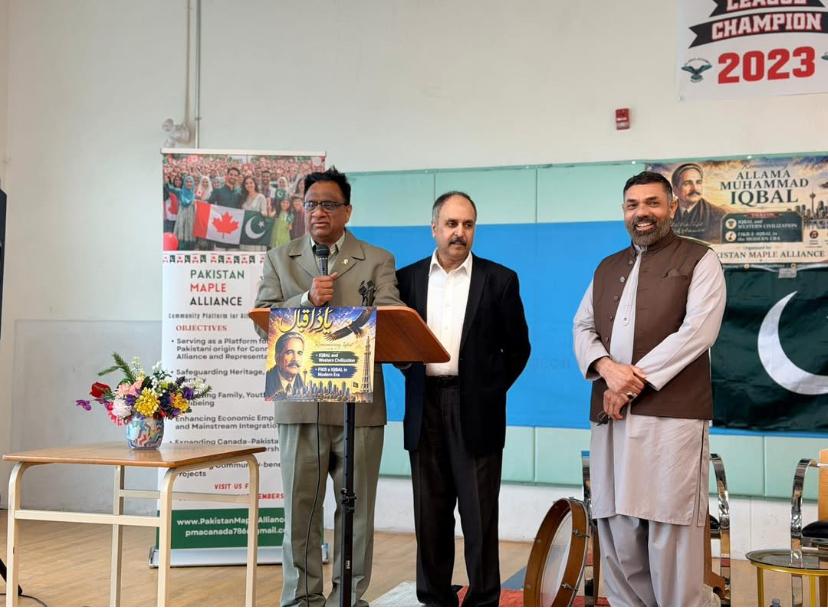
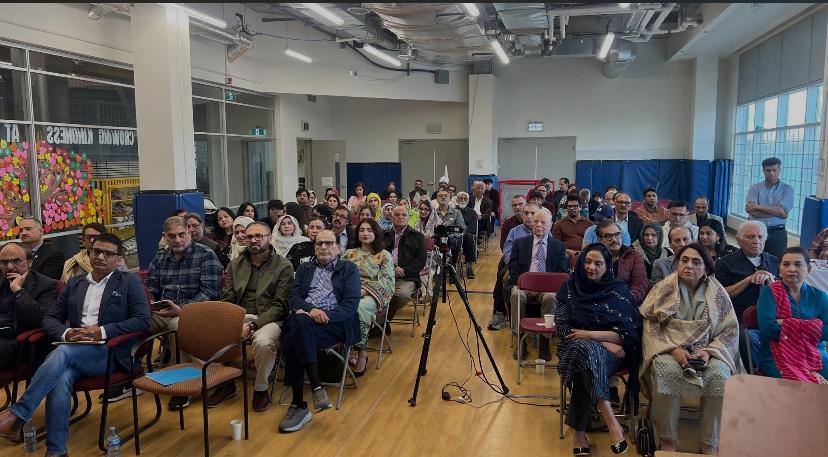
The rich intellectual and philosophical legacy of Allama Muhammad Iqbal was celebrated in Calgary during a thought-provoking literary and cultural gathering organized by the Pakistan Maple Alliance (PMA) on May 10, 2026. The event, titled “BeYad-e-Iqbal,” centered on the theme “Iqbal and Western Civilization” and attracted scholars, professionals, writers, community leaders, students, and members of the Pakistani-Canadian community for an evening devoted to reflection, dialogue, and cultural appreciation.
Widely regarded as one of the most influential thinkers and poets of the modern Muslim world, Iqbal’s philosophy continues to inspire generations across the globe. His work explored themes of self-awareness, spiritual awakening, human dignity, social justice, and the moral direction of civilizations. Through both poetry and philosophical thought, Iqbal challenged individuals and societies to rise above materialism and intellectual stagnation while striving toward ethical and spiritual development. More than eight decades after his passing, his ideas remain relevant in discussions surrounding identity, democracy, nationalism, and the future of humanity.
The program began with the national anthems of Pakistan and Canada, reflecting the spirit of multicultural harmony and mutual respect that defines the Pakistani community in Canada. The audience was welcomed by PMA directors Jamshaid Qureshi, Asif Anwar, and Syed Imtiaz Hussain, who highlighted the importance of preserving literary and intellectual traditions among overseas Pakistanis and creating platforms for meaningful community engagement.
The evening was hosted by radio producer and community activist Shan Ali, who served as the master of ceremonies and guided the program with professionalism and warmth. His presentation maintained a thoughtful atmosphere while introducing the speakers and performers whose contributions formed the heart of the event.
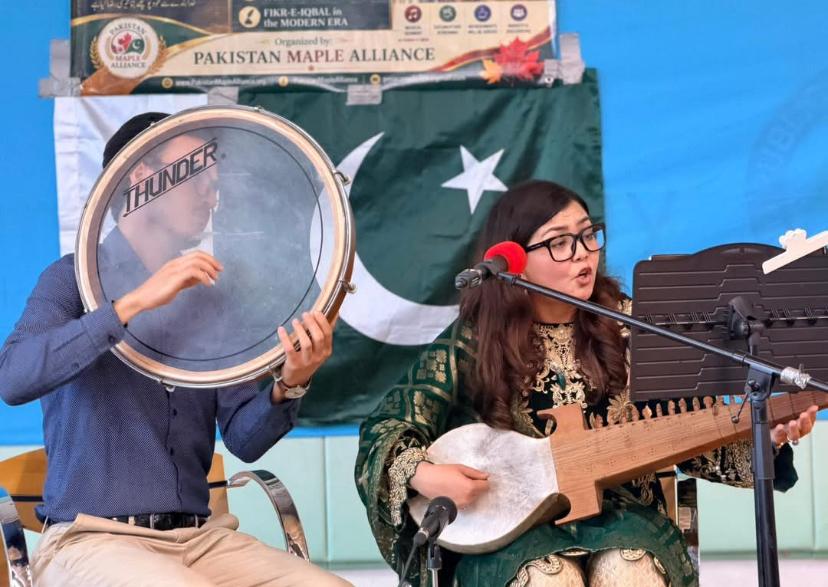
One of the most memorable segments of the evening was a musical tribute to Iqbal’s poetry presented by “Naghma-e-Ruh.” Hanifa Yousafi and her companion performed selected ghazals and poetic compositions accompanied by the traditional Rubab. The soulful presentation created a reflective and emotional environment, allowing the audience to experience the spiritual depth and artistic beauty of Iqbal’s message through music.
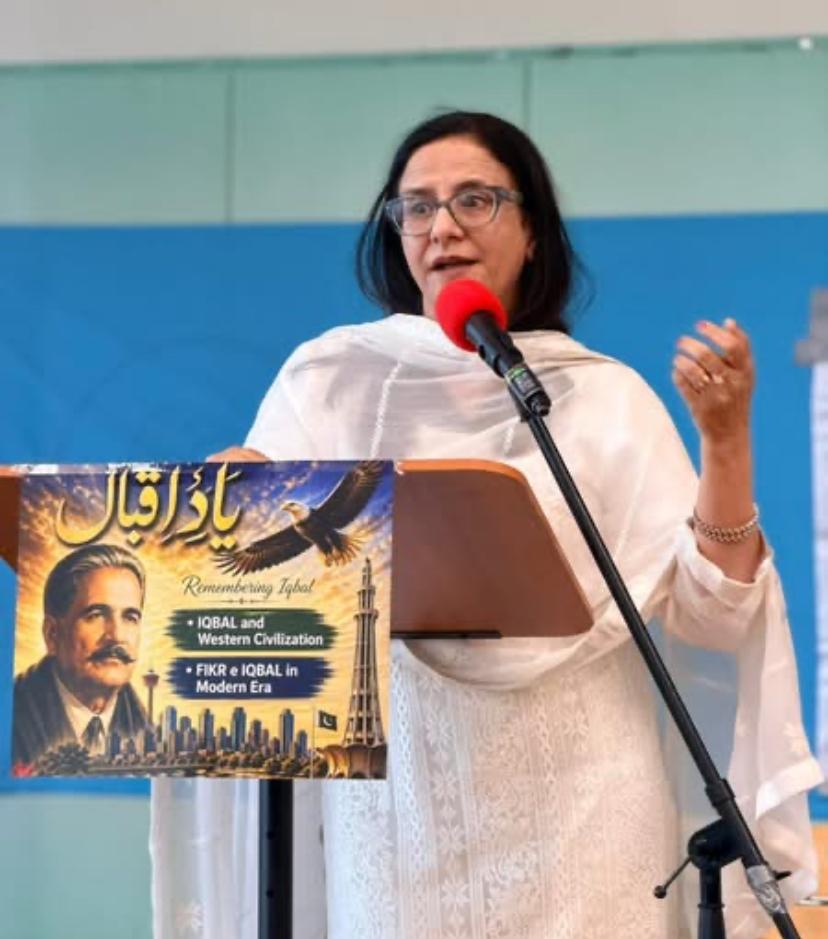
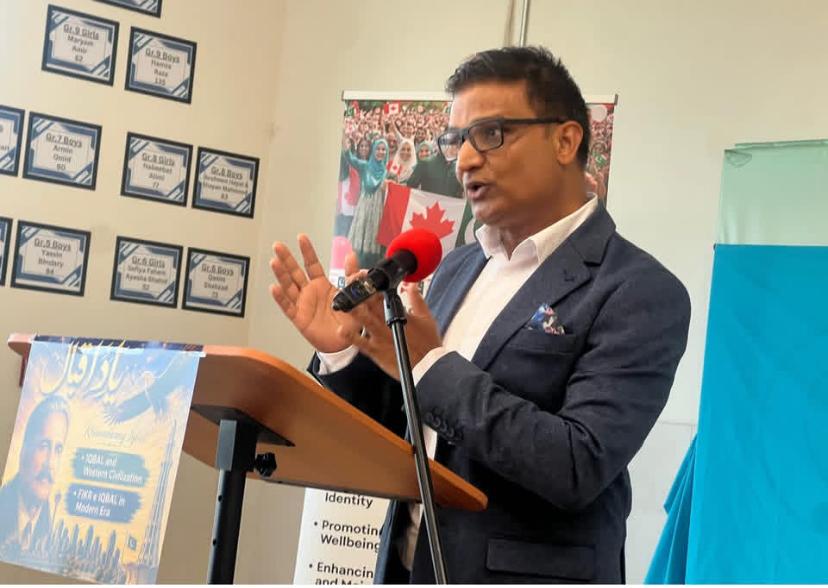
Barrister Shazia Bahadur Khan delivered an insightful presentation on Iqbal’s philosophy of selfhood, often described as the concept of “Khudi.” She explained how Iqbal viewed self-realization as essential for personal growth, moral courage, and societal progress. According to her remarks, Iqbal encouraged individuals to recognize their inner potential and to develop confidence, discipline, and purpose in order to contribute positively to humanity.
Dr. Tariq Cheema shared reflections on selected passages from Iqbal’s poetic work “Saqi Nama,” discussing the poet’s intellectual vision and his concerns regarding the decline of moral and spiritual values in society. He emphasized that Iqbal’s poetry was not limited to artistic expression but also served as a call for awakening, reform, and critical thinking.
The discussion on nationalism and patriotism was presented by Fawad Khan, who explored Iqbal’s perspective on the dangers of extreme nationalism and divisive political ideologies. He explained that Iqbal advocated a broader vision of humanity rooted in spiritual unity, justice, and coexistence rather than narrow concepts of identity based solely on territory or ethnicity. Participants noted that these ideas continue to hold significance in today’s increasingly polarized global climate.
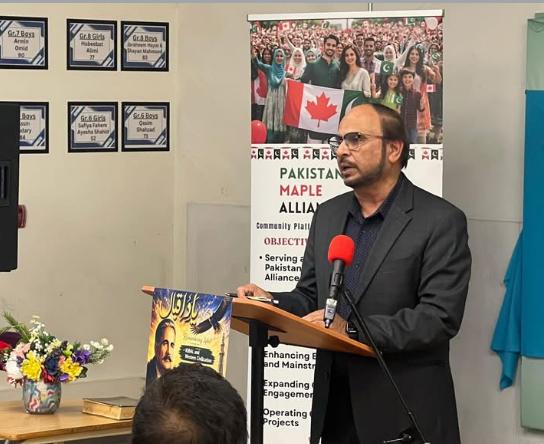
Jamshaid Qureshi spoke about Iqbal’s critique of Western democracy and modern political systems. His presentation examined Iqbal’s concerns regarding political structures that outwardly promote freedom and equality while internally sustaining inequality, exploitation, and concentration of power. The discussion encouraged attendees to reflect on the relationship between democracy, ethics, and genuine social justice in the contemporary world.
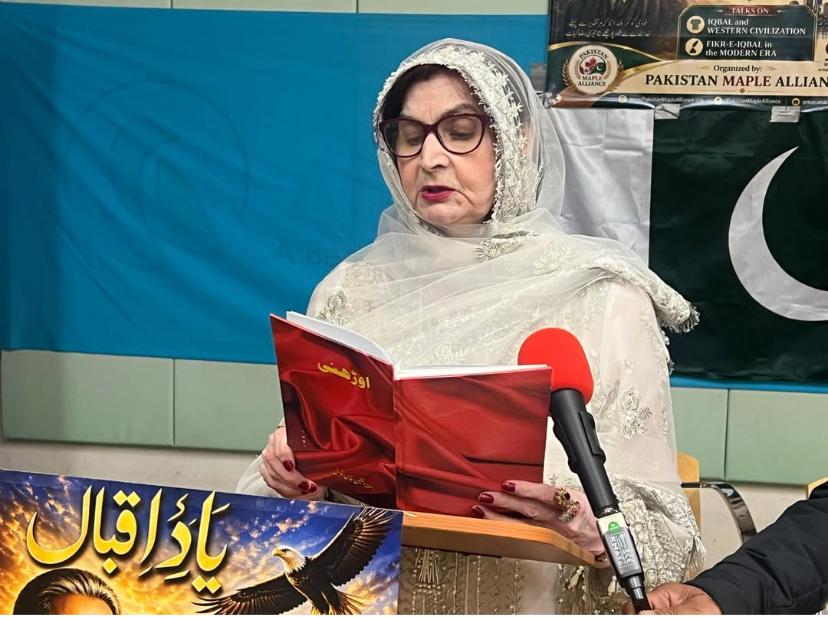
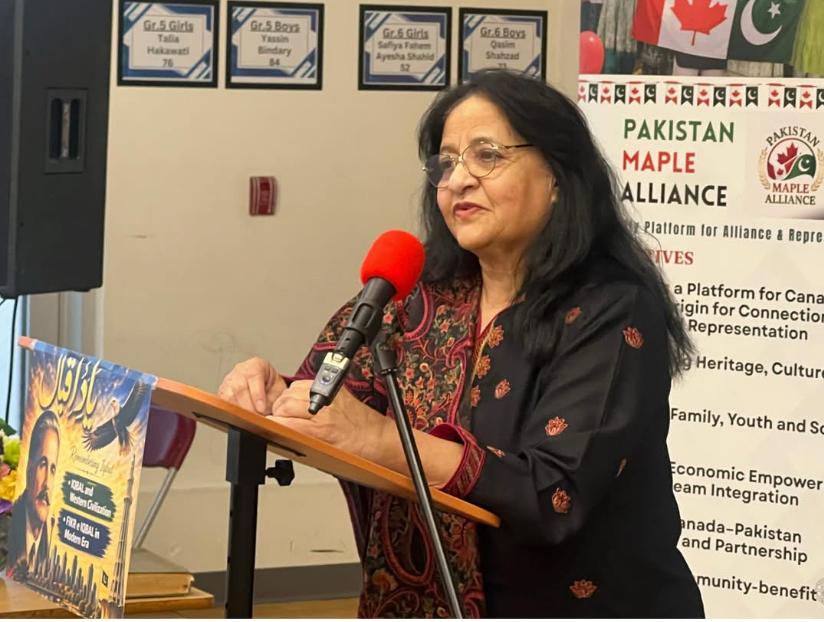
Renowned Urdu writer and poet Shaista Rizvi addressed Iqbal’s observations on materialism and the moral contradictions of modern civilization. She discussed how Iqbal warned against societies becoming overly dependent on economic power and technological advancement while neglecting ethics, spirituality, and compassion. Her remarks resonated strongly with audience members who viewed Iqbal’s analysis as increasingly relevant in an age shaped by consumerism, social fragmentation, and global uncertainty.
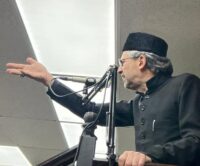
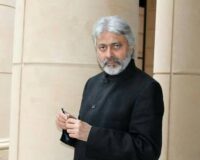
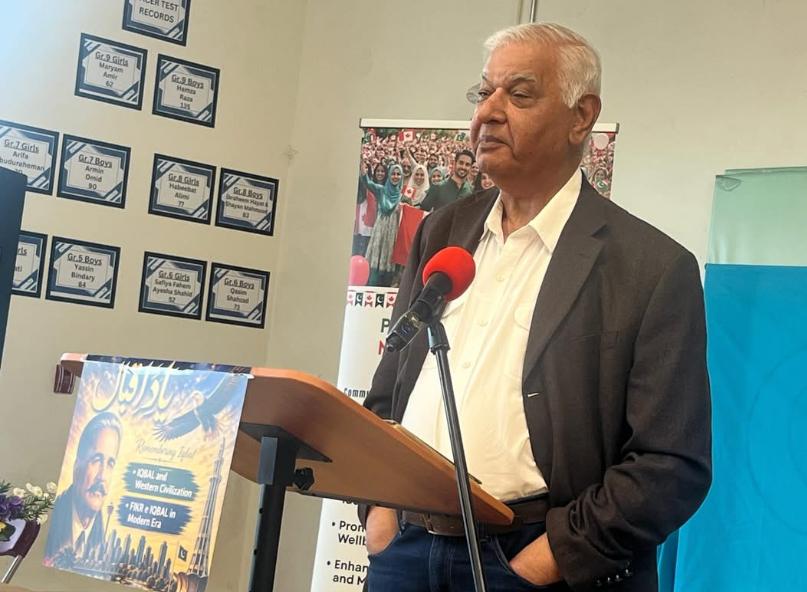
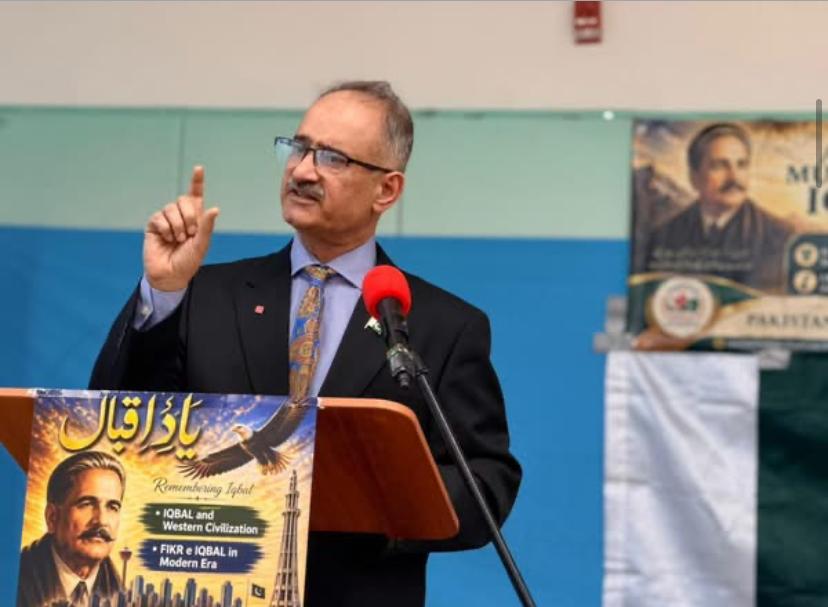
The keynote address and concluding session was delivered by Dr. Naweed Imam Syed, a distinguished Pakistani-Canadian neuroscientist and professor at the University of Calgary. In his remarks, he reflected on the enduring relevance of Iqbal’s thought in the modern era and emphasized how the poet-philosopher anticipated many of the challenges confronting humanity today, including aggressive nationalism, colonial power structures, social inequality, and spiritual emptiness.
Dr. Syed highlighted that Iqbal’s message continues to resonate because it encourages intellectual curiosity, moral responsibility, and the pursuit of knowledge combined with ethical values. He noted that Iqbal’s vision was not limited to a particular nation or community but addressed humanity as a whole, urging people to seek balance between material progress and spiritual consciousness.
Throughout the evening, participants engaged in meaningful discussions regarding the relevance of Iqbal’s philosophy in addressing contemporary global issues. The gathering created an atmosphere of intellectual exchange and cultural appreciation, demonstrating the continued importance of literary and philosophical forums within diaspora communities.
Following the formal sessions, guests were served dinner featuring traditional Pakistani cuisine, including biryani, dessert, and tea. The informal setting allowed attendees to continue conversations and strengthen community connections in a warm and welcoming environment.
The organizers acknowledged the support of sponsors including Al-Amal Academy led by Tahir Alvi, JUSH Law, MTJ Law Chambers under Tahir Javed Mian, and the Light of Guidance Foundation Calgary for helping make the event possible.
Appreciation was also extended to media partners and community supporters, including Jalal Ladak of Salam Namaste Radio and TV, B&W Times represented by Ishtiaq Seestani, community activist Abid Khan, and media coordinator Zeeshan Syed Jafri. Special recognition was given to Zeeshan Syed Jafri for managing the event recordings and multimedia presentations, along with the assistance of Abid Azeemi.
The contributions of volunteers Muiz Qureshi, Shahid Awan, and Sajjad Choudhry were also acknowledged for their dedication and organizational support throughout the program.
By the conclusion of the evening, attendees expressed appreciation for an event that successfully combined literature, philosophy, culture, and community engagement. The Pakistan Maple Alliance reaffirmed its commitment to organizing programs that promote dialogue, intellectual growth, and cultural heritage within the Pakistani-Canadian community.
The gathering ultimately served as a reminder that the ideas of Allama Muhammad Iqbal continue to transcend generations and borders. His message of self-discovery, ethical responsibility, and spiritual awakening remains deeply relevant in a rapidly changing world searching for meaning, justice, and human connection.
Post Disclaimer
The views and content presented in this article, news report, or video are solely those of the respective author or creator and do not necessarily reflect the official policy or position of BW Times Digital Online E-Paper.









Leave a comment