













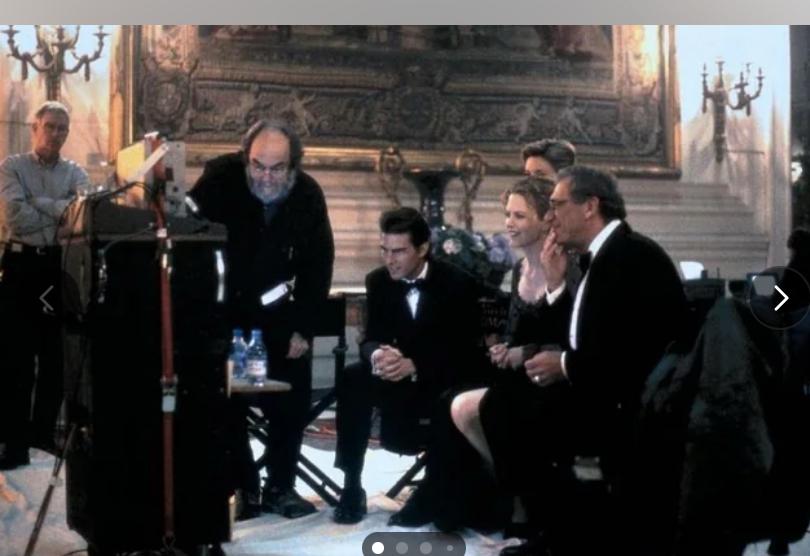
Stanley Kubrick’s final film continues to sit at the center of one of the most unsettling intersections between cinema, power, and modern conspiracy thinking. When Eyes Wide Shut was released in 1999, it was received as a slow, psychological drama about marriage, desire, and jealousy, but over time its meaning has been reinterpreted in a much darker context. After the exposure of Jeffrey Epstein and the disturbing details connected to his network, many viewers began to look back at Kubrick’s film with a different lens, seeing not just fiction but what feels like an uncomfortable reflection of real-world systems operating behind wealth and influence.
Kubrick, widely regarded as one of the most meticulous and intellectually driven filmmakers in history, directed, produced, and co-wrote the film alongside Frederic Raphael. The story itself was adapted from a novella written in 1926, long before any modern scandal involving elite trafficking networks. Yet the themes Kubrick chose to emphasize feel strikingly relevant today. The film follows Dr. Bill Harford, played by Tom Cruise, a wealthy New York doctor whose seemingly stable life begins to unravel after his wife, portrayed by Nicole Kidman, confesses that she once fantasized about another man. That confession sends him into a psychological spiral, leading him into encounters that blur the line between reality and illusion.
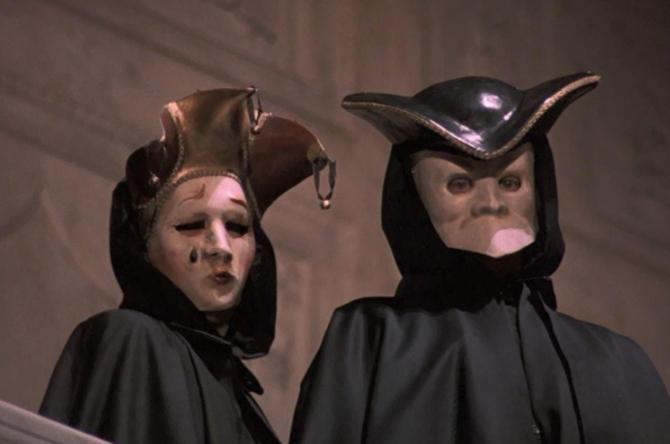
As the night unfolds, Bill moves through different layers of society, from street-level vulnerability to the insulated world of the ultra-wealthy. Each interaction reveals a different form of desire, control, or power imbalance, but nothing prepares him for the moment he is introduced to a secret gathering. Through coded language and connections, he gains access to a hidden event held in a secluded mansion where masked figures participate in ritualized sexual acts. The scene is deliberately structured, almost ceremonial, with strict rules and an atmosphere that suggests authority and hierarchy rather than chaos.
The masks worn by participants are central to the film’s symbolism. They do not merely hide identity but represent a system where individuals can act without consequence. In that environment, power is absolute, and accountability disappears. Bill’s intrusion into this space is not just a narrative turning point but a confrontation with a world he was never meant to see. When his presence is discovered, he is threatened and warned to leave, and later, he is told in no uncertain terms to forget everything that happened.
This idea of enforced silence is one of the film’s most haunting elements. A powerful figure, Victor Ziegler, played by Sydney Pollack, calmly explains to Bill that what he witnessed was not something he should concern himself with. The tone is not aggressive but controlled, almost reassuring, which makes it even more disturbing. It reflects a system where truth is not denied outright but quietly neutralized, where those with influence can redefine reality itself.
Years after the film’s release, the world was confronted with the Epstein scandal, a case that exposed how wealth and connections can shield individuals from accountability for serious crimes. The files and testimonies connected to Epstein revealed a network that operated across countries, involving powerful figures and vulnerable victims. While the full extent of that network remains debated, what is undeniable is that systems of influence allowed wrongdoing to continue for years without meaningful intervention.
It is within this context that Eyes Wide Shut has been reexamined. The parallels are not direct, and there is no evidence that Kubrick had knowledge of Epstein or anything similar, but the similarities in structure are difficult to ignore. Both involve exclusive environments where access is controlled, identities are protected, and behavior is hidden from public scrutiny. Both suggest a hierarchy in which certain individuals are protected while others are expendable. Most importantly, both highlight how silence plays a crucial role in maintaining these systems.
Despite these parallels, it is important to remain grounded in fact. The film is an adaptation of a much older literary work, and Kubrick’s interests were rooted in psychology and human behavior rather than investigative journalism. He had a long history of exploring themes related to control, authority, and the hidden forces that shape society. In that sense, Eyes Wide Shut fits naturally within his body of work rather than standing out as a direct commentary on a specific real-world event.
The mystery surrounding Kubrick’s death, however, has fueled speculation that goes beyond the film itself. He died in March 1999, just days after presenting the final cut of the movie to studio executives and its lead actors. The official cause was a heart attack in his sleep, and no credible evidence has ever suggested otherwise. Yet the timing has led some to question whether his death was purely coincidental. The idea that he may have been silenced for revealing uncomfortable truths has become a recurring theme in conspiracy discussions.
These claims often include suggestions that parts of the film were altered after his death or that the original version contained more explicit material. However, those who worked on the film have consistently stated that it was essentially complete at the time of Kubrick’s passing. Minor edits were made for technical and rating purposes, but there is no verified evidence of significant changes or removed content that would alter its meaning.
What keeps these theories alive is not proof but perception. Kubrick’s reputation as a perfectionist, combined with the film’s unsettling subject matter, creates an environment where speculation thrives. When real-world events like the Epstein scandal emerge, they appear to validate the film’s darker interpretations, even if the connection is coincidental.
The deeper question is not whether Kubrick was exposing a specific network but whether he was capturing a broader truth about how power operates. Eyes Wide Shut presents a world where wealth creates a barrier between those who act and those who are acted upon. It suggests that access to certain spaces comes with both privilege and danger, and that stepping outside one’s assigned role can have consequences.
The character of Bill Harford embodies this tension. He is wealthy enough to glimpse the hidden world but not powerful enough to be fully protected within it. His journey is not about uncovering a conspiracy in the traditional sense but about realizing his own limitations within a system he does not control. By the end of the film, he is left with more questions than answers, and the audience is placed in the same position.
What makes the film resonate so strongly today is its refusal to provide clarity. It does not explain the structure of the secret gathering or the identities of those involved. It does not resolve the fate of the woman who appears to sacrifice herself on Bill’s behalf. Instead, it leaves everything ambiguous, forcing viewers to confront the possibility that some systems are designed to remain hidden.
In the wake of real-world scandals, that ambiguity feels less like artistic choice and more like reflection. The idea that powerful individuals can operate in ways that are invisible to the public is no longer purely fictional. Yet the leap from thematic similarity to direct connection remains unsupported by evidence.
Kubrick’s film endures not because it reveals a specific truth but because it captures a feeling, a sense that there are layers of reality that most people never see. It challenges the viewer to question how much of the world is shaped by forces that operate quietly, behind closed doors, and beyond accountability.
The lasting impact of Eyes Wide Shut lies in its ability to blur the boundary between what is known and what is suspected. It does not claim to expose, but it invites interpretation. In doing so, it has become a mirror onto which each generation projects its own fears and discoveries.
Whether one sees it as a psychological drama, a social critique, or something more ominous, the film continues to provoke discussion because it touches on a universal concern. Power, when combined with secrecy, creates conditions where truth becomes difficult to define. Kubrick understood this dynamic deeply, and he translated it into a cinematic experience that remains as unsettling now as it was at the time of its release.
In the end, the connection between Eyes Wide Shut and the Epstein case is not one of direct evidence but of thematic resonance. One is a work of art, the other a documented scandal, yet both reveal how systems of influence can shape reality in ways that are not immediately visible. That overlap is enough to keep the conversation alive, even as the line between fact and interpretation continues to be debated.

Post Disclaimer
The views and content presented in this article, news report, or video are solely those of the respective author or creator and do not necessarily reflect the official policy or position of BW Times Digital Online E-Paper.










Leave a comment