















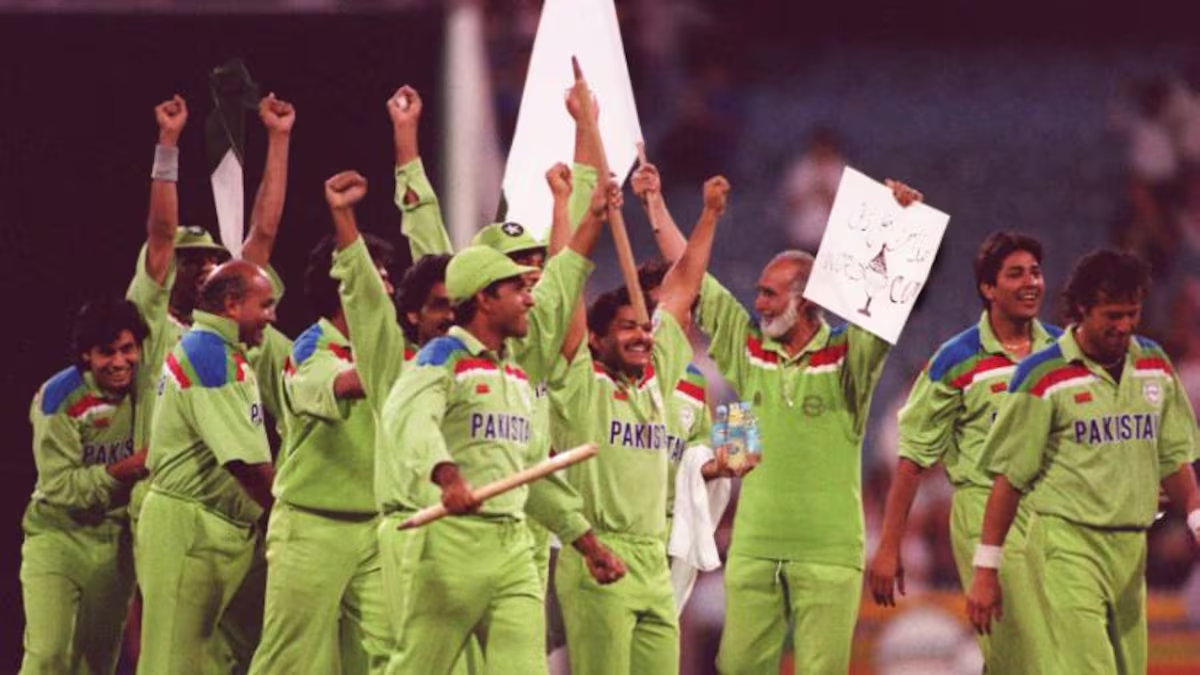
Pakistan’s historic triumph in the 1992 Cricket World Cup stands as one of the most remarkable narratives in the modern history of sport, a campaign defined by uncertainty, resilience, and an unshakeable belief that ultimately transformed a struggling side into world champions. At the center of this extraordinary journey was captain Imran Khan, whose leadership combined tactical intelligence, emotional strength, and a deeply rooted faith that inspired his team to rise above adversity.
When Pakistan arrived in Australia and New Zealand for the tournament, expectations were modest at best. The team had shown flashes of brilliance in the years leading up to the competition but lacked consistency. Injuries, internal disagreements, and unpredictable performances had weakened confidence both within the squad and among supporters. As the tournament began, those concerns quickly materialized. Pakistan struggled in their early matches, suffering defeats and failing to establish momentum. At one stage, their chances of progressing to the knockout rounds appeared almost impossible.
Amid growing criticism, Imran Khan introduced a defining idea that would come to symbolize Pakistan’s campaign. He described his team as “cornered tigers,” a phrase that captured the essence of their situation and the response he expected. For Imran, this was not simply motivational rhetoric but a reflection of his belief that adversity could bring out the strongest qualities in his players. He urged them to embrace pressure rather than fear it, to fight with determination and courage when pushed to the edge.
Equally important was Imran Khan’s emphasis on faith in Allah. According to several members of the squad, he consistently reminded them that while preparation and effort were essential, the final outcome lay in the hands of Allah. This perspective provided a sense of calm during moments of intense pressure. Players began to perform with greater clarity and confidence, freed from the fear of failure. The belief that they were part of a larger plan strengthened their unity and focus.
Pakistan’s turnaround began gradually but gathered pace as the tournament progressed. Each match became a test of character, and the team responded with growing belief. Senior players took responsibility, while younger members of the squad seized their opportunities. Javed Miandad, one of the most experienced players in the team, played a crucial role in stabilizing the batting lineup. His ability to handle pressure and guide innings provided a foundation on which others could build.
At the same time, emerging talents began to make their mark. Inzamam ul Haq, relatively unknown on the international stage at the time, delivered fearless performances that changed the course of key matches. His aggressive batting in the semifinal remains one of the defining moments of the tournament, signaling Pakistan’s arrival as serious contenders. Meanwhile, Wasim Akram developed into a decisive force with both ball and bat, showcasing his ability to influence games in critical situations.
The semifinal victory gave Pakistan the confidence they needed heading into the final against the England national cricket team at the iconic Melbourne Cricket Ground. The occasion carried immense pressure, not only because of the stakes but also due to the journey Pakistan had undertaken to reach that point. Imran Khan, aware of the significance of the moment, made a bold tactical decision by promoting himself up the batting order. It was a move that reflected his sense of responsibility as captain and his determination to lead from the front.
Imran’s innings in the final was measured and composed. He focused on building a competitive total rather than chasing quick runs, understanding the importance of stability in such a high pressure game. Alongside him, Javed Miandad provided support, ensuring that Pakistan maintained control during the middle overs. Their partnership laid the groundwork for a total that, while not overwhelming, was sufficient to challenge England.
The defining phase of the match came during Pakistan’s bowling innings. Wasim Akram produced a spell that has since become part of cricketing folklore. His deliveries combined pace, swing, and precision, dismantling England’s batting lineup at crucial moments. Two consecutive wickets in particular shifted the momentum decisively in Pakistan’s favor, leaving England struggling to recover. Supported by disciplined fielding and contributions from other bowlers, Pakistan tightened their grip on the match.
As the final wicket fell, Pakistan secured a victory that few had imagined possible at the start of the tournament. The scenes that followed reflected not only the joy of a sporting triumph but also the culmination of a journey defined by perseverance and belief. For Imran Khan, lifting the World Cup trophy marked the fulfillment of a long held dream and the perfect conclusion to his cricketing career.
In the years since that victory, players from the 1992 squad have consistently highlighted Imran Khan’s influence as the key factor behind their success. Wasim Akram has often credited him with shaping his mindset, teaching him to embrace responsibility and perform under pressure. Inzamam ul Haq has spoken about the confidence he gained from Imran’s trust, noting that such support allowed him to play freely on the biggest stage. Even experienced figures like Javed Miandad acknowledged that Imran’s leadership brought unity to a team of strong personalities.
Imran Khan’s belief in Allah remained central throughout the campaign. It was not presented as a substitute for effort or discipline but as a source of strength that complemented both. This belief created an environment in which players could focus entirely on their roles, secure in the understanding that they had done everything within their control. The combination of faith, preparation, and leadership proved to be a powerful formula.
Pakistan’s victory in the 1992 World Cup continues to resonate decades later, not only because it remains the country’s only ODI World Cup triumph but also because of the manner in which it was achieved. It demonstrated that success in sport is not solely determined by talent or form but also by character, unity, and belief. The journey from near elimination to world champions serves as a reminder that even in the face of overwhelming odds, determination and faith can lead to extraordinary outcomes.
For Pakistan, the legacy of that campaign extends beyond cricket. It provided a moment of national pride and unity, inspiring generations of players and supporters alike. The image of Imran Khan holding the trophy at the Melbourne Cricket Ground remains one of the most enduring symbols of Pakistan’s sporting history, representing not just victory but the triumph of belief over doubt.
Post Disclaimer
The views and content presented in this article, news report, or video are solely those of the respective author or creator and do not necessarily reflect the official policy or position of BW Times Digital Online E-Paper.










Leave a comment