













The Operation Searchlight stands as one of the most significant and painful events in the history of South Asia. It began on the night of March 25, 1971, when the Pakistani military launched a coordinated crackdown across East Pakistan, now known as Bangladesh. The operation was designed to suppress a growing political movement that demanded autonomy and eventually independence. Instead of restoring order, it triggered widespread violence, resistance, and ultimately led to the birth of a new nation.
The roots of this operation lie in the political and economic imbalance between the two wings of Pakistan. Although East Pakistan had a larger population, political power remained concentrated in West Pakistan. Over time, people in the eastern region felt increasingly neglected and deprived of their rights. Language, culture, and economic issues deepened the divide, creating a strong sense of injustice among the Bengali population.
The situation reached a critical point after the general elections of 1970. The Awami League, led by Sheikh Mujibur Rahman, won a clear majority in the national assembly. This gave them the democratic right to form the government. However, political leaders in West Pakistan, including Zulfikar Ali Bhutto, opposed this outcome. The refusal to transfer power led to mass protests, strikes, and civil disobedience across East Pakistan.
As tensions escalated, the central government decided to use military force to regain control. Operation Searchlight was planned as a swift action to eliminate opposition. On the night it began, troops were deployed in major cities, especially Dhaka. Their targets included political activists, students, intellectuals, and members of security forces who were suspected of supporting the independence movement.
One of the most tragic aspects of the operation was the attack on educational institutions. Dhaka University became a major target. Soldiers entered student hostels and faculty residences, leading to large scale killings. Many professors and students lost their lives. This attack was seen as an attempt to silence the intellectual leadership of the movement.
The military also moved to disarm local forces such as the East Pakistan Rifles and police units. In several areas, these forces resisted, resulting in armed clashes. What was expected to be a short operation quickly turned into widespread conflict. The violence spread from cities to rural areas, where villages were attacked on suspicion of harboring resistance fighters.
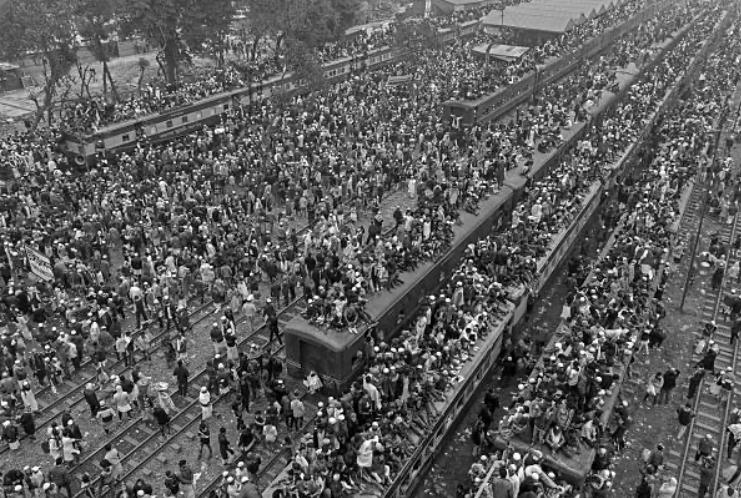
Civilians suffered the most during this period. There were reports of mass killings, destruction of homes, and severe human rights abuses. Families were displaced, and fear spread throughout the region. Millions of people fled their homes to escape the violence. A large number crossed into India, creating a massive refugee crisis that put pressure on neighboring regions.
As the situation worsened, resistance movements began to organize more effectively. The Mukti Bahini emerged as the main fighting force against the Pakistani military. Supported by local populations and later by India, they launched guerrilla attacks and gradually built momentum.
Operation Searchlight did not succeed in crushing the movement. Instead, it intensified the desire for independence among the people of East Pakistan. The conflict evolved into the Bangladesh Liberation War, which lasted for several months. The war drew international attention as reports of violence and humanitarian suffering spread across the world.
By December 1971, the situation reached its conclusion when Indian forces intervened directly in support of the Bengali resistance. The Pakistani military eventually surrendered, and Bangladesh emerged as an independent country. This marked the end of Pakistan as a unified state with two wings.
The human cost of Operation Searchlight and the subsequent war remains a subject of deep sorrow. While exact numbers are debated, it is widely acknowledged that a large number of people lost their lives. Many others were injured, displaced, or left traumatized. The social and cultural impact of the events continues to be felt even today.
Different countries and communities interpret Operation Searchlight in different ways. In Bangladesh, it is remembered as a deliberate and brutal attempt to suppress a legitimate political movement. In Pakistan, discussions often focus on the political crisis and the challenges of maintaining unity in a divided nation. These differing perspectives show how complex and sensitive this historical event remains.
Over the years, efforts have been made to preserve the memory of 1971. Memorials, museums, and annual commemorations serve as reminders of the sacrifices made during that time. Survivors continue to share their stories, ensuring that future generations understand the importance of justice, freedom, and human dignity.
Operation Searchlight serves as a powerful lesson about the consequences of political conflict and the misuse of power. It shows how the absence of dialogue and mutual understanding can lead to devastating outcomes. At the same time, it highlights the strength and resilience of people who fight for their rights and identity.
Today, the events of March 1971 are not just part of history but a living memory that shapes national identity in Bangladesh. The operation is seen as the beginning of a struggle that ultimately led to independence. Remembering it is essential not only for honoring those who suffered but also for promoting peace and preventing similar tragedies in the future.
Post Disclaimer
The views and content presented in this article, news report, or video are solely those of the respective author or creator and do not necessarily reflect the official policy or position of BW Times Digital Online E-Paper.










Leave a comment