















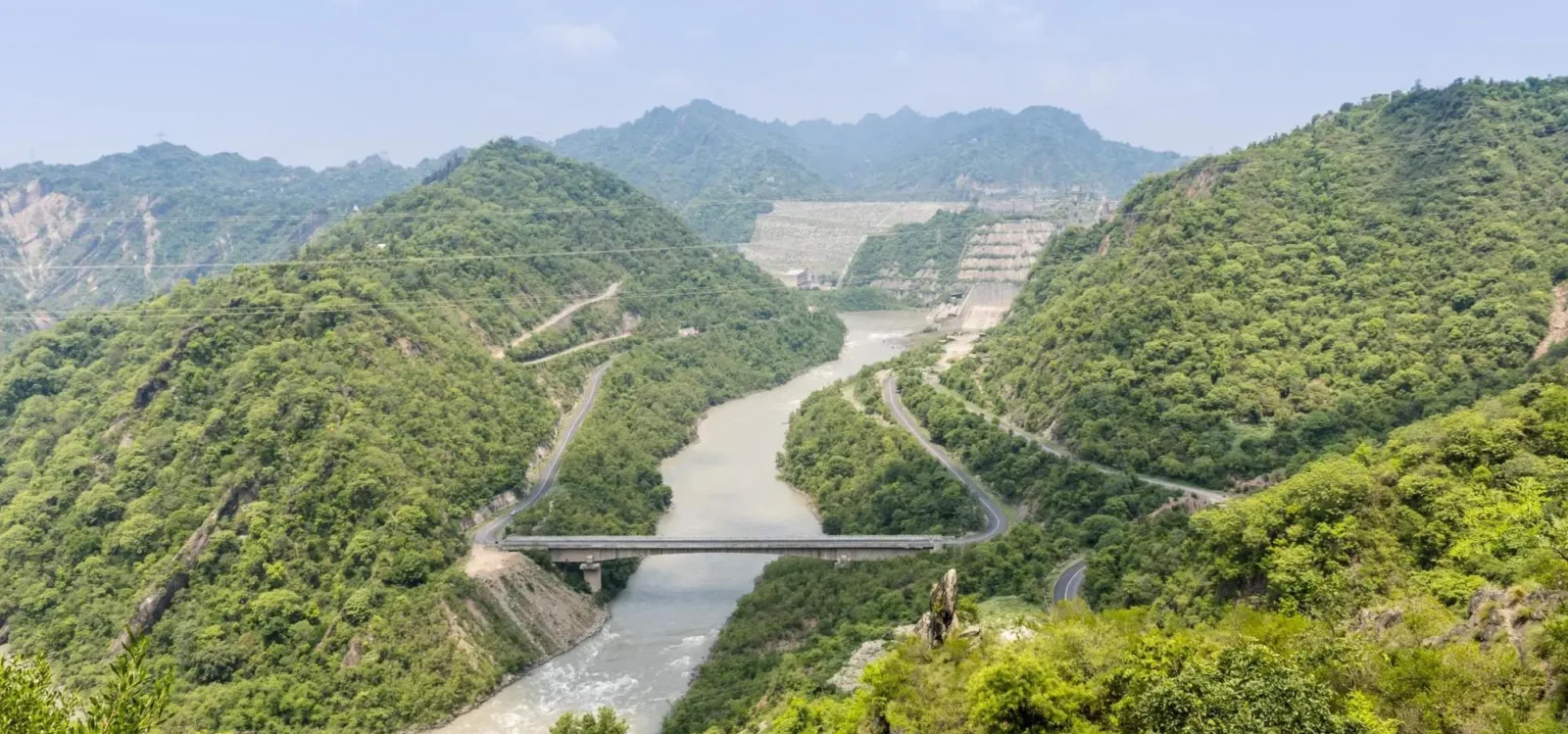
A long-delayed dam project on the border region of India has become a fresh point of concern in relations with Pakistan, where officials and analysts see growing strategic meaning behind water control.
The near-completion of Shahpur Kandi Dam on the Ravi River is drawing attention because of its possible effect on downstream water reaching Pakistan.
Decades-Old Project Nears Completion
The project was originally planned several decades ago and experienced repeated delays because of internal disputes over land, administration and regional coordination.
Now, construction has moved close to completion after renewed progress in recent years.
India to Use More Ravi River Water Internally
Under the new arrangement, India will increase its use of Ravi River water for irrigation and energy generation.
The project does not fully block river flow, but it is expected to reduce surplus water that had previously continued downstream into Pakistan.
Treaty Allows Eastern River Use
The river falls under the framework of the Indus Waters Treaty, which allocates eastern rivers to India and western rivers largely to Pakistan.
Under that treaty, India has legal rights to use waters from the Ravi.
Political Timing Draws Attention
Despite legal treaty provisions, the timing of the project has attracted concern because it comes during a period of continued political strain between both countries.
Relations remain tense after recent security incidents and diplomatic friction.
Water Security Sensitive for Pakistan
For Pakistan, river systems remain critically important because agriculture depends heavily on Indus basin water supplies.
Any reduction in available water, even if limited, carries both economic and political sensitivity.
Symbolic Pressure More Important Than Immediate Volume
Experts note that while direct water losses may remain modest in the short term, the symbolic impact is far greater.
The project is being viewed by many observers as a sign that trust between the two countries continues to weaken.
Wider South Asian Water Competition Growing
The development also reflects a broader regional pattern in South Asia, where upstream and downstream water projects increasingly influence diplomacy.
Water concerns already shape strategic thinking among multiple countries in the region.
Future Water Disputes Could Intensify
Analysts warn that water-related disputes may become a more frequent part of future regional tensions as climate pressure, infrastructure expansion and political rivalry continue to intersect.
Post Disclaimer
The views and content presented in this article, news report, or video are solely those of the respective author or creator and do not necessarily reflect the official policy or position of BW Times Digital Online E-Paper.











Leave a comment