







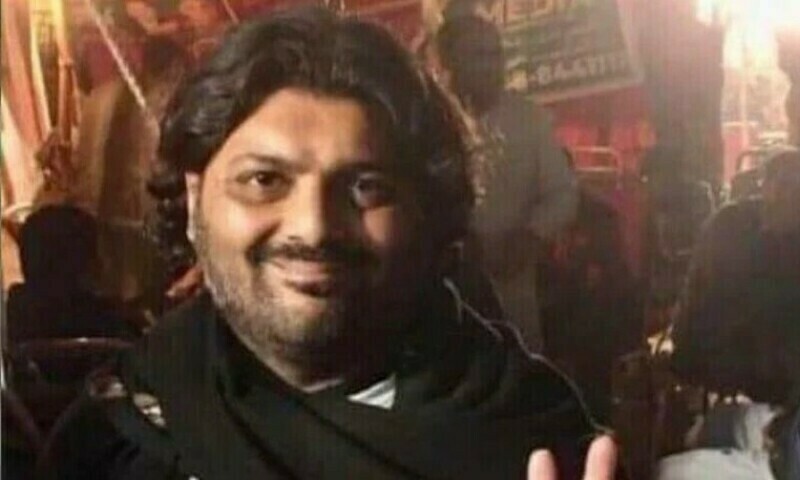
The death of Zille Shah became one of the most emotionally charged and politically explosive incidents in Punjab during the period of intense political confrontation in Pakistan. What began as a routine political gathering of supporters quickly turned into a national controversy, raising serious questions about policing methods, political polarization, and the safety of grassroots activists. The incident did not only highlight the tensions between political parties and state institutions but also exposed the fragile environment in which political workers operate.
Zille Shah, whose real name was Ali Bilal, was widely known among supporters of Pakistan Tehreek-e-Insaf as a dedicated and loyal activist. He frequently attended rallies and demonstrations organized in support of Imran Khan, often appearing outside Khan’s residence in Zaman Park in Lahore where party workers gathered during political mobilizations. Supporters described him as someone who was deeply devoted to the party and its leadership, even though he was not a senior political figure. Like many grassroots workers, he represented the ordinary supporter whose presence forms the backbone of political movements.
The circumstances that led to his death unfolded during a tense period when political activity around Zaman Park had intensified. Law enforcement authorities had been attempting to control gatherings and prevent protests in the area, arguing that the situation could escalate into violence or public disorder. During one such police operation aimed at dispersing supporters and enforcing restrictions, several activists were detained, and Zille Shah was reportedly among those taken into custody.
Shortly after the police action, shocking news spread that the activist had died. Reports indicated that he was taken to a hospital with serious injuries and was later declared dead. The medical examination that followed revealed severe physical trauma, including head injuries and other wounds that indicated significant violence had occurred before his death. The findings intensified public concern and immediately transformed the case into a political storm.
Leaders and supporters of PTI quickly accused the police of being responsible for the death. According to the party’s narrative, Zille Shah had been detained during the crackdown and was subjected to physical torture while in custody. Party officials argued that the injuries described in the medical report could not be explained by a simple accident and demanded accountability from the authorities. The incident quickly became a rallying point for the opposition movement.
Supporters across the country expressed anger and grief, portraying Zille Shah as a symbol of sacrifice for political loyalty. Demonstrations and statements from party leaders demanded a transparent and independent investigation. Social media also played a powerful role in amplifying the controversy, as videos, photographs, and emotional tributes circulated widely among supporters.
However, the official response from the Punjab police presented a very different version of events. Authorities denied that Zille Shah had died while in police custody. According to the police narrative, he had been released earlier and later became the victim of a road accident. Officials stated that two individuals had transported him to the hospital following the accident but had left afterward. The police investigation focused on identifying the vehicle allegedly involved in the incident and questioning individuals connected to the case.
This conflicting explanation created a deep divide in public opinion. Supporters of PTI rejected the accident claim, insisting that the physical injuries described in medical findings pointed toward custodial violence. On the other hand, government representatives and police officials maintained that the tragedy was being politicized for strategic purposes.
Political analysts observed that the case reflected a broader pattern in Pakistan’s political landscape where tragedies quickly become tools in the battle for narrative control. Competing political forces often present sharply different interpretations of the same event, leaving the public uncertain about the truth. In the case of Zille Shah, the lack of a universally accepted explanation further deepened mistrust between citizens and state institutions.
Another important aspect of the controversy was the role of ordinary political activists. While political leaders often remain protected by security and influence, grassroots workers frequently face the greatest risks during protests and confrontations with law enforcement. Zille Shah represented this vulnerable group of political participants whose loyalty to their cause sometimes places them directly in harm’s way.
Human rights observers also raised broader concerns about accountability and transparency in incidents involving police operations. Whenever deaths occur during or after detention, the demand for independent investigation becomes critical for maintaining public confidence in the justice system. Without credible and transparent processes, such incidents risk becoming permanent sources of political resentment.
The political environment at the time of the incident was already deeply polarized. Rival parties accused each other of abusing state power, while political rhetoric had reached an unusually intense level. In such a climate, even a single tragic event had the potential to trigger widespread outrage and deepen political divisions.
For many supporters of Imran Khan, Zille Shah’s death became a powerful symbol of what they perceived as repression against political dissent. Memorial gatherings and speeches referred to him as a loyal worker who stood by his political beliefs despite the risks involved.
Critics, however, argued that political parties sometimes use emotional narratives to mobilize supporters and strengthen their own political messaging. From this perspective, the tragedy of Zille Shah was seen as being drawn into the larger political conflict between government authorities and opposition forces.
Regardless of these competing interpretations, the case revealed a disturbing reality about political life in highly polarized environments. When institutions are distrusted and political rhetoric becomes increasingly confrontational, even the truth behind tragic events becomes contested.
The story of Zille Shah ultimately stands as a reminder of the human cost of political confrontation. Behind the political debates, accusations, and official statements lies the life of an ordinary activist whose death turned into a national controversy. His case continues to raise difficult questions about accountability, transparency, and the responsibility of political leadership toward the supporters who stand behind them.
In the broader picture, the tragedy illustrates how fragile the relationship between politics, law enforcement, and public trust can become. Until credible mechanisms exist to investigate such incidents impartially and transparently, similar controversies will continue to shake public confidence and deepen the divisions within society.
Post Disclaimer
The views and content presented in this article, news report, or video are solely those of the respective author or creator and do not necessarily reflect the official policy or position of BW Times Digital Online E-Paper.







Zille Shah a real hero of PTI