















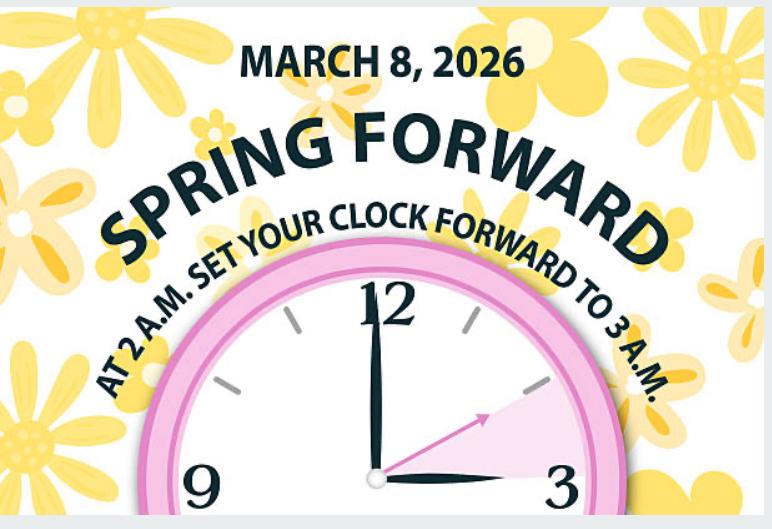
As the daylight saving period begins this weekend, millions of Canadians will once again move their clocks forward by one hour. Across the country, most of the ten provinces still follow the seasonal time change, adjusting clocks in spring and again in autumn. However, the situation is evolving. British Columbia is moving toward a permanent time system and is expected to shift to regular year-round timing after this change, signaling a possible end to the twice-a-year clock adjustment in the province.
Every spring the routine returns across much of North America: clocks move ahead by one hour, bringing longer daylight during the evening. Months later, in autumn, the clock moves back again to standard time. For decades this pattern has shaped the daily rhythm of work, school and travel.
In Canada, the majority of provinces — including Ontario, Quebec, Alberta, Manitoba, New Brunswick, Nova Scotia and Prince Edward Island — continue to follow this seasonal schedule. Saskatchewan, however, already remains on a fixed time throughout the year, avoiding the clock change altogether. Northern and remote areas also sometimes maintain unique timing arrangements because of their different daylight conditions.
Now the conversation is shifting in parts of the country. British Columbia has decided to move toward a consistent time system, meaning that after the current adjustment the province intends to keep one regular time instead of switching back again later in the year. Supporters believe this approach will simplify schedules and reduce the disruption caused by changing clocks twice annually.
The debate about daylight saving time is not limited to Canada. Around the world many governments are reconsidering the practice. The system was first introduced more than a century ago when electricity was expensive and less widely used. By shifting the clock forward during the warmer months, leaders believed people could make greater use of natural sunlight and reduce the need for artificial lighting.
Over time the practice spread across several countries, especially in North America and Europe. But modern technology and changing lifestyles have altered the way energy is used, leading many analysts to question whether the original benefits still exist.
Critics say the clock change can disturb sleep patterns and daily routines. Losing an hour in spring may temporarily affect concentration and productivity. Transportation systems, international communication and financial markets also need to adjust whenever the time shifts, which can create short periods of confusion.
Meanwhile, many parts of the world never adopted daylight saving time in the first place. Large regions of Asia, Africa and the Middle East operate on a single time throughout the year. Several other countries have experimented with the system in the past but later abandoned it.
Supporters of a permanent time system argue that keeping one stable clock would remove unnecessary disruption. Schools, businesses and digital networks would no longer have to adjust their schedules twice a year, and daily routines could remain consistent.
However, time policies are rarely simple decisions. Neighboring regions often try to maintain similar time systems to make trade, travel and communication easier. Because of this, governments usually move cautiously when considering major changes.
For now, much of Canada will continue the long-standing routine of changing clocks each spring and autumn. Yet with British Columbia preparing to remain on regular time after this adjustment, the discussion about whether the seasonal clock shift still belongs in modern society is gaining new momentum.
As people move their clocks forward this weekend, the familiar tradition continues — but the debate over the future of daylight saving time is far from over. ⏰
Post Disclaimer
The views and content presented in this article, news report, or video are solely those of the respective author or creator and do not necessarily reflect the official policy or position of BW Times Digital Online E-Paper.











Leave a comment