














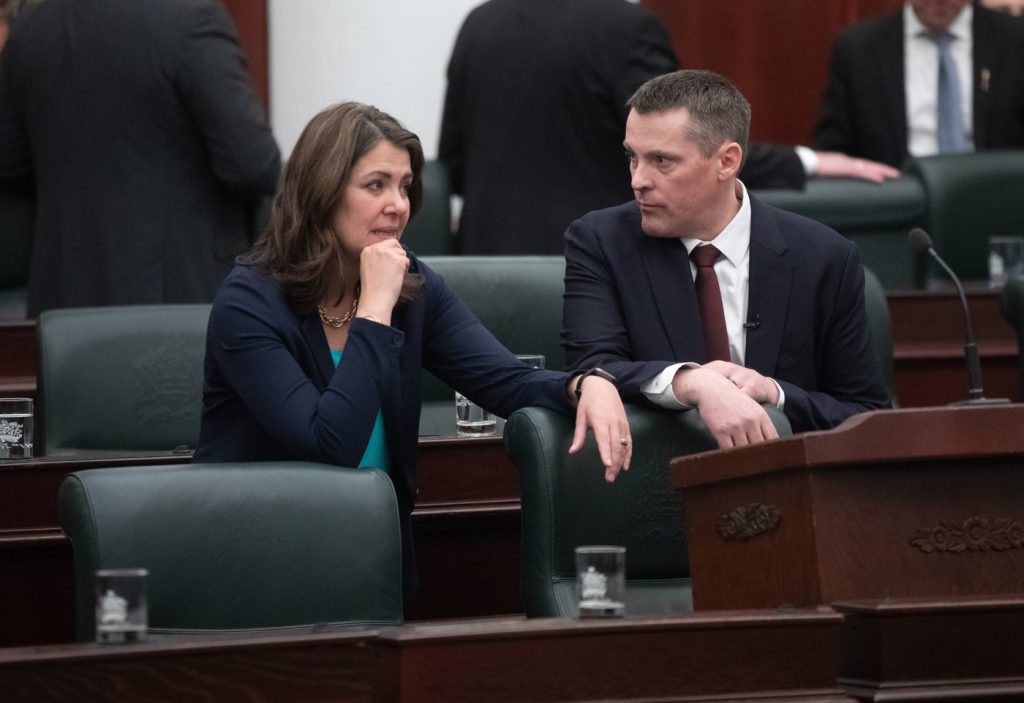
Alberta is bracing for a sizable deficit as the province unveils its 2026 budget, with Premier Danielle Smith acknowledging for weeks that the province’s finances will land firmly in the red.
While the exact shortfall was to be detailed in the budget documents, Smith has described it as “significant,” citing lower oil prices as the primary driver. She has also linked mounting fiscal pressure to rapid population growth, arguing that increased immigration in recent years has strained public services such as health care and education.
Despite the projected deficit, the United Conservative government has ruled out raising taxes or implementing what Smith called “deep” service cuts in an effort to restore balance.
Finance Minister Nate Horner said the province’s heavy reliance on resource revenue remains a central factor in Alberta’s financial volatility. In previous years, resource income exceeded $20 billion, but Horner indicated that 2026 will see that figure fall dramatically.
Alberta’s economy has long been tied to the ups and downs of oil markets. The province does not levy a provincial sales tax, making it more dependent on energy royalties than most other jurisdictions in Canada.
In the current fiscal year, which ends in March, Alberta is forecasting a $6.4-billion deficit based on an average price of West Texas Intermediate crude at US$61.50 per barrel. Smith has said oil would have needed to average roughly US$74 per barrel to avoid falling into deficit territory.
Even as revenues decline, spending commitments are rising. The government has already outlined key investments, including $10.8 billion allocated to education — a seven per cent increase over the previous year. Health care spending is also set to climb, with $7.7 billion earmarked for physician compensation and recruitment, representing a 22 per cent increase.
Horner acknowledged that Alberta’s rapid population growth has intensified pressure on schools, hospitals, and infrastructure. Construction costs have also risen, adding further strain to capital budgets.
While Horner raised the idea that a five per cent provincial sales tax could potentially generate about $6 billion annually, he emphasized that the government is not currently pursuing a referendum on introducing a PST. Instead, he suggested broader discussions will continue about revenue options, taxation levels, and expenditure management as the province grapples with rising debt.
He framed the province’s financial position as comparatively strong, arguing that Alberta’s balance sheet is in better shape than many household budgets struggling with affordability concerns.
The opposition, however, sees the deficit as a sign of mismanagement. Naheed Nenshi, leader of Alberta’s New Democratic Party, criticized the government ahead of budget day, arguing that the province faces higher living costs and mounting stress in health care and education.
Nenshi contends the fiscal shortfall reflects policy decisions rather than unavoidable circumstances, saying the government should take responsibility instead of attributing the deficit to oil prices or immigration levels.
The 2026 budget sets the stage for what is likely to be a heated political debate in the months ahead. With energy revenues under pressure and public service demands climbing, Alberta’s financial outlook once again highlights the province’s vulnerability to global commodity swings — and the ongoing challenge of balancing economic growth with fiscal stability.
Post Disclaimer
The views and content presented in this article, news report, or video are solely those of the respective author or creator and do not necessarily reflect the official policy or position of BW Times Digital Online E-Paper.









Leave a comment