















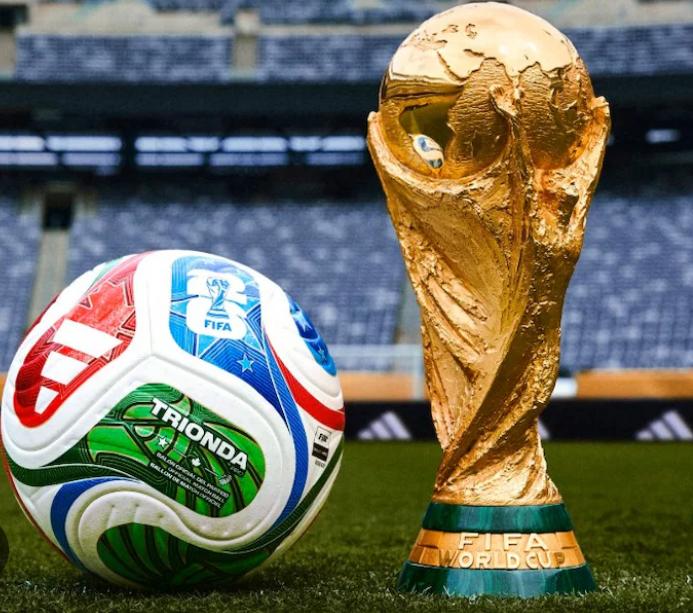
The world’s biggest sporting celebration is preparing to arrive in North America as the 2026 FIFA World Cup moves closer to kickoff with unprecedented excitement, global anticipation and historic significance. Organized by FIFA, the tournament will officially begin on June 11, 2026, in Mexico City, where the opening match is expected to take place at the legendary Estadio Azteca. Mexico’s national team is expected to play the opening game in front of tens of thousands of passionate supporters, continuing a long tradition in which host nations launch football’s greatest global event before a worldwide television audience of billions.
The tournament will continue across three host nations — United States, Canada and Mexico — making it the first FIFA World Cup jointly organized by three countries. The competition will conclude on July 19, 2026, with the grand final scheduled to be played at MetLife Stadium near New York City. Between those dates, the world will witness 104 matches involving 48 national teams, the largest tournament in FIFA history.
The quarterfinals are expected to be played in major cities including Los Angeles, Miami, Kansas City and Boston during the first half of July 2026. The semifinals are expected to take place in Dallas and Atlanta before the tournament reaches its climax in New Jersey. Fans from every continent are expected to travel across North America, turning the host cities into enormous international cultural festivals where football, music, tourism and global unity will merge together.
The 2026 edition represents a historic transformation for world football because FIFA has expanded the tournament from 32 teams to 48 teams for the first time. This major expansion will increase participation opportunities for nations from Africa, Asia, North America and the Middle East, allowing many emerging football countries to experience the World Cup stage for the first time. The new format reflects FIFA’s broader vision of making football more globally inclusive and competitive. More matches, more teams and more supporters will create a month-long sporting spectacle unlike anything previously witnessed in football history.
The United States will host the majority of the tournament with 78 matches across several iconic cities and stadiums. Host venues include Los Angeles, Seattle, Dallas, Miami, Atlanta and Philadelphia. Canada will host 13 matches in Toronto and Vancouver, while Mexico will host 13 matches in Mexico City, Guadalajara and Monterrey. Mexico will become the first nation ever to host the FIFA World Cup three times after previously organizing the tournaments in 1970 and 1986.
Football’s journey to becoming the world’s most influential sport began more than a century ago. FIFA was founded in 1904 in Paris by seven European nations seeking to create a unified international structure for football. At the time, football was already rapidly growing in popularity throughout Europe and South America, but there was no global championship dedicated exclusively to national teams. International matches existed, yet football administrators dreamed of creating a worldwide competition capable of bringing nations together through sport.
The man who transformed that dream into reality was Jules Rimet, the visionary French sports leader who believed football could unite humanity beyond politics, borders and war. Following the devastation of World War I, Rimet viewed sport as a bridge between nations and cultures. Under his leadership FIFA officially approved the creation of the FIFA World Cup in 1928, paving the way for the first tournament two years later.
The inaugural FIFA World Cup took place in Uruguay in 1930. Uruguay had recently won Olympic football gold medals and was celebrating its centenary as an independent nation, making it a symbolic choice to host the first tournament. Only 13 countries participated because international travel during that period was expensive and extremely difficult. European teams traveled for weeks by ship across the Atlantic Ocean to reach South America. Despite those challenges, the first World Cup created a powerful emotional connection between football and national pride.
Uruguay defeated Argentina 4–2 in the final to become football’s first world champion. That victory established Uruguay as an early football superpower and proved the enormous global potential of the tournament. Since then, the World Cup has evolved into the most watched sporting event on Earth, surpassing even the Olympic Games in global television audience.
Over nearly a century the FIFA World Cup has survived political crises, economic depression and world war while continuously expanding across continents. The tournaments planned for 1942 and 1946 were cancelled because of World War II, but football returned with renewed energy afterward. Television transformed the World Cup during the twentieth century, allowing billions of viewers to experience legendary moments live from their homes.
Only eight countries have won the FIFA World Cup since 1930. Brazil remains the most successful nation with five titles, followed by Germany and Italy with four each. Argentina has won three championships, while France and Uruguay each have two titles. England and Spain have won once. More than 80 countries have participated in the World Cup throughout history, yet only these eight nations have managed to lift football’s most prestigious trophy.
The World Cup has also produced some of sport’s greatest legends. Pelé became a global icon after winning three World Cups with Brazil, while Diego Maradona inspired Argentina to glory in 1986 through performances still considered among the greatest in football history. More recently, Lionel Messi fulfilled a lifelong dream by leading Argentina to victory in 2022, strengthening his place among football’s immortals.
The World Cup has repeatedly demonstrated football’s extraordinary ability to unite people across language, religion and political divisions. Every tournament creates unforgettable stories of hope, resilience and national pride. Smaller nations challenge global powers, unknown players become overnight heroes and supporters from different countries celebrate together in streets, stadiums and fan festivals. Few events on Earth generate the same collective emotion as the FIFA World Cup.
Several tournaments stand out as turning points in football history. The 1950 World Cup in Brazil witnessed Uruguay’s shocking victory over the host nation in the famous “Maracanazo.” The 1970 tournament in Mexico introduced millions of television viewers to Pelé’s legendary Brazil team. The 1986 World Cup elevated Maradona into football mythology. The 1998 competition in France highlighted multicultural European football, while the 2010 tournament in South Africa became the first World Cup held on African soil, symbolizing football’s growing inclusiveness and worldwide reach.
The 2022 tournament in Qatar marked another historic milestone as the first World Cup hosted in the Arab world and Middle East. Qatar introduced advanced cooling technologies, compact stadiums and massive infrastructure development projects. The tournament demonstrated how modern World Cups have become not only sporting competitions but also global showcases of culture, innovation and economic ambition.
The upcoming 2026 tournament is expected to surpass every previous edition in scale and commercial impact. Millions of supporters are anticipated to travel throughout North America, boosting tourism, transportation, hospitality and entertainment industries. FIFA projects record-breaking global audiences as football continues expanding rapidly in markets such as the United States and Canada. The tournament is also expected to inspire long-term youth football development programs across North America, where soccer participation has grown dramatically during recent decades.
For Canada, hosting the World Cup represents a major sporting milestone. Football has become one of the country’s fastest-growing sports, especially among immigrant and multicultural communities. Matches in Toronto and Vancouver are expected to attract enormous international attention while inspiring future generations of Canadian footballers. The United States views the tournament as an opportunity to further establish football alongside basketball, baseball and American football within the American sports landscape.
Mexico brings historic football passion and tradition to the 2026 event. Mexican supporters are famous for their vibrant atmosphere, unwavering loyalty and deep emotional connection to the national team. The iconic Estadio Azteca remains one of football’s most sacred stadiums, having hosted legendary moments involving Pelé and Maradona across previous World Cups.
As the world moves closer to June 2026, anticipation continues building across continents. The FIFA World Cup remains far more than a football tournament; it is a celebration of humanity’s shared emotions, dreams and cultural diversity. From its humble beginnings in Uruguay in 1930 to the massive three-country spectacle awaiting North America in 2026, the World Cup continues to embody the universal language of sport. It is a competition where borders disappear, rivalries intensify, heroes emerge and billions of people unite for one extraordinary global celebration of football.
Post Disclaimer
The views and content presented in this article, news report, or video are solely those of the respective author or creator and do not necessarily reflect the official policy or position of BW Times Digital Online E-Paper.











Leave a comment