













The United States Department of Justice has filed two civil forfeiture complaints seeking to seize more than $15.3 million allegedly connected to an illicit Iranian oil distribution network accused of violating U.S. sanctions.
The complaints were filed in the United States District Court for the District of Columbia and target funds authorities believe were used to support a network engaged in selling and transporting Iranian oil in violation of U.S. economic sanctions.
Alleged Sanctions Evasion Network
According to court filings, the funds are tied to a network allegedly operated by Mohammad Hossein Shamkhani. Investigators claim the network used multiple companies and individuals to conceal the origin of Iranian oil shipments and disguise the role of Iranian entities in international transactions.
Authorities allege that the funds provided financial influence over organizations including the National Iranian Oil Company, the Islamic Revolutionary Guard Corps, and the IRGC Quds Force. Both the IRGC and its Quds Force are designated by the United States as Foreign Terrorist Organizations.
The Justice Department says the financial network helped facilitate oil sales and distribution while obscuring the involvement of Iranian entities to evade international sanctions imposed under the International Emergency Economic Powers Act.
Links to Iranian Political Figures
Officials from the Office of Foreign Assets Control previously sanctioned Mohammad Hossein Shamkhani in July 2025. According to U.S. authorities, he is the son of Ali Shamkhani, a senior political adviser to Iran’s Supreme Leader and a former head of Iran’s National Defense Council.
U.S. officials allege the Shamkhani Network operates a large global infrastructure of vessels, shipping firms, and front companies that help transport Iranian and Russian oil to international buyers while concealing the origin of the shipments.
Investigators say the network has generated billions of dollars in revenue through global petroleum sales, often sending shipments to buyers in Asia while attempting to hide links to Iran, Russia, and the Shamkhani family.
Government Response
Attorney General Pamela Bondi said the U.S. government will not allow foreign actors to exploit the American financial system to support sanctioned regimes or organizations considered hostile to U.S. interests.
Justice Department officials also stated that preventing illicit financial activity tied to sanctioned entities remains a priority for national security and economic protection.
Assistant Attorney General Tysen A. Duva said the department is committed to blocking attempts by Iranian-backed shell companies to access U.S. financial institutions in order to evade sanctions.
Similarly, Assistant Attorney General John A. Eisenberg emphasized that dismantling illicit financial networks linked to Iran is an ongoing priority for U.S. national security agencies.
Details of the Seized Funds
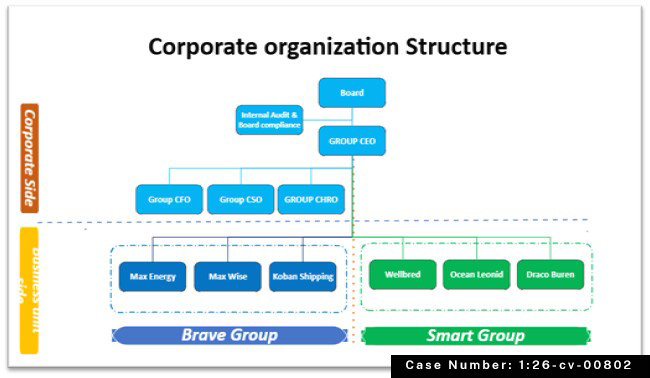
According to one complaint, approximately $12.9 million of the funds were connected to companies including Wellbred Capital Pte Ltd and its subsidiary Wellbred Trading DMCC.
Authorities allege these companies were acquired and controlled by Shamkhani and his associates to operate under a brand that appeared independent of Iranian ownership. Despite that public image, investigators claim the companies were secretly run for the benefit of the broader Shamkhani Network.
Court filings state that Shamkhani maintained internal documents outlining how these companies fit within the larger structure of the network used to distribute Iranian oil internationally.
Investigation and Enforcement Efforts
The investigation involves multiple U.S. agencies, including the Federal Bureau of Investigation, Homeland Security Investigations, and Internal Revenue Service Criminal Investigation.
Officials say these agencies are working together to track financial transactions and prevent sanctioned individuals or organizations from accessing the U.S. banking system.
Authorities say the forfeiture complaints are part of broader efforts to disrupt financial networks that allegedly fund terrorism, circumvent sanctions, and threaten international security.
The civil forfeiture cases are ongoing and will proceed through the federal court system as prosecutors attempt to permanently seize the funds.
Post Disclaimer
The views and content presented in this article, news report, or video are solely those of the respective author or creator and do not necessarily reflect the official policy or position of BW Times Digital Online E-Paper.










Leave a comment