














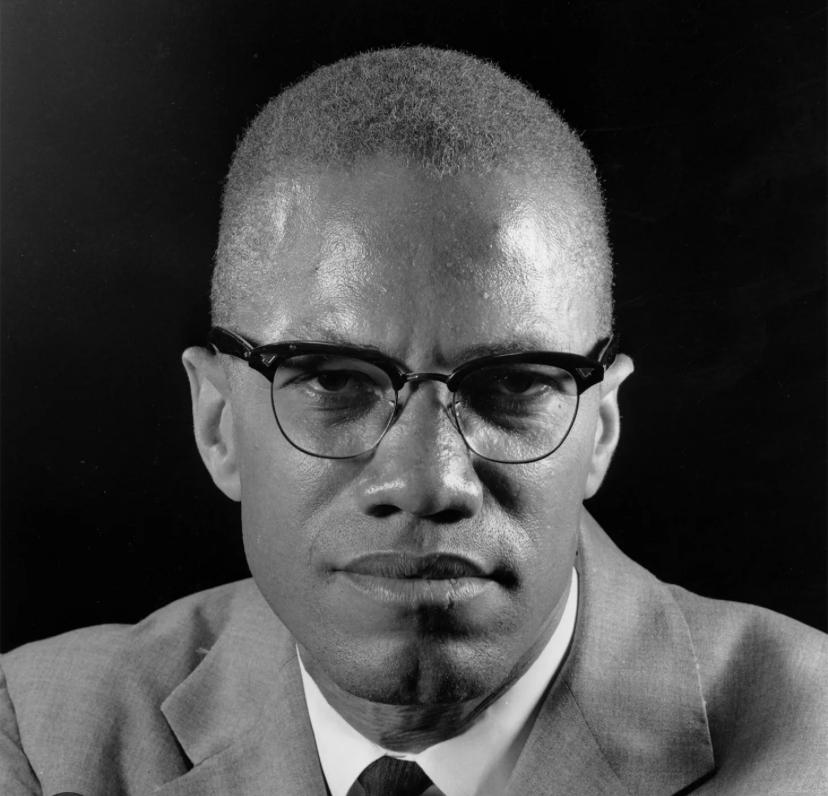
Malcolm X was one of the most powerful and controversial voices in the struggle for racial justice in the United States. His life was marked by hardship, transformation, faith, and a relentless demand for human dignity. From a troubled childhood to becoming an international symbol of resistance, his journey continues to influence conversations about civil rights and human rights around the world.
He was born Malcolm Little on May 19, 1925, in Omaha, Nebraska. His father was a preacher who supported Black empowerment and was outspoken against racial oppression. Because of his father’s activism, the family faced threats from white supremacist groups. When Malcolm was still young, his father died under suspicious circumstances, and the family struggled deeply. His mother later suffered a mental breakdown, and Malcolm was placed in foster care. These early experiences left a deep mark on him and shaped his views about racism and injustice in America.
As a teenager and young adult, Malcolm drifted into crime while living in Boston and New York. He was eventually arrested and sentenced to prison in 1946. It was behind bars that his life began to change dramatically. While serving his sentence, he educated himself by reading extensively and studying history, philosophy, and religion. During this time, he was introduced to the teachings of the Nation of Islam, a religious movement that combined elements of Islam with Black nationalist ideas. After his release from prison in 1952, he dropped his last name “Little,” calling it a “slave name,” and adopted “X” to represent the African identity that had been erased by slavery.
Malcolm X quickly became one of the most dynamic ministers and spokespersons for the Nation of Islam. He was known for his powerful speeches, sharp intellect, and fearless criticism of racism in American society. Unlike some other civil rights leaders who promoted nonviolent resistance, Malcolm often argued that Black Americans had the right to defend themselves “by any means necessary.” His message resonated strongly with many who felt that gradual change was not enough.
Throughout the 1950s and early 1960s, he helped expand the Nation of Islam’s influence across the country. His speeches attracted large crowds, and his presence in debates and interviews made him a prominent national figure. However, tensions eventually grew between Malcolm and the leadership of the Nation of Islam. He became disillusioned with internal disputes and controversial revelations about the organization’s leader. In 1964, he left the Nation of Islam and began to chart his own path.
That same year marked a profound turning point in his life. Malcolm traveled to Mecca to perform Hajj, the Islamic pilgrimage required of Muslims who are able to undertake it. During this journey, he encountered Muslims of all races and backgrounds worshipping together as equals. This experience deeply moved him. He embraced Sunni Islam and began to speak about unity across racial lines. While he remained committed to fighting oppression, his perspective broadened. He started to frame the struggle of African Americans as a human rights issue, not just a civil rights issue within the United States. He believed that the fight against racism should be taken to the international stage and discussed in global forums.
After returning from Mecca, he founded new organizations focused on both religious and political empowerment. His speeches reflected a more inclusive tone, emphasizing solidarity among oppressed people worldwide. Yet his outspokenness and changing alliances made him a target. He received frequent threats, and his public appearances were often tense.
On February 21, 1965, Malcolm X was assassinated while speaking at the Audubon Ballroom in New York City. As he prepared to address the crowd, gunmen rushed forward and shot him multiple times. He was only 39 years old. His death shocked the nation and marked one of the most tragic moments in the history of the civil rights era. Several men associated with the Nation of Islam were later convicted, although questions and controversies about the case have continued for decades.
Despite his violent death, Malcolm X’s influence did not fade. Many people who once viewed him as too radical began to reassess his message. His call for self-respect, education, and global awareness inspired later movements for racial justice. He remains a symbol of courage for those who feel marginalized and unheard.
His life story was brought to a wider audience through the 1992 film Malcolm X, directed by Spike Lee and starring Denzel Washington in the title role. The film traced his journey from troubled youth to influential leader, highlighting his spiritual transformation and political evolution. Denzel Washington’s performance was widely praised for capturing Malcolm’s intensity, charisma, and vulnerability. The movie introduced a new generation to his story and reinforced his place in American history.
Malcolm X’s legacy is complex but enduring. He challenged America to confront its deepest racial injustices. He demanded dignity for Black people at a time when discrimination was deeply entrenched in law and custom. His embrace of Islam and his pilgrimage to Mecca reshaped his worldview and strengthened his commitment to universal human rights. Even decades after his assassination, his speeches continue to be studied, quoted, and debated.
In remembering Malcolm X, many see not only a fierce critic of injustice but also a man who evolved over time. His willingness to rethink his beliefs and broaden his understanding of humanity stands as one of the most powerful aspects of his life. From prison cell to global stage, from anger to spiritual awakening, his journey remains one of the most remarkable transformations in modern history.
Post Disclaimer
The views and content presented in this article, news report, or video are solely those of the respective author or creator and do not necessarily reflect the official policy or position of BW Times Digital Online E-Paper.









Leave a comment