










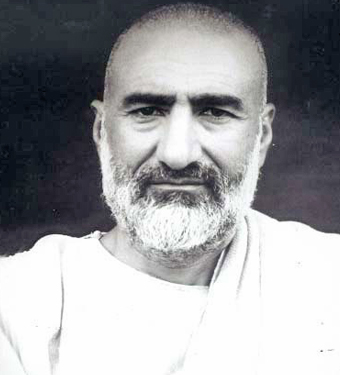
Khan Abdul Ghaffar Khan, famously known as Bacha Khan and often called the Frontier Gandhi, remains one of the most powerful symbols of nonviolent resistance in South Asian history. Born on February 6, 1890, in Utmanzai in the North-West Frontier region, he grew up during a time when British colonial authority dominated the subcontinent. His life was not only a political journey but also a social and spiritual mission dedicated to reforming his society.
Early Life and Education
Bacha Khan belonged to a respected Pashtun family. From a young age, he showed a strong interest in education and reform. He studied at Edward Mission School in Peshawar, an institution that played an important role in shaping his thinking. At a time when modern education was rare among Pashtuns, his schooling exposed him to new ideas about justice, equality, and service.
He once considered joining the British Indian Army, but after witnessing discrimination and injustice toward Indians, he rejected the idea. Instead of serving under colonial rule, he chose to dedicate his life to serving his people.
Social Reform Before Politics
Before fully entering politics, Bacha Khan focused on social transformation. He believed that the real weakness of his community was not just foreign rule but ignorance, illiteracy, poverty, and internal division. He opened schools in Pashtun areas and encouraged families to educate their children, including girls. His belief was simple yet powerful: no nation can rise without education.
He strongly criticized revenge culture and tribal violence, urging his people to replace anger with discipline and unity. For him, reforming society was as important as fighting colonialism.
Formation of Khudai Khidmatgar Movement
In 1929, he founded the Khudai Khidmatgar movement, meaning “Servants of God.” The members wore red uniforms and became known as the Red Shirts. This movement was built on strict nonviolence, discipline, and community service.
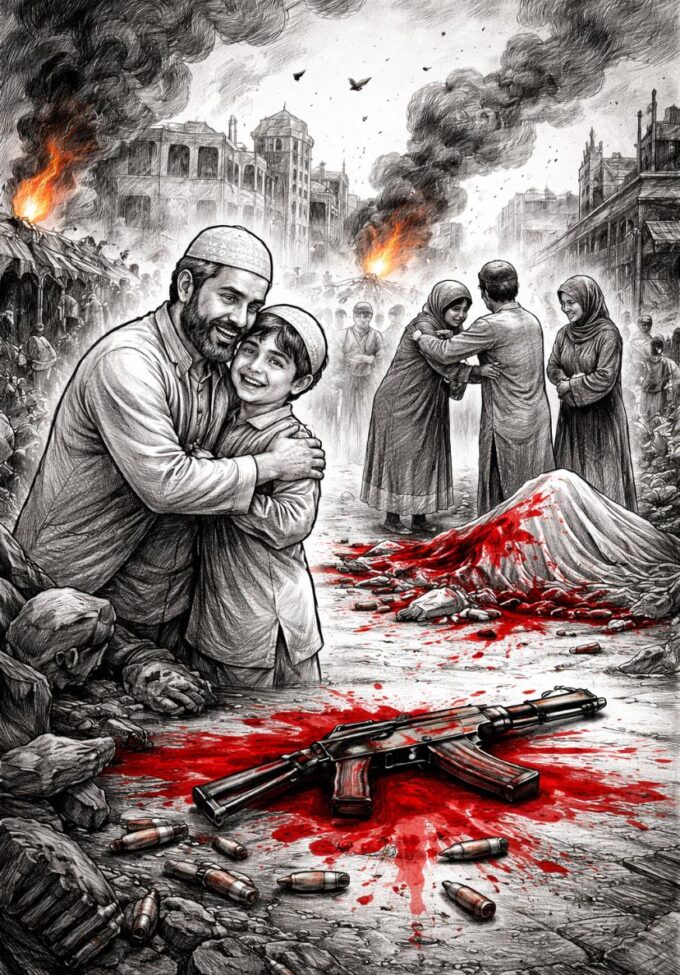
The volunteers took an oath to renounce violence and revenge. This was revolutionary in a region often associated with warrior traditions. Bacha Khan believed that true courage was not in carrying weapons but in controlling one’s anger and standing firm without retaliation.
One of his most powerful messages was:
“I am going to give you such a weapon that the police and the army will not be able to stand against it — patience and righteousness.”
Struggle Against British Rule
Bacha Khan became a close ally of Mahatma Gandhi and adopted the philosophy of nonviolent resistance. Together, they believed that moral strength was greater than military power.
In 1930, during protests in Peshawar, British forces opened fire on unarmed demonstrators. Despite facing bullets, the protesters did not respond with violence. This event showed the strength and discipline of his movement.
Throughout his life, Bacha Khan spent many years in prison under British rule. Jail became a repeated chapter in his struggle, but imprisonment never weakened his commitment.
Political Views and Opposition to Partition
As the independence movement advanced, Bacha Khan opposed the partition of India. He believed that Hindus and Muslims could live together in one united country. When partition became inevitable, he felt deeply disappointed and believed his people were not given a fair choice about their future.
After the creation of Pakistan in 1947, he continued to advocate for democracy, provincial autonomy, and recognition of Pashtun rights. His political stance led to further imprisonment under different governments. However, he maintained that his struggle was never against any country, but against injustice and oppression.
Religious and Humanitarian Beliefs
Bacha Khan believed Islam was a religion of peace, service, and humanity. He rejected the idea that faith justified violence. One of his most remembered statements reflects his spiritual vision:
“My religion is truth, love and service to God and humanity.”
He also strongly supported women’s rights, saying that a society’s level of civilization can be judged by how it treats its women.
Legacy and Impact
Khan Abdul Ghaffar Khan passed away in 1988 after nearly a century of struggle and sacrifice. His funeral was attended by thousands, reflecting the respect he earned across borders.
His life remains a powerful example of nonviolent resistance, political courage, and social reform. He proved that even in regions shaped by conflict, peace can become a weapon stronger than guns. His message of patience, unity, and service continues to inspire generations seeking justice without violence.
Post Disclaimer
The views and content presented in this article, news report, or video are solely those of the respective author or creator and do not necessarily reflect the official policy or position of BW Times Digital Online E-Paper.







MaShaAllah
BWtimes welldone