
















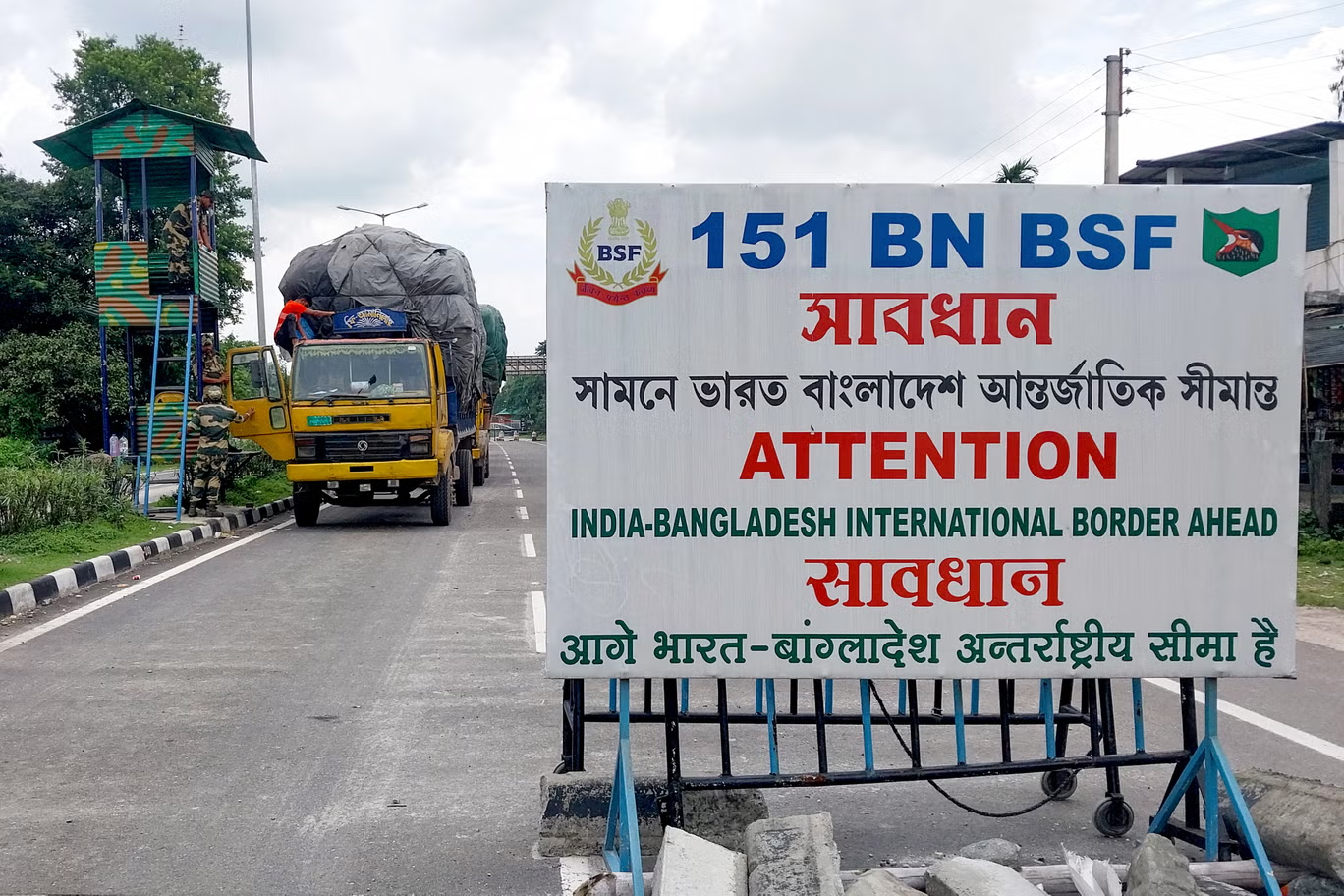
A reported internal security discussion in India has triggered serious debate after claims emerged that border authorities examined the possibility of using crocodiles and venomous snakes in river sections of the frontier with Bangladesh.
The proposal is linked to difficult terrain along the 4,096 kilometre border shared by both countries, where large areas pass through rivers, wetlands, marshland and flood prone ground.
Security planners have long faced technical challenges in completing fencing across the entire eastern frontier.
Although major stretches are already fenced, several hundred kilometres remain difficult to secure through conventional barriers.
According to reports, approximately one fifth of the border still contains open sections where fencing is considered impractical because seasonal flooding and unstable land can damage physical structures.
Particular concern centres on river linked stretches across West Bengal, Assam, Meghalaya, Tripura and Mizoram.
These regions are politically sensitive because migration, cross border movement and smuggling remain major security topics there.
According to internal discussion reports, field officers were asked to study whether natural river predators could serve as an added deterrent in water based crossing points.
The idea reportedly appeared in an internal communication circulated among units responsible for eastern border monitoring.
The concept is unusual and immediately raised practical as well as ethical concerns.
Security officers themselves reportedly identified major risks connected to such a plan.
The first concern is obvious danger to civilians.
Many communities live directly along these rivers and depend on them for fishing, farming, transport and daily movement.
Introducing additional dangerous reptiles could create direct risks for local residents rather than only affecting illegal crossings.
Another concern involves ecological consequences.
River systems along the border already contain fragile biodiversity.
Artificially relocating predators could disrupt habitats, affect local species balance and create long term environmental problems.
Experts also note that many of these rivers already naturally contain crocodiles or snakes in some sections, meaning controlled release may not produce predictable security outcomes.
From a practical security standpoint, enforcement specialists argue that animals cannot distinguish between smugglers, migrants, fishermen or villagers.
That makes such an idea difficult to manage under any formal border doctrine.
At the same time, the discussion reflects how seriously border agencies are examining non traditional methods in difficult terrain.
Modern border strategy in these regions increasingly includes drones, thermal surveillance, infrared systems and river patrol technology.
The proposal reportedly emerged alongside efforts to identify dark communication zones where electronic monitoring remains weak.
Political sensitivity around migration has increased sharply in recent years under the leadership of Narendra Modi.
Immigration from Bangladesh remains a major domestic political issue in several eastern Indian states.
Security policy is therefore often debated not only in military terms but also through domestic political pressure.
Human rights groups continue to express concern that aggressive border approaches can affect ordinary civilians and minority populations living near frontier zones.
Past controversies have already involved allegations regarding forced returns and harsh treatment of undocumented migrants.
If any reptile based deterrence were ever implemented, it would almost certainly trigger legal, environmental and international questions.
Border management between two densely populated neighbouring countries requires careful coordination because river systems do not follow simple military boundaries.
Water channels shift seasonally, making static control difficult.
For now, officials have not publicly confirmed any final operational approval for such a measure.
However, the fact that the proposal entered internal discussion shows how unconventional ideas are emerging where geography limits traditional fencing.
The larger reality remains that the eastern frontier is one of the most complex border systems in South Asia because land, water, villages and agriculture often exist side by side across short distances.
That complexity means every new security proposal quickly becomes politically sensitive.
Courtesy: The Independent
Post Disclaimer
The views and content presented in this article, news report, or video are solely those of the respective author or creator and do not necessarily reflect the official policy or position of BW Times Digital Online E-Paper.













Leave a comment