













The countdown to UEFA Euro 2028 is already building momentum as the tournament prepares to break new ground with a historic multi nation hosting format across the United Kingdom and Ireland. For the first time in the competition’s history, the championship will be staged across four countries — England, Scotland, Wales, and the Republic of Ireland — bringing together some of the most iconic football venues in Europe for a summer tournament expected to draw record crowds and global attention.
The tournament is scheduled to begin on June 9, 2028 and will run through to the final on July 9, 2028, delivering a full month of elite international football. A total of 51 matches will be played across 31 days, with fixtures spread strategically to reduce travel demands for teams and supporters alike. Organizers have introduced a structured matchday schedule featuring consistent kickoff windows designed to maximize fan engagement while ensuring logistical efficiency across multiple host cities.
At the centre of the tournament’s spotlight will be Wembley Stadium, which has been confirmed as the venue for both semi finals and the final, reinforcing its status as one of football’s most prestigious stages. The opening match, meanwhile, will take place at Principality Stadium, setting the tone for a tournament that blends tradition with modern infrastructure. Across the host nations, matches will be staged in nine stadiums located in eight cities, each selected for its capacity, facilities, and significance within the footballing landscape.
Among the standout venues included are Tottenham Hotspur Stadium, Etihad Stadium, St James’ Park, and Villa Park, alongside Hampden Park in Scotland and Dublin’s Aviva Stadium. A new addition to the list is Everton’s waterfront ground, Hill Dickinson Stadium, which is expected to showcase one of the tournament’s most modern matchday environments. Together, these venues reflect both the deep football heritage and evolving infrastructure across the host nations.
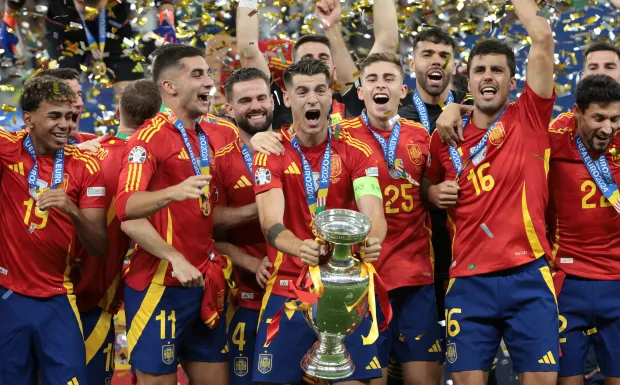
Defending champions Spain will enter the competition aiming to retain the title they secured in 2024 after defeating England in the final. However, in a notable twist, none of the host nations are guaranteed automatic qualification due to the multi federation hosting structure, meaning all teams, including the hosts, must compete through the qualification process set to begin following the draw in late 2026.
Euro 2028 also carries historical significance beyond its format. While England has previously hosted major tournaments including Euro 1996 and key matches during Euro 2020, this will mark the first time that Wales and the Republic of Ireland host a men’s European Championship tournament. For Scotland, it represents a continuation of its role on the European stage following its involvement in recent multi nation competitions.
As anticipation builds, Euro 2028 is shaping up to be more than just another football tournament. It represents a collaborative effort across borders, combining world class venues, passionate fan bases, and a shared football culture that spans the British Isles and Ireland. With its ambitious structure, iconic stadiums, and competitive field, the tournament is expected to deliver a landmark chapter in European football history.
Courtesy: talkSPORT
Post Disclaimer
The views and content presented in this article, news report, or video are solely those of the respective author or creator and do not necessarily reflect the official policy or position of BW Times Digital Online E-Paper.













Leave a comment