

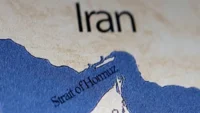
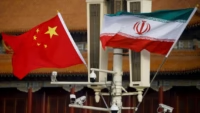

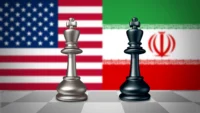







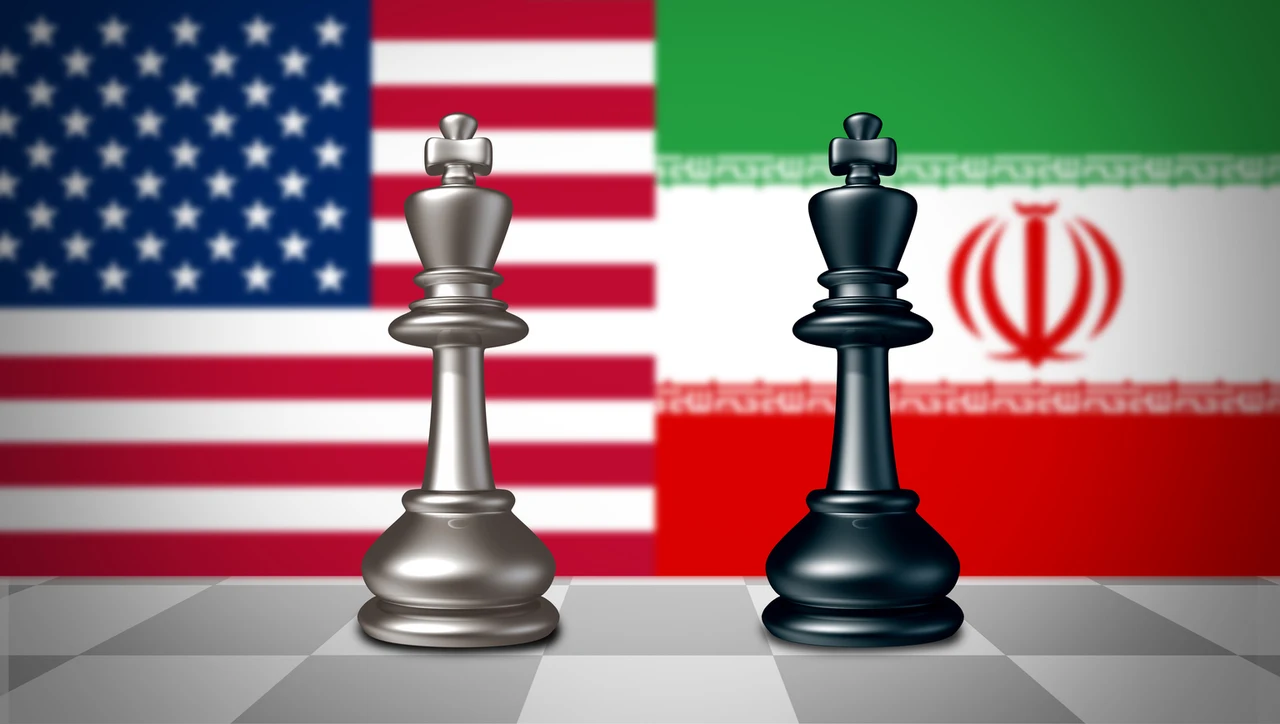
The two-week ceasefire between the United States and Iran is being presented as a diplomatic breakthrough. But beneath the surface, a more uncomfortable question is emerging: is this really about peace or is it about control, timing, and strategy?
For years, Washington’s role in the Middle East has followed a predictable pattern. During conflicts such as the Israel–Gaza conflict, the United States did not act as a neutral mediator. Instead, it stood firmly aligned with Israel, offering political backing and strategic support while calls for balanced intervention remained largely unanswered. That history makes the sudden shift toward mediation with Iran not only surprising but deeply suspicious.
Under Donald Trump, US foreign policy has often been defined by unpredictability but not without purpose. Every move carries calculation. Every pause has intent. In that context, this ceasefire begins to look less like a peace initiative and more like a strategic pause designed to serve American interests first.
Ceasefires in modern warfare are rarely just about stopping violence. They are about buying time. Time to reassess intelligence. Time to reposition military assets. Time to open diplomatic channels while maintaining pressure behind the scenes. When viewed through this lens, the current pause raises serious concerns about what is happening beyond the headlines.
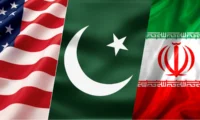
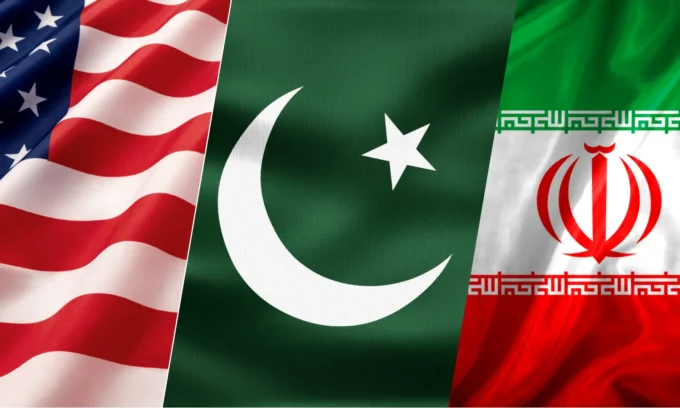
One of the most debated aspects of this situation is Pakistan’s role. Officially, Pakistan is being credited as a mediator a bridge between two hostile powers. But this narrative deserves closer examination. Is Pakistan truly shaping the outcome or is it simply facilitating a process largely designed in Washington?
Critics argue that the current government in Pakistan lacks the strategic independence required to lead such a complex negotiation. Instead it appears to be operating within a framework dictated by the United States giving diplomatic cover to a process that serves broader American objectives. This is not mediation in the traditional sense it is coordination under influence.
At the same time political pressures inside the United States cannot be ignored. Prolonged conflict with Iran carries significant risks not only militarily but economically and politically. For Donald Trump a controlled pause offers something valuable: an exit without the appearance of retreat. A ceasefire allows Washington to step back reassess its options and avoid deeper entanglement in another costly conflict.
This is where the narrative becomes more complex and more troubling. If the ceasefire is indeed part of a broader strategy then it is not simply a peace effort. It is a calculated move to manage conflict on favorable terms. Diplomacy in this case becomes a tool of strategy rather than a genuine attempt to resolve tensions.
That does not mean the ceasefire has no value. Any pause in hostilities reduces the immediate risk of escalation and creates space for dialogue. But ignoring the strategic dimension behind such decisions would be naive. Global politics does not operate on goodwill alone. Power, influence, and long-term objectives always shape outcomes.
The comparison with past conflicts only strengthens this argument. When Gaza burned, mediation was limited and selective. When Iran stands at the center of the crisis, diplomacy suddenly becomes urgent. This inconsistency is not accidental. It reflects shifting priorities not shifting principles.
None of this proves that the ceasefire is a trap in the literal sense. But it does suggest that it may be part of a broader strategic design. A pause that allows for recalculation. A diplomatic move that serves multiple purposes at once. A moment of calm that may not last.
The real test will come after these two weeks. If meaningful negotiations follow the ceasefire, it may prove to be a genuine step toward stability. But if tensions return stronger than before, it will reinforce the belief that this was never about peace to begin with.
In geopolitics, appearances can be deceiving. What looks like diplomacy on the surface can often be a strategy underneath. The US-Iran ceasefire is a reminder that in international relations, every move matters, every pause has purpose, and every agreement carries more than one meaning.
The question is no longer whether this ceasefire is important. The question is what it is really meant to achieve.
Post Disclaimer
The views and content presented in this article, news report, or video are solely those of the respective author or creator and do not necessarily reflect the official policy or position of BW Times Digital Online E-Paper.









Leave a comment