















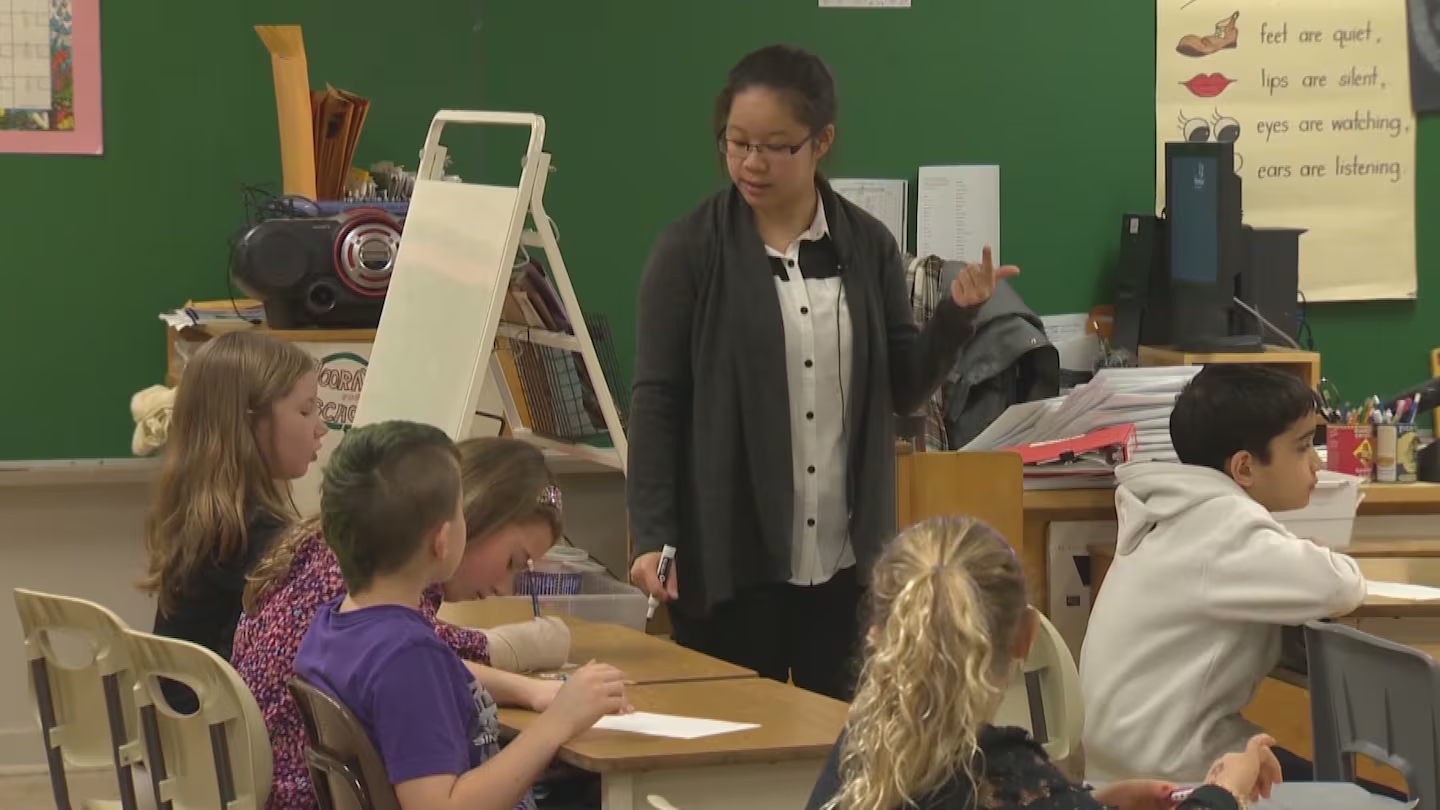
Tensions are rising between the Alberta Teachers’ Association and Premier Danielle Smith’s government as educators argue that classroom pressures are intensifying without sufficient provincial support.
ATA President Jason Schilling says teachers have been sounding the alarm on classroom complexity since 2020, long before the government began collecting updated class size and composition data. According to the association, the concerns have remained consistent for years: growing social and emotional challenges among students, behavioural and cognitive needs, increasing numbers of English language learners, and rising socioeconomic pressures affecting families.
While the provincial government has introduced measures such as classroom complexity teams and has promised increased education spending in the upcoming budget, teachers argue the pace of change does not match the scale of enrollment growth.
Recent data from Alberta Education shows significant spikes in both international and interprovincial migration of school-aged children. Over the past several academic years, Alberta has seen tens of thousands of new students enter the system. Many of those students require English as an additional language support and specialized learning resources.
Schilling contends that funding has not kept up with both enrollment growth and inflationary pressures. He argues that while thousands of new students have entered classrooms, there has not been a proportional hiring of teachers, educational assistants, speech specialists, and support staff. The result, he says, is overcrowded classrooms where educators are stretched thin and vulnerable students risk falling through systemic gaps.
Premier Smith, in a recent address to Albertans, pointed to immigration levels as a contributing factor to classroom crowding and complexity. She suggested that rapid population growth has strained public systems, including education. However, the ATA has pushed back strongly against what it views as scapegoating certain groups of students.
Schilling emphasized that public schools are obligated to educate every child who walks through their doors, regardless of immigration status. He maintains that it is the government’s responsibility to ensure resources match demographic realities.
Education Minister Demetrios Nicolaides has acknowledged differences between the province and the ATA but insists both sides share the same ultimate objective: ensuring students receive proper support and teachers feel safe and equipped to do their jobs. The government has pledged further steps to address class size and classroom complexity in the months ahead.
Still, skepticism remains among teachers. The memory of a three-week strike last October continues to shape the tone of the debate. Educators say they were ordered back to classrooms without meaningful improvements to learning conditions. For many, that experience has reinforced doubts about whether government announcements will translate into measurable change.
Teachers’ conventions and professional development sessions across Alberta have increasingly focused on strategies to support English language learners and students facing social and emotional challenges. Educators say they are adapting as best they can, but professional commitment alone cannot replace structural investment.
As Alberta prepares for upcoming provincial discussions and potential referendum questions later this year, education funding and classroom conditions are emerging as central issues. The ATA argues that the next provincial budget will be a critical test of whether the government intends to move beyond rhetoric and address the realities teachers face daily.
At the heart of the dispute is a fundamental question: will policy decisions reflect the lived experience inside Alberta’s classrooms? For now, teachers say they are waiting not for speeches—but for sustained, measurable action.
Post Disclaimer
The views and content presented in this article, news report, or video are solely those of the respective author or creator and do not necessarily reflect the official policy or position of BW Times Digital Online E-Paper.










Leave a comment