











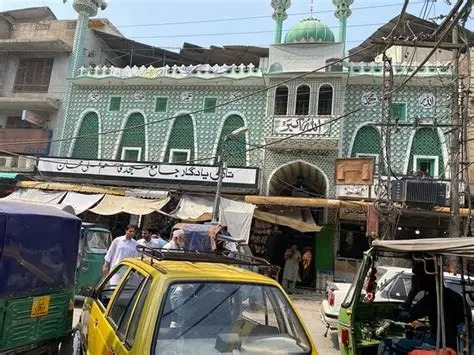
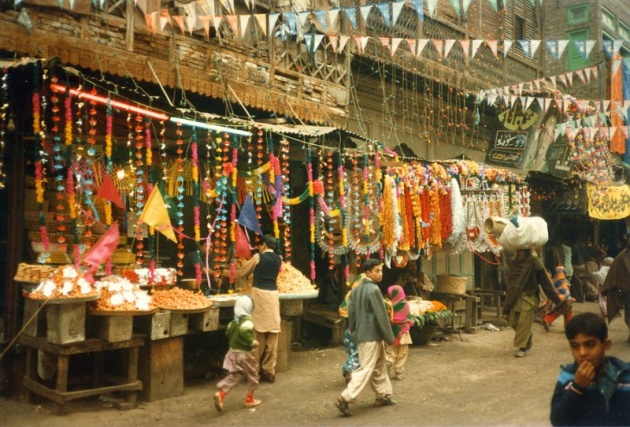
An incredible legacy has spread well beyond the bazaars of Khyber Pakhtunkhwa to the centre of Peshawar’s ancient Qissa Khawani Bazaar. People used to tell stories over steaming cups of qehwa, and the live oral tradition attracted tourists. This busy market is called “the storytelling market,”, which is a fitting term because it was where caravans and trade took place and some of South Asia’s most famous cinema stars got their start.
Hinko speeches were used to fill the alleys of Qissa Khawani, Mohalla Khudadad. Hinko’s speech is a cultural voice that combines poetry with daily speech. It was the first language that boys learnt, and it would go on to shape generations of films across the subcontinent. The bazaar was more than simply a place; it was a place where people from all walks of life came together to talk, sing, and dream.
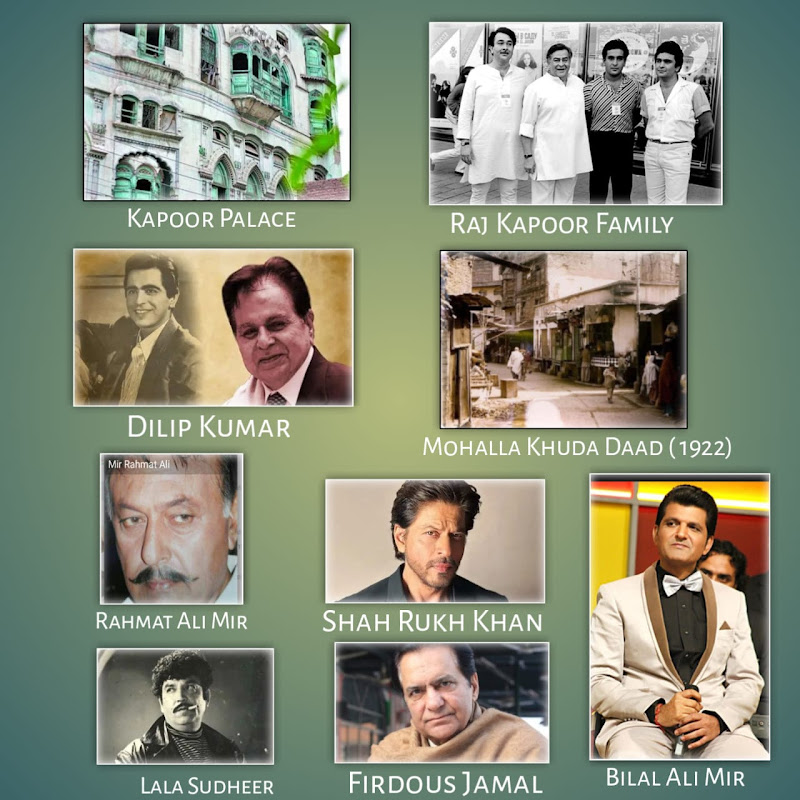
On December 11, 1922, in Mohalla Khudadad in Qissa Khawani Bazaar, Dilip Kumar was born Yousaf Khan. People would subsequently call this time the “golden age” of Indian cinema. He was destitute and spent his childhood in the market’s alleys, where he listened to stories in Hinko and Pashto at night.
He changed his name to “Dilip Kumar” and went on to star in more than 60 films over the next 60 years, including the classics Devdas and Ganga Jamna. He was known as the “King of Tragedy” because he imparted depth and feeling to every part he played. He became famous all around the world, but his heart remained still in Peshawar. He previously claimed that he wanted people in his ancestral home to be able to use it for beneficial purposes.
Prithviraj Kapoor, the leader of the Kapoor cinema dynasty, lived in a haveli that was a short walk from where Dilip Kumar was born. The family’s history extends back to the same streets in Qissa Khawani where they lived before relocating to Bombay (now Mumbai) in the early 1900s. Prithviraj’s relocation made way for one of the most prominent families in Indian film, which has had many famous performers over the years, such as Raj Kapoor, Rishi Kapoor, and Ranbir Kapoor.
People in Peshawar are proud of the Kapoor legacy. It will always remind me of how a marketplace of storytellers helped establish a worldwide film tradition.
Shah Rukh Khan was born and reared in India; however, his father’s family came from Qissa Khawani Bazaar. Before going to India, his father, Taj Muhammad Khan (sometimes written Taj Mohammad Mir), lived and worked in the market. As a child, Shah Rukh went to Peshawar to see his relatives. The King of Hearts’ shared history connects him to the diverse cultures found in the ancient neighbourhoods of Peshawar.
Firdous Jamal is another star from Peshawar, which is different from the Bollywood scene that covers the whole subcontinent. In 1954, Jamal was born in Peshawar. He went on to become a leader in Pakistani theatre, TV, and movies. His first work was in Hindko language theatre, which illustrated how different languages and cultures existed in the area. This led to a long career with over 300 TV plays and countless performances on stage.
He is one of the most respected artists in Pakistan and has won the Pride of Performance Award. His work goes beyond generations and languages, from Waris to Landa Bazar.
Beyond these notable personalities, the legends of Qissa Khawani connect additional individuals to art. There are also local stories of performers whose names aren’t as well-known but who added to the cultural mix. These include performers, singers, and storytellers, whose shapes are difficult to define and originate from oral traditions and dispersed records. Community memory and oral traditions mention people like Ishtiaq Ahmed, Rahmat Ali Mir, Bilal Ali Mir, and Lala Sudhir, although there aren’t many full biographical records.
Qissa Khawani’s heritage is more than just a list of great names; it is a place where language, performance, and cultural interchange used to happen.
Even today, stories continue to unfold in Qissa Khawani Bazaar. People used to trade stories and spices there, and they spoke Hinko, Pashto, and Persian all the time. Many of the people who would eventually become famous in South Asian entertainment lived in its streets.
For people who don’t live on these streets, learning about this history is more than just a chance to learn about the past. It’s also a way to understand that local stories told by tea-drinking storytellers in the language of their neighbourhoods frequently form the basis of world culture. People who heard, lived, and modified these stories over the decades have passed them down.
Post Disclaimer
The views and content presented in this article, news report, or video are solely those of the respective author or creator and do not necessarily reflect the official policy or position of BW Times Digital Online E-Paper.





Leave a comment