














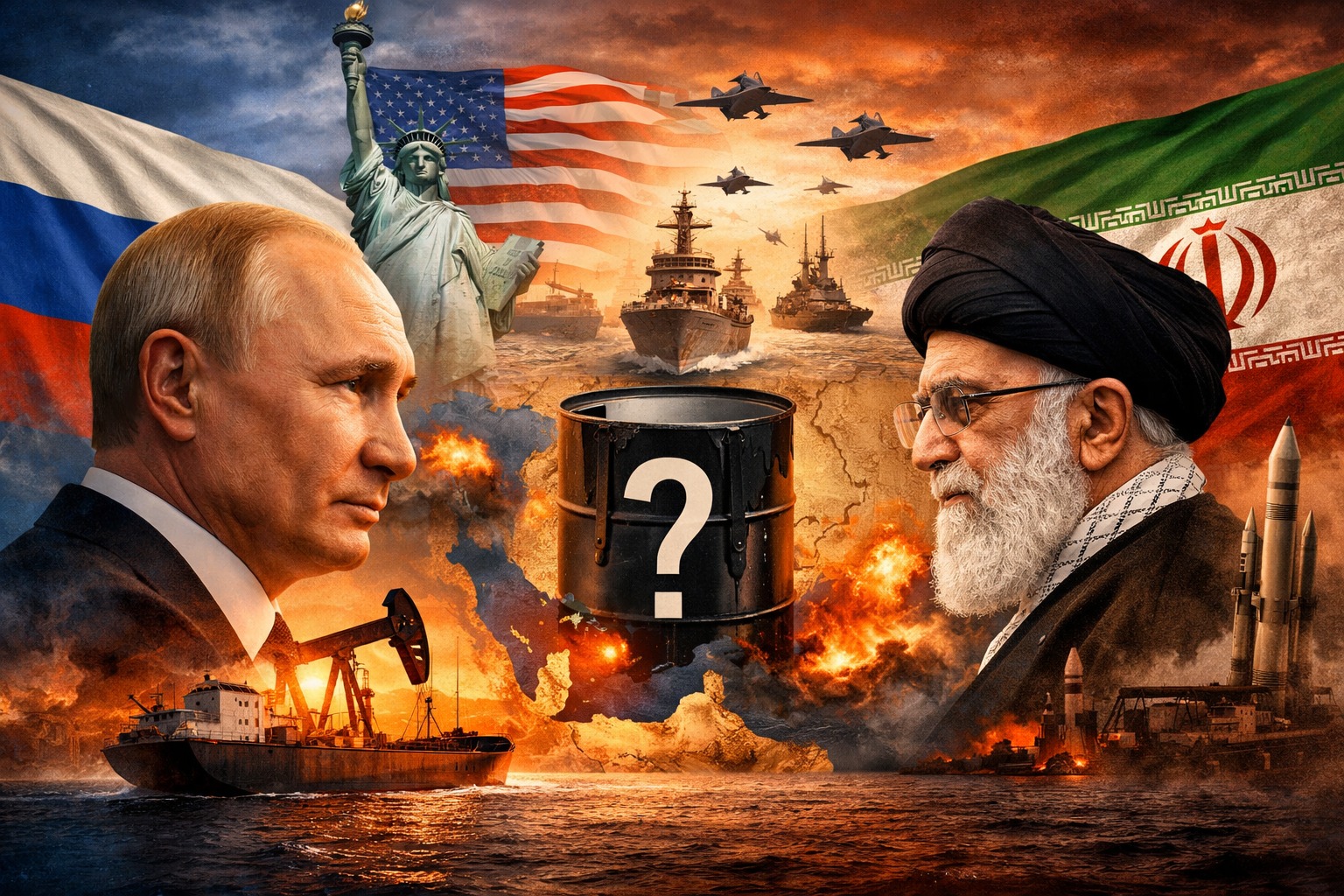
In the ever-changing landscape of global politics, every move by powerful nations carries multiple layers of meaning. The recent decision by the United States to temporarily ease certain restrictions on Russian oil has raised new questions about strategy, alliances, and the balance of power. Officially, the measure is presented as a short-term step to stabilize energy markets. Yet, it also puts Russia in a complicated position. With tensions rising in the Middle East and Iran playing a central role in regional conflicts, Moscow now faces a strategic dilemma: whether to stand firmly alongside Iran or to navigate a path that avoids falling into what some see as a diplomatic trap set by Washington.
Sanctions on Russia were first introduced after its military actions in Ukraine, with the goal of reducing Moscow’s financial capacity to sustain war efforts. These restrictions targeted banks, major corporations, energy exports, and key individuals connected to the Russian leadership. By limiting Russia’s access to global markets and cutting off critical revenue streams, the United States and its allies aimed to exert maximum pressure to influence Russian behavior. Among all sectors, energy exports were a primary focus, as oil and gas make up a significant portion of Russia’s income.
However, global energy markets are deeply interconnected, and any sudden disruption in supply can trigger economic instability worldwide. Russia remains one of the largest producers of oil and natural gas, and removing its exports from the market could push prices sharply higher. At the same time, tensions involving Iran, especially around vital shipping routes like the Strait of Hormuz, have created additional uncertainty in global energy flows. Rising oil prices directly impact inflation, transportation costs, and the overall stability of economies across the world, including those of the United States and its allies.
In response, the United States allowed a temporary easing of restrictions on certain Russian oil transactions until April 11. This step is intended to ensure that energy supplies remain stable and to prevent sudden price spikes that could disrupt economies globally. It is presented as a limited, short-term adjustment, not a reversal of sanctions, giving time for companies and countries to manage contracts and logistical arrangements.
Critics see this as an example of selective enforcement, arguing that sanctions are softened when economic interests collide with political goals. Supporters, however, argue that stabilizing the global energy market is essential to avoid broader crises that would affect millions of people.
For Russia, this development presents a delicate challenge. While the country maintains a strategic partnership with Iran, it must also weigh the consequences of actions that could provoke further Western pressure. Acting too aggressively could deepen isolation, but a cautious approach that keeps oil flowing could provide both economic benefits and leverage in international negotiations.
This situation highlights the complexity of modern geopolitics. Sanctions are never applied in a vacuum; they intersect with economic realities, energy needs, and global stability. The temporary easing of restrictions on Russian oil shows how even the most powerful nations must adapt policies when markets and alliances shift. Russia’s next steps, particularly in relation to Iran, may determine how the next phase of global strategic games unfolds.
Post Disclaimer
The views and content presented in this article, news report, or video are solely those of the respective author or creator and do not necessarily reflect the official policy or position of BW Times Digital Online E-Paper.









Leave a comment