


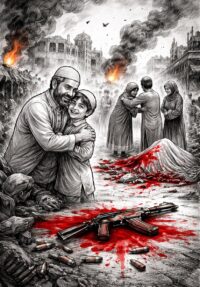
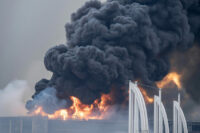





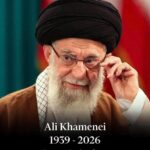
The killing of Iran’s Supreme Leader, Ali Khamenei, has triggered a powerful and emotional reaction across Pakistan, where grief, anger and political tension have spilled into the streets. Within hours of the announcement, religious groups, political activists and ordinary citizens began gathering in major cities to condemn what many described as an act of aggression against a Muslim nation.
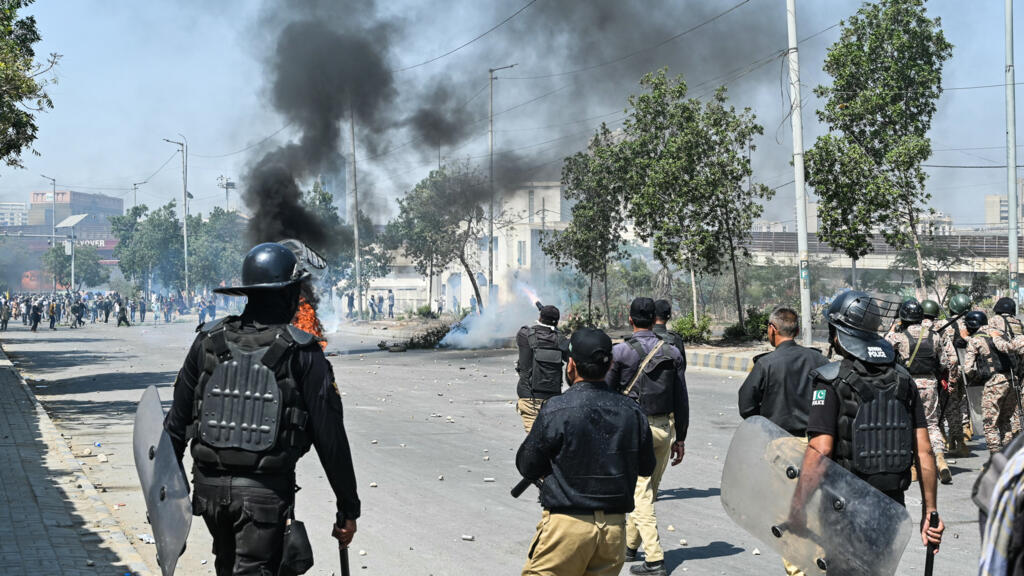
The most intense unrest unfolded in Karachi, where large crowds marched toward the diplomatic zone housing the United States Consulate. Protesters carried banners, portraits and flags while chanting slogans against the United States and Israel. What began as a demonstration of mourning gradually escalated when some participants attempted to push through security barricades surrounding the consulate.
Police and paramilitary forces responded with tear gas and baton charges. As the confrontation intensified, gunfire was reported in the chaos. By late evening, hospital officials confirmed that at least nine people had been killed in Karachi, most from gunshot wounds sustained during clashes. Dozens more were treated for injuries ranging from tear-gas exposure to serious bullet wounds. Several police officers were also reported injured.
Authorities sealed off major roads around the diplomatic area and imposed emergency security measures to prevent further escalation. Public transport was suspended in sensitive zones, and mobile services were briefly disrupted in parts of the city to control crowd coordination.
Protests were not limited to Karachi. In Lahore, large demonstrations gathered outside diplomatic facilities, though security forces managed to prevent direct attacks on buildings. In Islamabad, heavy deployment of police and Rangers around the diplomatic enclave deterred protesters from approaching foreign missions. Officials invoked temporary restrictions on public assembly to maintain order.
In Gilgit-Baltistan, where there is a significant Shia population, entire towns observed shutter-down strikes. Roads were blocked with burning tires, and rallies filled central squares. In Skardu, protesters reportedly damaged a government-linked facility during a particularly heated gathering. Businesses remained closed as a mark of mourning, and traffic along key highways was disrupted for several hours.
Religious scholars across various sects expressed sorrow and called for unity, while also urging supporters to avoid violence. Political leaders in Islamabad issued statements condemning the killing and describing it as a destabilizing act for the region, but they simultaneously appealed for calm and respect for law and order.
Security agencies nationwide remain on high alert. Intelligence officials fear that further escalation in the Middle East could ignite additional protests, particularly after Friday prayers when turnout is typically higher. Diplomatic missions in major cities have reinforced perimeter security and reduced non-essential operations.
Beyond Pakistan, demonstrations have erupted in several countries with large Shia communities. Marches have been reported in parts of the Middle East and South Asia, reflecting a broader wave of anger and uncertainty across the Muslim world.
As of now, the confirmed death toll inside Pakistan stands at nine fatalities in Karachi, with dozens injured nationwide. Officials have announced investigations into the circumstances that led to the use of live ammunition. Tensions remain high, and authorities are closely monitoring the situation to prevent further bloodshed.
The coming days will determine whether the protests subside into organized political expression or expand into prolonged unrest, as Pakistan navigates a moment of regional crisis that has deeply stirred public sentiment.
Post Disclaimer
The views and content presented in this article, news report, or video are solely those of the respective author or creator and do not necessarily reflect the official policy or position of BW Times Digital Online E-Paper.


Leave a comment