















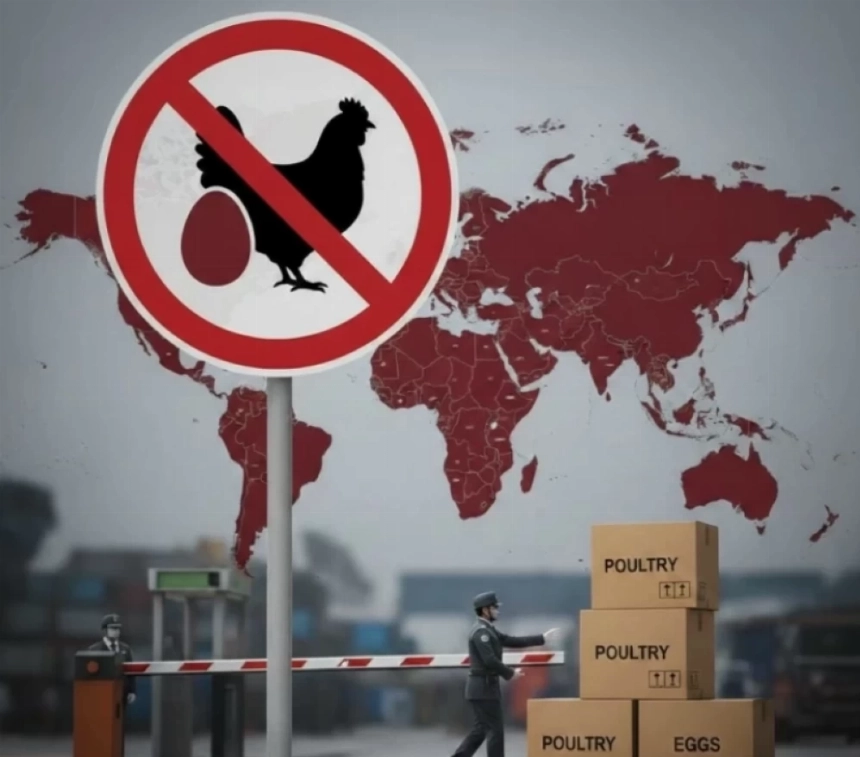
The Saudi Food and Drug Authority (SFDA) has announced a sweeping ban on poultry and egg imports from 40 countries, with additional partial restrictions placed on selected provinces and cities in 16 other nations.
The decision, announced on February 24, 2026, is part of precautionary measures aimed at safeguarding public health and reinforcing food safety standards in Saudi Arabia’s domestic market.
According to the SFDA, the list of affected countries is subject to periodic review based on global epidemiological developments and updated risk assessments. Some countries have faced restrictions since 2004, while others have been added over time in response to international reports of animal disease outbreaks, particularly highly pathogenic avian influenza.
Countries Under Total Ban
The total ban applies to the following 40 countries:
Afghanistan, Azerbaijan, Germany, Indonesia, Iran, Bosnia and Herzegovina, Bulgaria, Bangladesh, Taiwan, Djibouti, South Africa, China, Iraq, Ghana, Palestine, Vietnam, Cambodia, Kazakhstan, Cameroon, South Korea, North Korea, Laos, Libya, Myanmar, the United Kingdom, Egypt, Mexico, Mongolia, Nepal, Niger, Nigeria, India, Hong Kong, Japan, Burkina Faso, Sudan, Serbia, Slovenia, Ivory Coast, and Montenegro.
Partial Ban on Select Regions
A partial ban has been imposed on certain provinces and cities in 16 countries, including Australia, the United States, Italy, Belgium, Bhutan, Poland, Togo, Denmark, Romania, Zimbabwe, France, the Philippines, Canada, Malaysia, Austria, and the Democratic Republic of Congo.
Exemptions for Heat-Treated Products
The SFDA clarified that poultry meat and related products subjected to sufficient heat treatment or processing to eliminate the Newcastle disease virus may be exempt from the temporary ban.
However, such products must meet strict health regulations and standards. They must also be accompanied by an official health certificate issued by the competent authorities in the exporting country, confirming that the processing method applied effectively eliminates the virus. Additionally, the products must originate from an approved facility.
The authority emphasized that these measures reflect Saudi Arabia’s continued vigilance in monitoring global disease outbreaks and maintaining high food safety standards.
Post Disclaimer
The views and content presented in this article, news report, or video are solely those of the respective author or creator and do not necessarily reflect the official policy or position of BW Times Digital Online E-Paper.









Leave a comment