















Across the world, rising fuel prices are placing enormous pressure on ordinary citizens. Transportation costs, food prices, and electricity bills are all being affected as gasoline and diesel become more expensive. In many countries, fuel prices at gas stations have increased by nearly 20 percent in a short period of time, triggering frustration and anger among consumers.
The recent spike in prices began after geopolitical tensions in the Middle East created fears of disruptions to global oil supply. Because a large portion of the world’s oil passes through sensitive shipping routes, even the possibility of conflict can push prices higher in global markets. As traders anticipated potential shortages, crude oil prices quickly climbed toward the $100-per-barrel range.
Governments and energy companies reacted quickly to this increase. In many countries, the price of fuel at gas stations was raised almost immediately. However, the rapid increase sparked an important question: were these price hikes justified, or were they simply an opportunity for governments and large oil companies to increase profits?
Sudden Price Increases in Developing Countries
In several developing countries, fuel prices increased dramatically within days of the global oil market surge. In one example, the government raised petrol prices by nearly 30 percent in a single decision. For many citizens already struggling with inflation, this increase came as a severe shock.
Transportation workers, small businesses, and farmers were among the hardest hit. Public transport fares increased almost overnight, and the cost of delivering food and goods rose sharply. As a result, prices of basic necessities also began climbing.
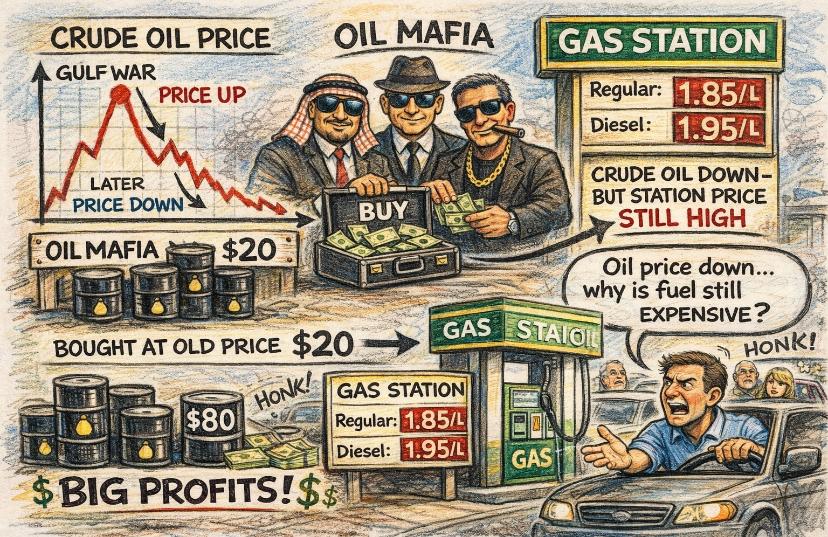
Critics quickly questioned the timing of the decision. Fuel sold at gas stations is usually purchased weeks earlier from international markets. This means the fuel already stored in local depots was likely bought at the older, cheaper price.
From a technical standpoint, if fuel was purchased earlier at a lower price, some economists argue that it should continue to be sold at that price until new shipments are purchased at higher costs. Only after new fuel is bought at the increased price would it make economic sense to raise prices at the pump.
Yet in many places, the price increase happened immediately, raising suspicions about whether the policy was based on actual cost increases or simply expectations of future prices.
Oil Prices Fall, But Pump Prices Stay High
Adding to the controversy, global oil prices began to decline soon after the initial surge. Political leaders signaled that tensions might ease and that the conflict could end sooner than expected. This caused crude oil prices to drop significantly, falling back toward the $80 per-barrel level.
Despite this drop, fuel prices at gas stations remained largely unchanged in many countries.
For consumers, this created a frustrating situation. Prices at the pump rose rapidly when oil became more expensive, but they did not fall with the same speed when oil prices declined.
Economists often describe this phenomenon as an imbalance in the pricing system. Fuel prices tend to rise quickly when global markets increase, but they decrease much more slowly when markets fall. The result is that consumers end up paying more for longer periods of time.
The “Rockets and Feathers” Effect
Energy economists have long observed what they call the “rockets and feathers” effect. When crude oil prices rise, gasoline prices shoot upward like rockets. But when crude oil prices fall, gasoline prices drift downward slowly like feathers.
Several explanations have been offered for this pattern.
First, fuel supply chains involve multiple steps including transportation, refining, and distribution. These steps create delays between changes in crude oil prices and the prices consumers see at gas stations.
Second, many governments impose taxes and levies on fuel. In some countries, these taxes make up a large percentage of the total price. Even if the cost of crude oil falls, these fixed taxes can keep the overall price relatively high.
Third, fuel retailers and oil companies may adjust prices strategically to protect profit margins during periods of market uncertainty.
The Role of Big Oil Companies
The global oil industry is dominated by a relatively small group of powerful corporations and state-owned producers. These companies control large portions of exploration, production, refining, and distribution.
During periods of energy market volatility, these companies often generate enormous profits. When oil prices rise, their revenues increase dramatically because the value of the product they sell becomes more expensive.
Critics argue that these companies sometimes benefit from geopolitical crises. Wars, political tensions, and supply disruptions can push prices higher, allowing oil producers to earn billions in additional revenue.
At the same time, ordinary consumers are forced to pay higher prices for gasoline, transportation, and goods.
This imbalance has fueled accusations that the energy industry prioritizes profit over public welfare.
Corruption Concerns in the Fuel Sector
In many developing countries, the fuel sector has historically been vulnerable to corruption.
Fuel pricing systems can be complicated and difficult for the public to understand. Governments often use complex formulas that include import costs, transportation charges, refining margins, distribution fees, and taxes.
Because these formulas are not always transparent, it becomes difficult for citizens to verify whether the final price is fair.
In some cases, politically connected businesses may benefit from government decisions about fuel pricing or import contracts. Critics argue that these relationships can lead to inflated costs or unnecessary price increases that ultimately hurt consumers.
When fuel prices rise suddenly without clear explanation, public trust in government institutions can decline rapidly.
Impact on Everyday Life
For ordinary people, rising fuel prices affect nearly every aspect of daily life.
Transportation becomes more expensive, increasing the cost of commuting to work or school. Farmers must pay more for diesel used in tractors and irrigation systems. Truck drivers face higher costs for delivering goods across long distances.
As a result, the price of food and basic commodities often increases soon after fuel prices rise.
In countries where many families already struggle with inflation, these increases can be devastating. A single fuel price hike can push millions of households deeper into financial hardship.
Public frustration often leads to protests, strikes, and political pressure on governments to reverse the increases.
Differences Between Developed and Developing Countries
Although fuel price increases affect the entire world, the impact is often much more severe in developing countries.
Wealthier nations usually have stronger social safety nets, higher incomes, and more diversified energy systems. These factors can help cushion the impact of rising fuel prices.
Developing countries, however, often rely heavily on imported oil and have limited financial resources to subsidize fuel costs. When global prices increase, governments may be forced to pass those costs directly to consumers.
At the same time, weaker regulatory systems can make it easier for corruption or price manipulation to occur.
This combination of economic vulnerability and limited oversight creates an environment where citizens may feel that they are being exploited by both governments and powerful corporate interests.
The Need for Transparency and Reform
Experts argue that greater transparency is essential for restoring public trust in fuel pricing systems.
Governments can help by clearly explaining how fuel prices are calculated and publishing detailed breakdowns of the costs involved. Independent oversight and stronger regulations can also help prevent price manipulation.
In the long term, many countries are also exploring ways to reduce dependence on oil altogether. Investments in renewable energy, electric transportation, and energy efficiency could help protect economies from the volatility of global oil markets.
However, the transition away from fossil fuels will take time.
Until then, the debate over fuel prices, corporate profits, and corruption is likely to continue.
Conclusion
The recent global fuel price surge has highlighted the complex relationship between geopolitics, government policy, and corporate power. While international conflicts and supply disruptions can push oil prices higher, the way those costs are passed on to consumers often raises serious questions.
When fuel prices rise quickly but fall slowly, many citizens begin to suspect that the system is unfair.
For millions of people around the world, the issue is not just about energy markets or international politics. It is about the cost of living, economic justice, and the belief that governments and corporations should act in the public interest rather than prioritize profit.
As global oil markets continue to fluctuate, the demand for transparency, accountability, and fair pricing will only grow stronger.
Post Disclaimer
The views and content presented in this article, news report, or video are solely those of the respective author or creator and do not necessarily reflect the official policy or position of BW Times Digital Online E-Paper.










Leave a comment