








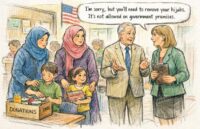

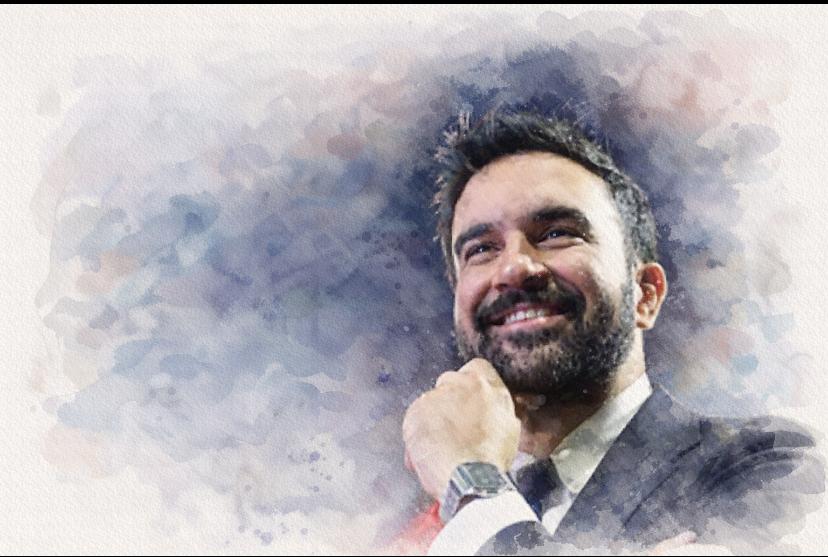
In March 2026, the political and social landscape of the United States witnessed an intense and emotional debate centered around Zohran Mamdani, the first Muslim mayor of New York City. As the holy month of Ramadan began, Mamdani chose not only to observe his faith privately but to bring its values of reflection, charity, and community into the public sphere. What followed was a wave of support from diverse communities, but also a strong and at times deeply controversial backlash from several senators, lawmakers, and political figures who questioned his actions, his identity, and in some cases, his place in American public life.
Mamdani’s Ramadan activities were both symbolic and practical. He hosted large iftar gatherings at City Hall, opened the doors of government spaces to ordinary citizens, and emphasized unity among different religious and ethnic communities. These gatherings were not exclusive religious ceremonies but inclusive civic events where Muslims, Christians, Jews, and people of other backgrounds sat together to share a meal. For many, this represented the true spirit of New York, a city built on immigration, diversity, and coexistence.
However, the visibility of a Muslim mayor practicing his faith publicly triggered sharp reactions. Among the most controversial remarks came from Tommy Tuberville, who posted a statement implying that the “enemy is inside the gates,” while referring to Mamdani’s Ramadan event alongside imagery connected to the September 11 attacks. The statement was widely condemned as inflammatory and Islamophobic, drawing criticism from across the political spectrum. Many observers noted that such language not only targeted Mamdani personally but also reinforced harmful stereotypes about Muslims in general.
Mamdani responded with composure rather than confrontation. In his public remarks, he did not engage in personal attacks but instead redirected the conversation toward broader societal issues. He questioned why a peaceful iftar gathering was provoking such intense anger while critical issues like child poverty, homelessness, and hunger often failed to generate the same level of outrage. His response was widely seen as an attempt to elevate the debate and focus on governance rather than identity-based division.
Another voice that added to the controversy was Brandon Gill, who criticized a widely circulated image of Mamdani sitting on the floor during an iftar meal. The criticism framed the scene as inappropriate for a public official, despite the fact that sitting on the floor is a common cultural practice during Ramadan in many parts of the world. Supporters of Mamdani viewed this reaction as a reflection of cultural misunderstanding and an unwillingness to accept traditions outside the Western norm.
The backlash intensified with remarks from Andy Ogles, who made highly controversial statements questioning Mamdani’s belonging in the United States and even suggesting actions related to his citizenship. These comments sparked alarm among civil rights advocates, who warned that such rhetoric crosses the line from political disagreement into exclusion and discrimination based on religion.
Similarly, Randy Fine contributed to the narrative by suggesting that Mamdani’s leadership could lead to an “Islamization” of New York, a claim that was strongly rejected by many analysts and community leaders. Critics of these statements argued that they were rooted in fear rather than facts and that they ignored the democratic framework within which Mamdani operates.
Even within more moderate political circles, tension was evident. Kirsten Gillibrand faced criticism after making remarks that were interpreted as linking Mamdani’s views to extremism. She later clarified her position and acknowledged that her comments had gone too far. This episode highlighted how sensitive and complex the conversation around religion and politics has become, even among experienced policymakers.
Throughout this period, Mamdani remained consistent in his approach. He repeatedly emphasized that his faith is a personal matter that informs his values but does not dictate exclusionary governance. He described New York as a city where people of all religions should feel equally represented and respected. His Ramadan events, he argued, were not about promoting one faith over another but about recognizing the diversity that defines the city.
Beyond official events, Mamdani’s Ramadan schedule included visits to local neighborhoods, participation in small community iftars, and direct engagement with youth and immigrant groups. These interactions demonstrated a leadership style focused on accessibility and connection. Rather than retreating into formal settings amid criticism, he increased his presence among the public, reinforcing his message of unity.
At the same time, the political dimension of the backlash cannot be ignored. Mamdani’s outspoken views on international issues, particularly regarding the Middle East, have contributed to the intensity of criticism against him. Some of his statements have been viewed by opponents as controversial, while supporters argue that he is exercising his right to free speech and advocating for human rights. Mamdani has defended his position by stating that democratic leadership requires the courage to speak on difficult issues, even when doing so invites criticism.
The backlash has also had real-world implications. Protests outside his residence and heightened tensions in certain areas have raised concerns about safety and the direction of political discourse. While these incidents have remained limited, they reflect the broader polarization within society and the challenges faced by leaders who represent both political change and cultural diversity.
Despite these challenges, Mamdani has received strong support from many quarters. Community leaders, activists, and ordinary citizens have defended his actions, arguing that his leadership reflects the inclusive values that New York stands for. For them, Ramadan events at City Hall are not a source of division but a celebration of the city’s identity.
The events of this month reveal a deeper struggle within American society. The presence of a Muslim mayor openly practicing his faith in a highly visible role challenges long-standing assumptions about religion in public life. For supporters, this represents progress and a step toward true equality. For critics, it raises questions and, in some cases, discomfort.
As Ramadan continues, Zohran Mamdani has shown no signs of stepping back. His response to criticism has been measured, deliberate, and focused on principles rather than personalities. By maintaining his commitment to inclusion and addressing backlash with calm resolve, he has turned a moment of controversy into a broader conversation about identity, democracy, and belonging.
In doing so, Mamdani has not only defended his own position but has also highlighted the evolving nature of leadership in a diverse society. His experience during Ramadan 2026 may well become a defining moment, not just for his political career, but for the ongoing debate about faith, representation, and the meaning of equality in modern America.
Post Disclaimer
The views and content presented in this article, news report, or video are solely those of the respective author or creator and do not necessarily reflect the official policy or position of BW Times Digital Online E-Paper.





Leave a comment