















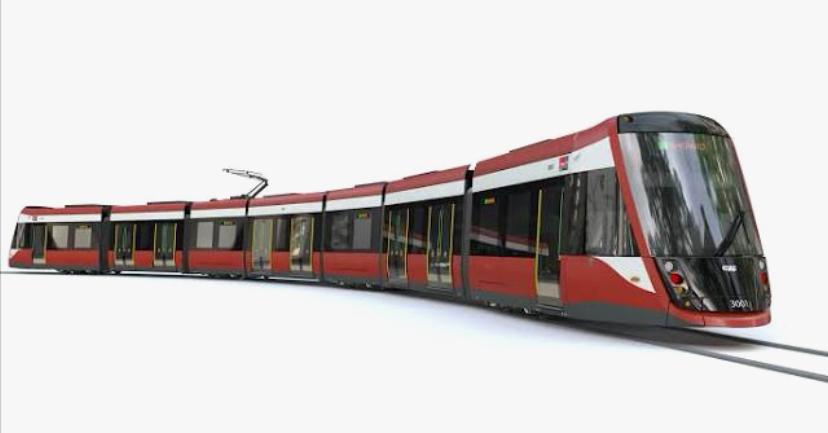
Calgary Transit has modernized the way it counts riders with automated passenger counting (APC) technology on CTrains. Calgary Transit will be in a better position to make data-driven decisions when planning our service for customers. It also means better value from investments Council and The City have made in public transit.
“To have this daily feedback on the number of customers using public transit, across the entire system, is important for adjusting our operations and future planning,” says Laura Hoskins, Leader of Performance and Analytics. “It’s a big value-add piece not just for us at Calgary Transit, but for being strategic on where we and Council invest dollars to improve service and expand the network.”
This industry-leading technology, which has been on buses since 2023, uses automated sensors at each door to capture when people board. It provides consistent daily data, system-wide. Around 70 per cent of the CTrain fleet have APCs, which will increase as older trains are replaced with newer ones.
“We know events throughout the year, and especially events in the summer, always attract more people using Calgary Transit,” says Hoskins. “This new data will help tell us when we should be scheduling more trains or less trains depending on the time of year.”
The data can show trends over the course of weeks, months and years, which can support deploying the fleet of buses and train cars that closer reflects the ridership, system-wide. In the future, data from new payment technologies, such as tap-and-go, will be used with APC data to further refine the service we provide for Calgarians. Together, they will help us better understand customers and their rides.
Using the new methodology, 2025 ridership totaled 93.1 million trips. To ensure accurate year-over-year comparisons, the 2024 ridership total was restated using this approach, which totaled 93.7 million trips. The slight decrease in 2025 can be attributed to the February 2025 extreme cold event, workforce shortages throughout the fall that required select route cuts, and the October 2025 teacher strike. When these factors are considered, underlying ridership demand continues to show stable growth.
For further context, fare revenues for 2025 totaled $123 million, an increase of $10 million, or nine per cent, compared to 2024. This increase reflects an increase in fare prices, the number of fares sold, and fare compliance initiatives like the installation of platform validators for CTrain and fare enforcement blitzes.
Before APCs, ridership was estimated by using manual passenger counts and periodic sampling. This approach is industry-standard, used across most transit agencies in North America. It comes with limitations and relies on modelling and assumptions to develop system‑wide estimates for ridership. As a result, year‑to‑year comparisons could sometimes reflect differences in sampling, rather than actual changes in customer behavior.
Source: The City of Calgary Newsroom
Post Disclaimer
The views and content presented in this article, news report, or video are solely those of the respective author or creator and do not necessarily reflect the official policy or position of BW Times Digital Online E-Paper.










Leave a comment