















The current confrontation between Iran and Israel has escalated into a profound and dangerous crisis with both military and strategic dimensions. Over the past weeks, Israel has reportedly carried out targeted strikes on multiple senior figures within Iran’s security and intelligence hierarchy. These strikes have not only eliminated individuals responsible for national defense and intelligence coordination but also appear designed to disrupt Iran’s broader command structure. Unlike prior skirmishes, which were often limited to border incidents or proxy conflicts, this operation demonstrates an unusual level of precision and ambition, suggesting that Israel possesses detailed intelligence on the location and movements of Iran’s top leadership. Iran, for its part, has responded with missile and drone attacks, along with assaults on strategic infrastructure. There is no indication that these hostilities will cease in the immediate future, raising the stakes for both regional security and global economic stability.
Iran’s leadership system is complex and highly hierarchical. Ultimate authority is concentrated in the supreme position, which oversees political, military, and judicial functions. Beneath this central authority, several senior officials coordinate the operations of intelligence agencies, the armed forces, and regional proxies. The recent elimination of the chief national security coordinator, who links strategic decision-making with operational implementation, and the head of the intelligence ministry, responsible for both domestic and international espionage, has created a significant disruption. Their absence interrupts the usual flow of information, delays decisions, and increases the potential for internal competition as other officials seek to fill the power vacuum. Historically, Iran’s governance has been resilient, but the simultaneous targeting of multiple top figures represents an unprecedented stress test for the system.
Iran’s intelligence apparatus is structured to be multi-layered and adaptive. The national intelligence ministry handles traditional espionage functions, including monitoring domestic dissent, countering foreign intelligence threats, and conducting covert operations abroad. The Revolutionary Guard maintains a separate intelligence division, which focuses on military operations, regional proxies, and strategic initiatives outside Iran’s borders. In addition to these formal structures, Iran relies on affiliated militias and political groups in countries such as Iraq, Syria, and Lebanon to extend its intelligence and operational reach. The loss of senior leaders may weaken coordination between these layers temporarily, but the decentralized nature of these networks allows them to continue operations, albeit with less strategic cohesion. The redundancy built into these systems is one reason Iran has historically been able to recover from internal purges and leadership disruptions.
Israel’s approach reflects a combination of precise intelligence and preemptive military doctrine. Its intelligence agencies utilize both human sources and technical surveillance to monitor targets, while the military is capable of executing rapid strikes with high accuracy. The current operations suggest that Israel has achieved a level of penetration into Iran’s decision-making circles that allows it to neutralize individuals who are central to strategic planning. By removing these leaders, Israel aims to degrade Iran’s operational capabilities and demonstrate that even the most senior figures are vulnerable. This is a calculated risk, as it increases the likelihood of asymmetric retaliation, but it also underscores Israel’s emphasis on disrupting potential threats before they fully materialize.
Iran’s response has been both conventional and asymmetric. Missile and drone strikes have targeted infrastructure and supply routes, while proxy groups affiliated with Iran have conducted operations in other areas. These actions serve multiple purposes: they demonstrate that Iran can still act decisively, maintain domestic and regional credibility, and impose costs on Israel for continuing the campaign. At the same time, these responses increase the risk of broader escalation, as additional countries in the region could become involved either directly or indirectly, either through alignment with Iran or through concern for their own security.
Within Iran, the removal of top leaders has triggered discussions about succession and internal power dynamics. The absence of experienced figures has created opportunities for mid-level commanders and political actors to assert themselves, potentially reshaping the balance of power between hardline and more moderate factions. Decisions about leadership succession will be closely watched by regional actors and could influence Iran’s foreign policy and military posture for years to come. If the power vacuum is filled by individuals more inclined toward aggressive retaliation, the current confrontation could intensify further. Conversely, if more cautious leaders assume control, there may be openings for temporary de-escalation.
Globally, the crisis has generated significant concern. Governments are watching the situation carefully, balancing calls for restraint with the need to protect economic and security interests. Some nations are urging both sides to avoid civilian casualties and to engage in diplomatic dialogue. Others emphasize the right to defensive actions while warning that escalation could destabilize the region. The complexity of alliances, regional rivalries, and economic interdependencies means that every statement and action is closely scrutinized for strategic signals.
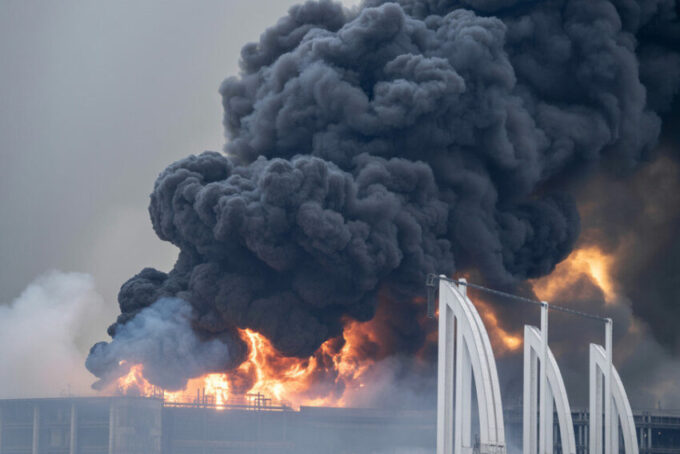
One of the most immediate and tangible global consequences is the impact on oil markets. Much of the world’s oil supply passes through a narrow maritime corridor near Iran, and any disruption or perceived threat to this route can have dramatic effects on pricing. Uncertainty about supply creates risk premiums, and even temporary instability can drive prices upward. Analysts now project that crude oil prices may remain elevated for months, potentially exceeding $100 per barrel for sustained periods. Higher energy costs will ripple through transportation, industrial production, and consumer markets worldwide, amplifying inflationary pressures and potentially slowing economic growth in sensitive regions.
The broader economic and security implications are also significant. Trade routes in the surrounding region may be disrupted, defense expenditures could rise, and investment patterns may shift as perceptions of risk increase. Humanitarian concerns are growing as civilians face displacement, damage to infrastructure, and limited access to essential services. The ongoing crisis highlights how regional conflicts, when combined with high-value targets and strategic chokepoints, can produce far-reaching consequences beyond the immediate theater of operations.
Looking ahead, several scenarios are possible. Continued escalation could draw in neighboring states, creating a wider regional conflict with unpredictable consequences. A more contained confrontation may persist in a tense state, punctuated by periodic strikes and retaliations, which would maintain market volatility and regional uncertainty. Alternatively, diplomatic efforts could eventually reduce direct hostilities, though trust deficits and recent losses within Iran’s leadership may slow progress and limit the effectiveness of negotiations. The evolving balance of power, the resilience of intelligence networks, and the influence of external actors seeking to stabilize the region will be decisive factors in determining the trajectory of the conflict.
The current confrontation underscores the ways in which modern conflicts intertwine intelligence operations, military capabilities, political structures, and global economic systems. Targeted actions against leadership figures can ripple across borders, affecting markets, trade, and populations far from the immediate conflict zone. Oil markets are particularly sensitive to instability in the region, and the combination of leadership disruption and ongoing hostilities has already driven prices higher. As the situation unfolds, both Israel and Iran will continue to weigh the benefits of aggressive action against the risks of wider escalation, while the international community monitors potential humanitarian, economic, and strategic repercussions.
In this context, the crisis demonstrates the vulnerability of centralized leadership structures, the strategic value of intelligence penetration, and the complex interplay between regional power dynamics and global economic stability. The removal of top Iranian leaders has created both operational challenges and political opportunities within Iran, while also signaling to the world the depth of Israel’s intelligence reach and the precision of its military capabilities. The ongoing strikes, retaliatory measures, and economic consequences illustrate how a localized conflict can have global ramifications, affecting not only the immediate region but also international markets, diplomatic relations, and security considerations. The coming weeks will be critical in determining whether this confrontation escalates further, stabilizes into a prolonged standoff, or opens avenues for negotiation and de-escalation, with implications that will be felt far beyond the borders of the countries directly involved.
Post Disclaimer
The views and content presented in this article, news report, or video are solely those of the respective author or creator and do not necessarily reflect the official policy or position of BW Times Digital Online E-Paper.









Leave a comment