












In recent years the discussion about the hijab and religious symbols has become one of the most debated social issues in some Western societies. The conversation often revolves around two important principles: the freedom of individuals to practice their faith and the idea of a secular state where government institutions remain neutral toward religion. While both principles are widely respected, the challenge comes when they appear to conflict with each other.
In the Canadian province of Quebec, this debate became particularly intense after the provincial government passed a secularism law in 2019. The legislation declared the province a secular state and introduced restrictions on visible religious symbols for certain public employees while they are performing their official duties. Positions such as teachers, judges, and police officers were included in these restrictions because they hold roles of authority within government institutions.
Supporters of the policy argue that the intention is not to target any specific religion but to ensure that public institutions appear neutral and independent from religious influence. According to this view, when citizens interact with government officials, the state should appear completely impartial and separate from any religious identity.
However, critics say the practical impact of the law has been felt most strongly by religious minorities, particularly Muslim women who wear the hijab. For many of these women, the headscarf is not only a symbol of faith but also a deeply personal part of their identity and daily life. They believe that wearing the hijab does not affect their professional ability or their commitment to serving the public.
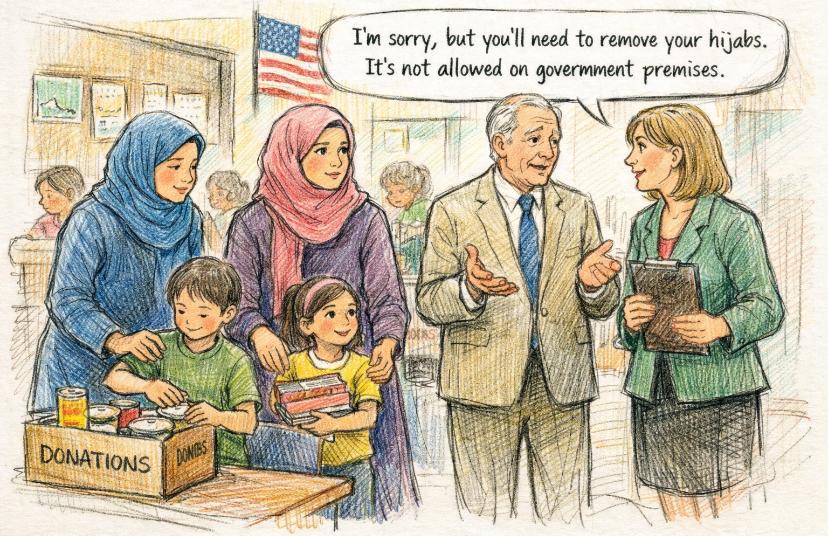
In recent developments within Quebec’s education system, the issue became even more emotional for some families. A number of Muslim mothers who had been volunteering in their children’s schools were informed that they could no longer participate in certain school activities while wearing a hijab. These mothers had been helping teachers with various programs, assisting with student events, and supporting school activities for years.
One situation that drew strong reactions involved school activities taking place in a gymnasium where students were participating in sports programs. Some mothers were told they could not volunteer inside the gym area while wearing a headscarf. For the families involved, the moment was painful because their intention was simply to support their children and contribute positively to the school environment.
Many parents expressed disappointment, saying their presence was never meant to influence anyone’s beliefs but only to help their children and the school community. For them, volunteering in classrooms, libraries, or sports activities had always been an act of care and cooperation rather than a political or religious statement.
The situation has opened a wider conversation across Canada about how societies should balance secular policies with the rights of individuals to express their faith. Some people strongly support the idea that public institutions must remain completely neutral. Others believe that neutrality should not come at the cost of excluding people who simply wish to participate in community life.
At the same time, many Canadians continue to emphasize the importance of respect and coexistence in a multicultural society. Canada is home to people from hundreds of cultural and religious backgrounds, and diversity is often considered one of the country’s greatest strengths. In everyday life, people from different faiths work together, study together, and raise their families side by side.
Many observers also remind that head covering is not unique to one religion or culture. Around the world, people cover their heads for many reasons including faith, tradition, respect, and even practical protection from the sun. In several parts of South Asia, including India, women working in agricultural fields commonly cover their heads with scarves or the edge of a sari while farming. This practice protects them from intense sunlight and dust while also reflecting cultural traditions passed down for generations.
Because of these global traditions, many believe that head coverings should be understood within a broader cultural and historical context rather than being viewed only through a political lens.
The discussion in Quebec therefore reflects a larger question faced by many modern democracies: how to maintain secular public institutions while also protecting personal freedoms and cultural expression. The answer is not simple, and opinions remain divided.
Yet many voices across communities continue to call for understanding, patience, and respectful dialogue. They believe that open conversation and mutual respect can help societies find balanced solutions where both equality and diversity are protected.
For many families, the hope is simple. They want a society where people can contribute to their communities, support their children, and live according to their beliefs without feeling excluded. In a country built on diversity and inclusion, many citizens believe that such balance is not only possible but essential for the future.
Post Disclaimer
The views and content presented in this article, news report, or video are solely those of the respective author or creator and do not necessarily reflect the official policy or position of BW Times Digital Online E-Paper.







Leave a comment