













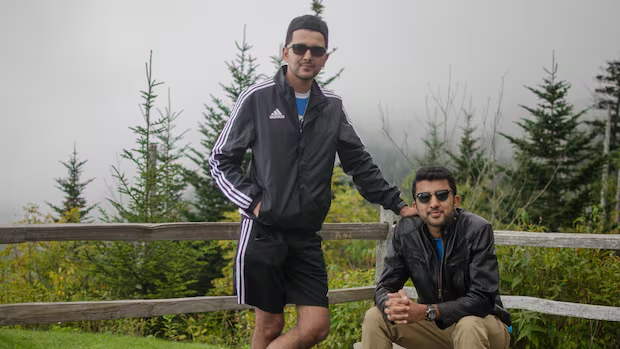
A Canadian doctoral student from the University of Toronto is behind bars in Pakistan after being detained over social media content authorities describe as inflammatory.
Hamza Ahmed Khan, a dual Canadian-Pakistani citizen, had travelled to Pakistan in December to conduct research for his PhD dissertation. His work focused on democracy promotion in Muslim-majority societies, with interviews conducted in Lahore and Islamabad. He was expected to travel to Karachi to spend Ramadan with family but failed to arrive, prompting concern among relatives.
Days later, the family learned he had been taken into custody by Pakistan’s National Cyber Crime Investigation Agency (NCCIA). According to an official report, authorities alleged that Khan’s activity on X and Instagram involved disseminating misinformation targeting state institutions. The agency claimed the posts were inflammatory and capable of inciting unrest or damaging Pakistan’s reputation.
Khan is currently being held in Lahore District Jail under the Prevention of Electronic Crimes Act, a 2016 law used to prosecute cyber-related offences. A magistrate has ordered that he remain in custody for at least 14 days pending further proceedings. A bail hearing is scheduled in Lahore later this week.
Family members dispute the allegations and the official timeline of events. They say Khan went missing days before authorities acknowledged detaining him. His brother, Awes Ahmed Khan, described prison conditions as overcrowded and harsh, expressing deep concern for his wellbeing.
The family’s lawyer has argued that Khan was not properly informed of the reasons for his detention at the time he was taken into custody, characterizing the initial incident as an abduction rather than a lawful arrest. Efforts to clarify the timeline and circumstances remain ongoing.
Global Affairs Canada has confirmed it is aware of the case but has declined to provide further details due to privacy considerations. University officials have also expressed concern. The vice-provost of the University of Toronto stated that the institution’s priority is Khan’s safety and that it is in contact with the family and Canadian officials.
Experts note that Pakistan has experienced periods of political instability and strained civil-military relations. Laws addressing electronic crime and digital speech have increasingly been used in cases involving political expression. Critics argue that such legislation can blur the line between cybersecurity enforcement and restrictions on dissent.
Supporters of Khan describe him as an articulate academic engaged in intellectual debate, maintaining that his online discussions were part of scholarly and civic engagement rather than attempts to incite unrest.
As his legal case proceeds, attention is focused on the upcoming bail hearing and whether diplomatic channels may influence the outcome. For now, the situation highlights the complexities faced by dual citizens conducting academic research in politically sensitive environments, particularly when digital expression intersects with national security laws.
Post Disclaimer
The views and content presented in this article, news report, or video are solely those of the respective author or creator and do not necessarily reflect the official policy or position of BW Times Digital Online E-Paper.









Leave a comment