














Nepal’s recent national election has become one of the most closely watched political developments in South Asia. The vote not only determined the future leadership of the Himalayan country but also signaled a shift in the political mood of its people. Nepal sits between two major regional powers, India and China, and its domestic politics often influence the strategic balance in the region. Because of this geographic and political importance, the election attracted strong attention from neighboring countries as well as international observers.
The election came at a time when many citizens were frustrated with political instability, corruption allegations, and slow economic progress. Over the past decade Nepal has experienced frequent changes in government, and many voters expressed a desire for new leadership capable of bringing stability and development. Youth participation increased significantly in this election, and the results reflected a demand for reform and transparency in governance.
Election date and voting process
Nepal held its parliamentary election on February 26, 2026. The election was conducted across the country’s seven provinces, from large urban centers to remote Himalayan districts. Polling stations opened early in the morning and voters lined up throughout the day to cast their ballots.
Nepal’s parliament consists of 275 seats, and the country follows a mixed electoral system.
- 165 seats are elected directly from geographic constituencies.
- 110 seats are distributed through proportional representation according to the total national vote received by political parties.
This system allows both regional representation and broader party representation in the national parliament.
Voter turnout and new voters
The election saw strong public participation. Election authorities estimated that around 60 percent of registered voters took part in the voting process.
Nepal had close to 19 million registered voters, and among them nearly one million were first-time voters. Many of these new voters were young citizens who had recently reached voting age. Their participation played a significant role in shaping the results because many supported newer political movements rather than long-established parties.
In cities such as Kathmandu, Lalitpur, and Pokhara, long lines of voters were seen at polling stations during the early hours. Rural areas also recorded steady participation despite transportation and geographic challenges.
Results and winning party
The election produced a major shift in Nepal’s political balance. The Rastriya Swatantra Party emerged as the biggest winner in terms of parliamentary seats and overall support.
The party’s campaign focused on issues such as anti-corruption reforms, improving government transparency, economic opportunities for young people, and strengthening public institutions. These messages attracted strong support from urban voters and the younger generation.
Many candidates from traditional political parties lost their seats to new faces. This result showed that voters were looking for change and were willing to support emerging political leaders.
Although the final distribution of all seats required several days of counting, early results clearly indicated that the new party had become the largest political force in parliament.
Current leadership of Nepal
Nepal operates under a parliamentary system where the prime minister leads the government while the president serves as the head of state.
At the time of the election period:
- Ram Chandra Poudel is the President of Nepal.
- Pushpa Kamal Dahal (Prachanda) has been serving as the Prime Minister.
After elections, the newly elected parliament determines which party or coalition forms the next government. If a new party or alliance gains a majority, it can choose a new prime minister.
Election day incidents
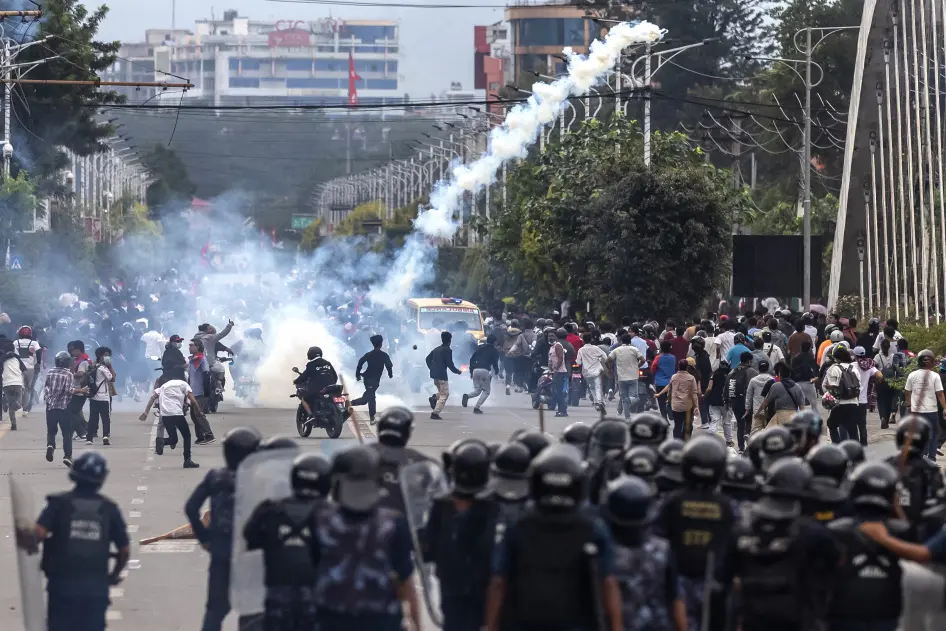
Overall, the election remained mostly peaceful across the country. Security forces were deployed at thousands of polling stations to ensure safety and prevent disturbances.
However, a few minor incidents occurred in some districts:
- Supporters of rival parties argued outside polling stations in a few areas.
- In certain locations voting started late due to delays in delivering election materials.
- In remote mountainous regions, difficult terrain slowed transportation of ballot boxes.
Authorities responded quickly to these issues, and they did not significantly affect the overall election process. Compared to earlier elections in Nepal’s history, this vote was considered relatively calm and orderly.
Situation twelve days after the election
About twelve days after the election, the political situation in Nepal remains active as parties negotiate alliances and prepare to form the next government.
Vote counting has largely been completed, and the results confirmed the strong performance of the Rastriya Swatantra Party. However, because Nepal’s parliamentary system sometimes requires coalition governments, discussions between political parties have continued in the capital.
Several key developments have emerged during these days:
- Coalition talks: Political leaders have been meeting to discuss possible alliances that could secure a majority in parliament.
- Public expectations: Many citizens expect the new political leadership to focus quickly on economic reforms and anti-corruption measures.
- Youth influence: Analysts believe the large participation of young voters will push political leaders to prioritize employment and development programs.
The coming weeks will determine whether a single party forms the government or whether a coalition arrangement becomes necessary.
Influence of India after the election
Nepal shares a long open border with India, and the two countries have deep historical, economic, and cultural ties. Because of this close relationship, political developments in Nepal often attract strong interest in New Delhi.
After the election, India’s influence and role in Nepal can be seen in several ways.
Economic connections:
India is one of Nepal’s largest trading partners. Many goods used in Nepal are imported through Indian routes, and millions of Nepalese citizens work in India. A stable government in Kathmandu is important for maintaining these economic links.
Infrastructure and energy cooperation:
Several cross-border infrastructure and electricity projects connect the two countries. The new Nepalese government will likely continue discussions with India on hydropower development, transmission lines, and road connectivity.
Strategic balance:
Nepal maintains relations with both India and China. India closely watches political developments in Kathmandu because shifts in policy could influence regional strategic dynamics. However, Nepal traditionally attempts to maintain balanced relations with both neighbors.
Political communication:
After the election results became clear, diplomatic communication between leaders of both countries continued as part of normal regional cooperation.
Future challenges for the new government
Whoever forms the next government in Nepal will face several major challenges. These include improving the economy, reducing unemployment among young people, developing infrastructure in rural areas, and strengthening government institutions.
Political stability will also be crucial. Frequent changes in leadership have slowed progress in the past, and many voters hope the new parliament will bring a more stable period of governance.
Conclusion
The February 2026 election represents an important moment in Nepal’s democratic journey. Strong participation from voters, particularly young citizens, has reshaped the political landscape and opened the door for new leadership.
Twelve days after the vote, political negotiations are still continuing, but the message from the electorate is already clear: citizens want transparency, economic development, and stable governance.
As the new parliament prepares to form a government, both domestic expectations and regional attention—especially from neighboring India—will influence how Nepal moves forward in the coming years.
Post Disclaimer
The views and content presented in this article, news report, or video are solely those of the respective author or creator and do not necessarily reflect the official policy or position of BW Times Digital Online E-Paper.






Leave a comment