















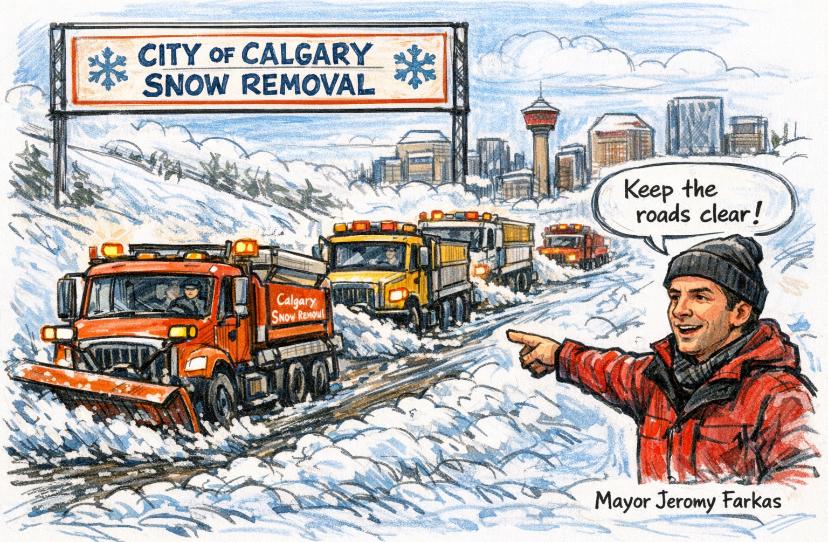
In a winter city like Calgary, the true test of municipal leadership comes when heavy snow blankets the streets and daily life depends on swift action. Since taking office, Jeromy Farkas has placed strong emphasis on preparation first, rapid deployment second, and full-city coverage third — a structured approach that many residents say is delivering visible results.
The focus begins even before the first snowflake falls. When forecasts predict a major system, city crews prepare equipment, load sanding and anti-icing materials, and position trucks across different quadrants of the city. This early mobilization ensures that response times are minimized once snowfall begins. Under the current leadership, readiness has become the first priority rather than reaction.
As snow starts accumulating, the operational plan activates immediately. The first stage concentrates on Priority 1 routes — major arteries, emergency corridors, public transit roads, and high-traffic commuter routes. These roads are pre-treated when possible and plowed continuously during active snowfall. The objective is clear: keep the city moving, protect emergency access, and prevent gridlock.
After snowfall slows or stops, crews intensify clearing on these main routes to restore full driving capacity. Typically, this phase is targeted to be completed within approximately 18 to 24 hours, depending on the severity of the storm. Sanding and de-icing follow plowing operations to reduce ice buildup and improve traction.
Once the primary network is stabilized, operations shift to collector roads — the connectors that feed traffic from neighbourhoods to major arteries. Clearing these roads ensures that communities are not isolated and that traffic flows smoothly outward from residential areas.
What residents have particularly noticed this winter is the next stage: the visible presence of snow removal trucks inside residential side streets much sooner than expected. After major and collector routes are secured, crews have moved more decisively into neighbourhoods. Plows and sanding trucks have been seen clearing narrower streets, improving access for school buses, delivery vehicles, and everyday commuters.
This step-by-step system — prepare first, clear main routes second, connect communities third, and address residential streets fourth — reflects an organized and disciplined operational strategy. The difference this season has been the stronger emphasis on completing each phase efficiently before advancing to the next, without unnecessary delay.
Communication has also played a key role. Residents have received clearer information regarding parking bans, snow route designations, and expected timelines. By ensuring vehicles are removed from key routes when required, crews can work faster and more effectively.
Winter management in Calgary is complex, requiring coordination across transportation services, emergency management, and public works. However, the structured “prepare, prioritize, expand” approach has strengthened public confidence. Many residents report smoother commutes and safer neighbourhood access compared to previous winters.
Snowstorms will always challenge a northern city. Yet leadership is reflected in how those challenges are met. This winter, the visible sequence of preparation, rapid main-road clearing, and quicker attention to residential streets has demonstrated a focused commitment to keeping Calgary safe and moving — from major highways down to the smallest side street.
Post Disclaimer
The views and content presented in this article, news report, or video are solely those of the respective author or creator and do not necessarily reflect the official policy or position of BW Times Digital Online E-Paper.










Leave a comment