










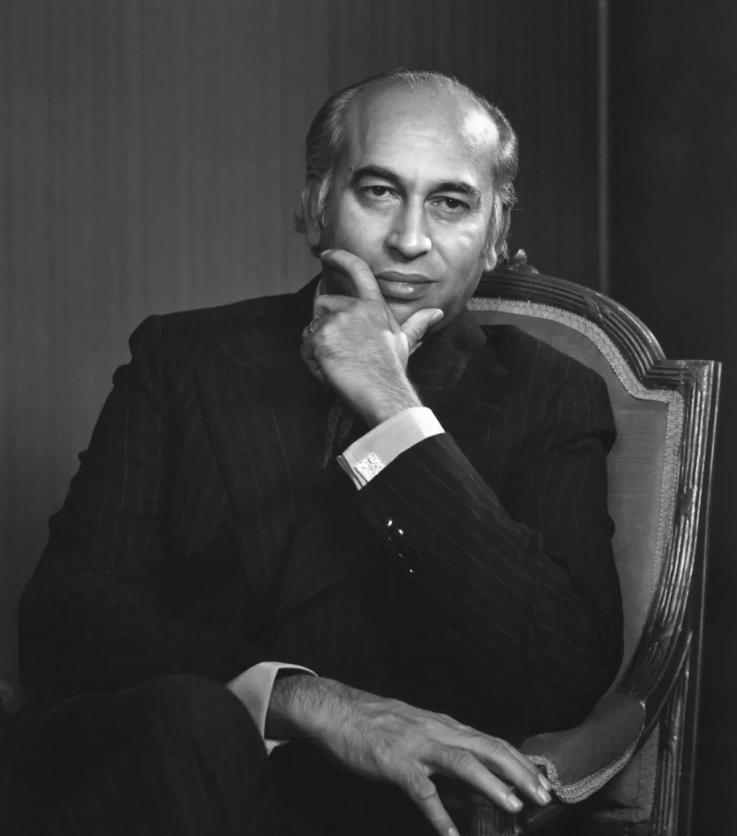
The death anniversary of Zulfiqar Ali Bhutto remains one of the most controversial and emotionally charged moments in the political history of Pakistan. His execution on April 4, 1979, following a highly disputed trial, continues to raise serious questions about justice, power, and the role of the military in politics. The circumstances surrounding his death, and the role played by General Zia-ul-Haq, are still debated decades later.
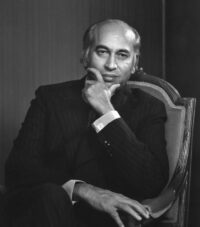
Zulfiqar Ali Bhutto was not only a politician but also a transformative figure in Pakistan’s history. He served as President from 1971 to 1973 and later as Prime Minister from 1973 to 1977. He founded the Pakistan Peoples Party, which quickly became one of the most influential political movements in the country. Bhutto’s leadership came at a critical time, especially after the traumatic separation of East Pakistan, which became Bangladesh in 1971. He worked to rebuild national confidence and introduced a new constitution in 1973, which still serves as the foundation of Pakistan’s political system.
Bhutto’s achievements were significant. He introduced major economic reforms, including the nationalization of key industries, banks, and educational institutions. While controversial, these policies were aimed at reducing inequality and strengthening state control over the economy. He also launched Pakistan’s nuclear program, famously declaring that the country would develop nuclear capability even if people had to “eat grass.” In foreign policy, he strengthened ties with countries like China and played a leading role in the Islamic world, hosting the 1974 Islamic Summit in Lahore.
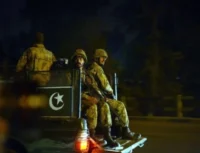
However, his rule was not without criticism. Political opponents accused him of authoritarian tendencies, suppressing dissent, and manipulating the electoral process. The 1977 general elections became a turning point. Opposition parties, united under the Pakistan National Alliance (PNA), alleged massive rigging. Protests spread across the country, leading to political instability. Amid this chaos, General Zia-ul-Haq, who had been appointed Army Chief by Bhutto himself, staged a military coup on July 5, 1977. This event, known as Operation Fair Play, marked the beginning of military rule.
After the coup, Bhutto was arrested and later charged in connection with the murder of a political opponent, Nawab Muhammad Ahmed Khan Kasuri. The case itself was highly controversial. Many observers, both within Pakistan and internationally, believed the trial was politically motivated. The proceedings took place in the Lahore High Court, where Bhutto was sentenced to death in 1978. The verdict was upheld by the Supreme Court in a split decision, with a narrow margin of 4–3, raising further doubts about its fairness.
The role of General Zia-ul-Haq in Bhutto’s execution is widely scrutinized. As the head of the military government, Zia had the authority to grant clemency but chose not to do so. Critics argue that the entire judicial process was influenced by the military regime, making it less about justice and more about eliminating a powerful political rival. Appeals for mercy came from world leaders, human rights organizations, and even some within Pakistan, but they were ultimately ignored.
On April 4, 1979, Zulfiqar Ali Bhutto was executed by hanging in Rawalpindi Central Jail. The execution was carried out in secrecy during the early hours of the morning, and his body was buried without a public funeral in his ancestral village, Garhi Khuda Bakhsh. The manner in which the execution was conducted added to the sense of injustice felt by his supporters.
The case against Bhutto continues to be described by many legal experts as a “judicial murder.” Decades later, Pakistan’s Supreme Court itself acknowledged procedural irregularities in the trial, further fueling the belief that Bhutto did not receive a fair hearing. His death marked a turning point in Pakistan’s political trajectory, ushering in a long period of military dominance under Zia-ul-Haq, who ruled until his death in 1988.
Bhutto’s legacy remains deeply influential. For his supporters, he is remembered as a champion of democracy, a voice for the poor, and a leader who sought to give Pakistan an independent and assertive identity on the global stage. For his critics, he remains a complex figure whose policies and style of governance contributed to political polarization.
Even today, his party, the Pakistan Peoples Party, continues to play a significant role in Pakistani politics, led by his descendants. His death anniversary is observed every year with gatherings, speeches, and renewed calls for justice. The story of Zulfiqar Ali Bhutto is not just about one man’s rise and fall; it is about the struggle between civilian authority and military power, the challenges of democracy, and the quest for justice in a deeply divided society.
In the end, the execution of Zulfiqar Ali Bhutto remains one of the most defining and controversial episodes in Pakistan’s history. It reflects how political conflicts, when combined with institutional weaknesses, can lead to irreversible consequences. The questions surrounding his trial and death continue to echo, reminding future generations of the importance of rule of law, judicial independence, and democratic values.
Post Disclaimer
The views and content presented in this article, news report, or video are solely those of the respective author or creator and do not necessarily reflect the official policy or position of BW Times Digital Online E-Paper.







Leave a comment