















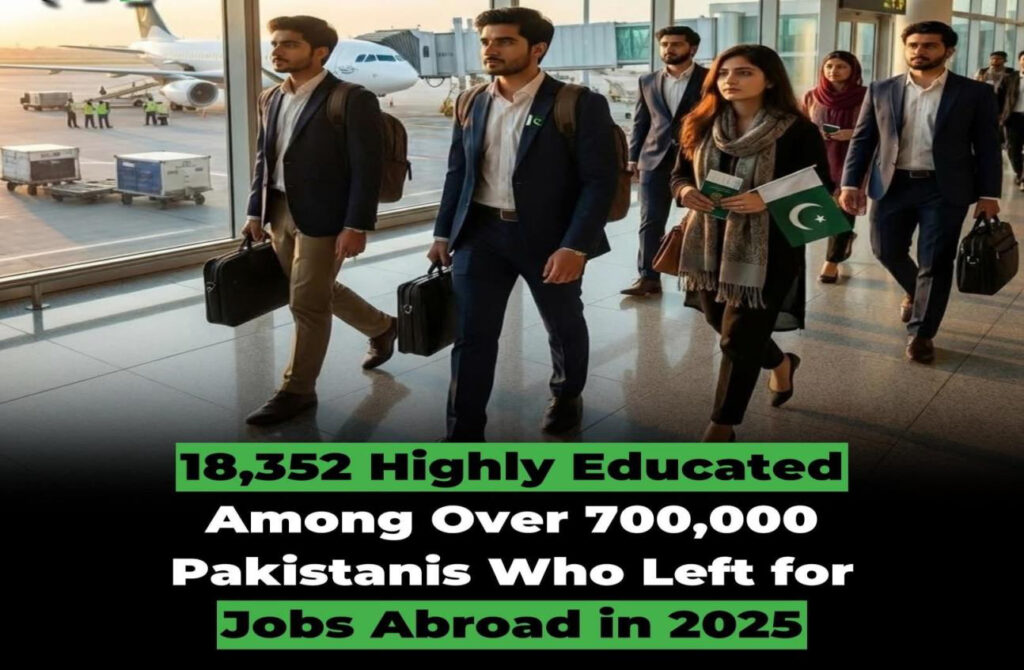
Pakistan is experiencing a steady outflow of educated professionals who are
choosing to build their careers abroad, particularly in European countries. Doctors,
engineers, IT specialists, academics, and skilled graduates—many holding
advanced degrees—are leaving not because of a lack of attachment to their
homeland, but because of limited opportunities at home. This growing migration
highlights deep-rooted economic and institutional challenges that demand serious
attention.
A Job Market That Fails Its Graduates
Every year, Pakistani universities produce thousands of degree holders, yet the
domestic job market struggles to absorb them. Many graduates remain unemployed
for months or years, while others accept jobs that do not match their qualifications.
This mismatch between education and employment leaves skilled individuals
frustrated and undervalued, pushing them to explore opportunities overseas.
Economic Pressures and Low Salaries
Even when employment is secured, salaries in Pakistan often fail to keep pace with
the rising cost of living. Inflation, expensive housing, and high utility bills have eroded
financial security, especially for young professionals. European countries, by
comparison, offer competitive wages, job stability, and social welfare benefits that
provide a sense of economic dignity and long-term security.
Merit, Fairness, and Career Progression
A lack of merit-based systems is frequently cited by educated Pakistanis as a reason
for leaving. Hiring and promotions are often influenced by connections rather than
competence, limiting career growth for talented individuals. In contrast, many
European work environments emphasize transparency, performance, and equal
opportunity—qualities that attract ambitious professionals.
Limited Research and Professional Development
For academics, researchers, and innovators, Pakistan offers limited funding,
outdated facilities, and minimal institutional support. European countries invest
heavily in research, technology, and innovation, providing modern laboratories,
grants, and collaborative opportunities. Such environments allow professionals to
grow intellectually and professionally.

Uncertainty and Quality of Life Concerns
Political instability, economic uncertainty, and inconsistent policies further weaken
confidence in the future. Educated individuals, particularly those planning families,
seek countries where governance is stable, public services are reliable, and quality
of life is assured. Safety, healthcare, education, and work-life balance play a
significant role in these decisions.
What This Means for Pakistan
The continuous departure of educated citizens represents a major loss of human
capital. Pakistan invests heavily in education, but the benefits of that investment are
increasingly realized elsewhere. This brain drain slows national development and
weakens institutions that rely on skilled professionals.
Conclusion
The migration of Pakistan’s educated workforce is a symptom of deeper systemic
problems rather than a lack of patriotism. Unless meaningful reforms are
introduced—fair employment practices, competitive salaries, political stability, and
professional growth opportunities—this trend will continue. Retaining talent is
essential for Pakistan’s progress, and it begins with creating an environment where
educated citizens can thrive at home.
Post Disclaimer
The views and content presented in this article, news report, or video are solely those of the respective author or creator and do not necessarily reflect the official policy or position of BW Times Digital Online E-Paper.








Leave a comment