












The ongoing Iran-US-Israel conflict has now entered its 35th day, and there seems to be no immediate resolution in sight. The uncertainty surrounding this war has been compounded by former US President Donald Trump, who, according to economist Jeffrey Sachs, has acted without strategic planning, making decisions that appear reckless and self-serving. Many analysts describe him as a psychopath because he treats global politics as a business opportunity. His recent moves suggest a focus on selling Venezuelan oil, with profits primarily benefiting his family members and close associates who hold shares in related companies. Meanwhile, the global consequences of this conflict are becoming increasingly severe, especially for countries like Pakistan, which are already vulnerable to external economic shocks.
Crude oil prices have surged sharply in response to the ongoing tensions. As of early April 2026, Brent crude is trading at over $104 per barrel, while US WTI crude has reached approximately $102–$104 per barrel. This is the first sustained period above $100 per barrel since 2022. The primary driver of this surge is the risk of supply disruptions in the Middle East, particularly near the Strait of Hormuz, a vital route for nearly 20 percent of the world’s oil exports. Shipping attacks, military maneuvers, and the potential for escalation have sent shockwaves through global markets. Industries that rely on energy, including transportation, manufacturing, and agriculture, are facing increasing production costs, which are now being passed on to consumers worldwide.
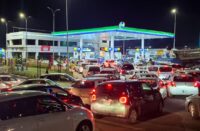
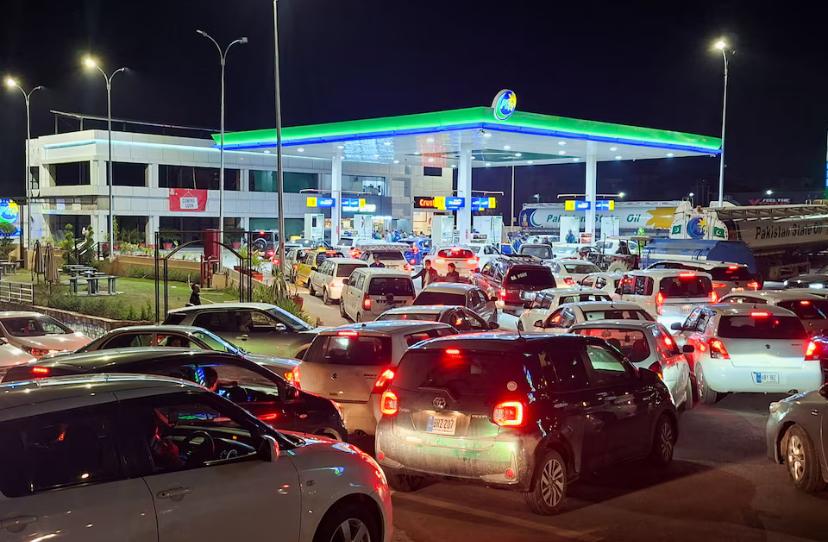
Pakistan has been disproportionately affected by this global oil price surge. Fuel prices in the country have skyrocketed, making it one of the most expensive markets in the world relative to income levels. Petrol, which was around Rs 266 per liter at the start of March 2026, jumped to Rs 321 by March 7 and reached Rs 458 per liter by April 3—a staggering increase of almost 80 percent in just over a month. Diesel followed an even steeper trajectory, rising from Rs 281 to Rs 520 per liter over the same period. These price hikes are among the highest globally, reflecting not only the surge in global crude prices but also domestic factors such as taxation and currency depreciation.
Several factors have contributed to this sharp rise in fuel costs. Pakistan imports nearly all of its crude oil, so fluctuations in global prices have a direct and immediate impact on domestic fuel rates. The government, struggling with budget deficits and debt repayments, has imposed heavy taxes on petroleum products, further inflating retail prices. The depreciation of the Pakistani rupee against the US dollar has magnified the effect of rising international crude prices, making fuel even less affordable for ordinary citizens.
The consequences of these price increases extend far beyond fuel itself. Transportation costs have risen dramatically, directly impacting the cost of food and other essential goods. Supply chain disruptions caused by higher logistics costs have led to price inflation across multiple sectors, including grocery items, construction materials, and public transportation. Analysts warn that if global oil prices remain elevated, Pakistan could experience prolonged economic stress with severe consequences for households, businesses, and the overall economy.
The poorest segments of Pakistani society are bearing the brunt of this crisis. Daily wage laborers, small farmers, and low-income families are struggling to meet basic needs. Many families now spend a larger portion of their income on fuel alone, leaving less for food, healthcare, and education. Public transportation costs have increased significantly, making commuting unaffordable for workers who depend on buses, rickshaws, or shared taxis. Rural communities are particularly hard hit, as they rely on diesel for agricultural machinery and transport of goods to local markets. Rising fuel costs have also led to higher prices for fertilizers and agricultural inputs, threatening the livelihoods of small-scale farmers and increasing food insecurity.
Unfortunately, government inaction and poor planning have compounded the problem. Despite the surge in prices and mounting public hardship, authorities have failed to introduce effective subsidies or targeted relief measures for the poor. Instead, the government has largely relied on market mechanisms, which has allowed fuel prices to rise unchecked. Criticism has been growing from economists, social activists, and the general public, who argue that the lack of proactive measures reflects a disconnect between policymakers and the reality faced by ordinary citizens. Many analysts contend that the government’s focus has been on maintaining fiscal balance rather than ensuring social welfare, which has left vulnerable populations extremely exposed to global economic shocks.
The human impact of these policies is evident in daily life. In urban areas, workers struggle to pay for rising bus fares and rickshaw rides, often having to walk long distances to reach their jobs. Families in low-income neighborhoods are cutting back on essential expenses such as electricity, cooking gas, and healthcare to cope with the rising cost of fuel. In rural areas, farmers are forced to reduce planting or delay harvesting due to the high cost of diesel and fertilizers. Many small business owners are also seeing their operating costs double, threatening the survival of micro-enterprises that form the backbone of local economies.
The psychological impact is equally significant. The constant pressure of rising expenses has increased stress levels among ordinary citizens. Social unrest, protests, and strikes are becoming more common as public frustration grows. The situation exposes the vulnerability of Pakistan’s poor, who have little buffer against sudden price shocks and whose livelihoods are directly tied to the affordability of fuel.
Globally, the Pakistan experience is a microcosm of how the Iran-US-Israel conflict is reshaping economic realities. Countries that are net importers of oil face immediate exposure to price volatility. While some nations with domestic oil production or subsidies can shield their populations from the worst effects, Pakistan has limited capacity to do so. Analysts warn that unless there is a diplomatic resolution to the Middle East conflict or a major drop in global oil prices, these pressures will continue, affecting food prices, transport, and overall inflation for the foreseeable future.
In conclusion, the combination of geopolitical instability, self-interested decision-making by influential figures, and domestic policy failures has created a scenario in which ordinary Pakistanis are paying the heaviest price. Fuel prices have skyrocketed to unprecedented levels, with petrol at Rs 458 per liter and diesel at Rs 520 per liter, leaving the poorest citizens struggling to meet basic needs. The government’s failure to provide meaningful relief or subsidies has exacerbated social and economic inequality. As the world continues to monitor the Iran-US-Israel conflict, Pakistan serves as a stark example of how global crises can have immediate and devastating effects on vulnerable populations. The ongoing situation underscores the need for proactive policy measures to protect the poor and ensure that global economic shocks do not translate into widespread human suffering.
Post Disclaimer
The views and content presented in this article, news report, or video are solely those of the respective author or creator and do not necessarily reflect the official policy or position of BW Times Digital Online E-Paper.








Leave a comment