














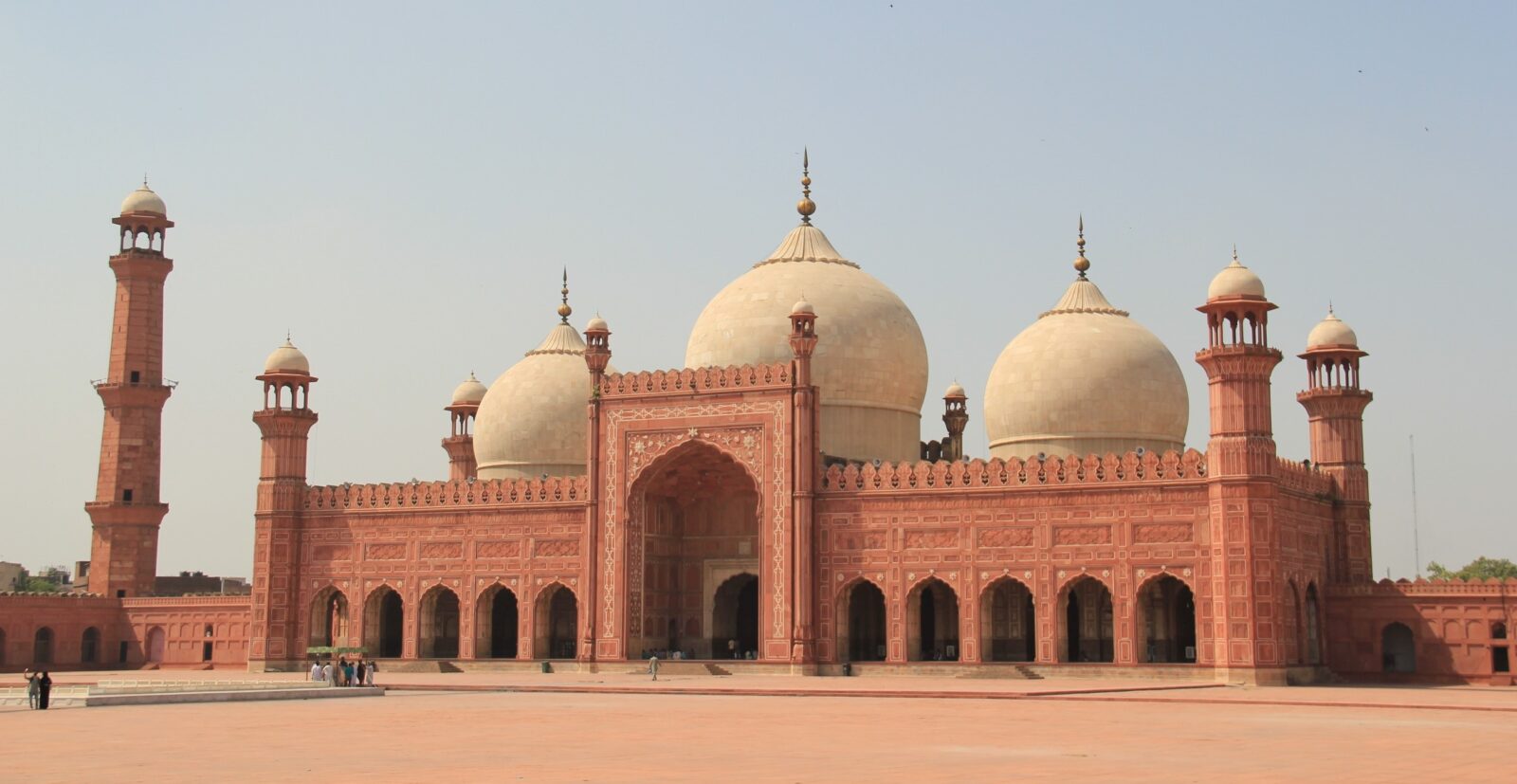
In the historic heart of Lahore, Pakistan’s cultural capital, the Badshahi Mosque rises with quiet authority. Framed by the ancient Lahore Fort and surrounded by the vibrant rhythms of the old city, it stands as more than a place of worship. It is a witness—one that has observed empires rise and fall, cultures transform, and generations pass. For more than three centuries, the Badshahi Mosque has remained a powerful symbol of faith, endurance, and architectural excellence.
Completed in 1673 during the reign of Mughal Emperor Aurangzeb Alamgir, the Badshahi Mosque was designed to reflect both imperial strength and spiritual devotion. At the time of its completion, it was the largest mosque in the world, a distinction it held for over 300 years. Constructed primarily from red sandstone and adorned with delicate white marble inlay, the mosque represents the refined aesthetic vision of Mughal architecture—one rooted in symmetry, balance, and scale.
The sheer size of the mosque is striking. Its vast courtyard can accommodate nearly 100,000 worshippers, while its three marble domes and four towering minarets dominate Lahore’s skyline. Yet despite its monumental proportions, the space feels calm rather than overwhelming. The design encourages contemplation, reminding visitors that grandeur can coexist with humility.
Stepping into the mosque’s courtyard often feels like crossing a threshold. The sounds of traffic and city life fade, replaced by open sky and stillness. Shoes are removed, conversations soften, and the environment invites reflection. Whether one arrives as a worshipper, a visitor, or a student of history, the experience is deeply human—marked by a sense of pause in an otherwise fast-moving world.
The history of the Badshahi Mosque, however, is not a simple story of reverence. Following the decline of the Mughal Empire in the 18th century, Lahore came under Sikh rule. During this period, the mosque was repurposed for military use, its courtyard turned into a stable and its sanctity compromised. Later, under British colonial administration, the mosque suffered further neglect as the city was reshaped according to colonial priorities.
These periods of disruption are central to the mosque’s meaning today. The Badshahi Mosque did not merely survive history; it absorbed it. After the mid-20th century, extensive restoration efforts returned the mosque to its original form. This revival was not only architectural but cultural, reaffirming the mosque’s place as a living symbol rather than a relic of the past.
Today, the Badshahi Mosque functions as an active centre of worship and community life. Five daily prayers continue within its walls, just as they did centuries ago. On Fridays and religious festivals, large congregations gather—families arriving together, elders guiding younger generations, and traditions passed on through shared experience. The mosque remains deeply woven into the social and spiritual fabric of the city.
Beyond its religious role, the Badshahi Mosque serves as a reminder of how civilizations express identity through architecture. Like historic cathedrals, temples, and sacred spaces around the world, it reflects a collective desire to preserve meaning in physical form. Such landmarks endure not simply because of stone and mortar, but because communities continue to invest them with purpose.
Architecturally, the mosque reflects the Mughal vision of harmony between power and piety. Unlike more ornate Mughal monuments, the Badshahi Mosque emphasizes strength and clarity over excessive decoration. This restraint aligns with Aurangzeb’s emphasis on discipline and faith, resulting in a structure that feels grounded, purposeful, and timeless.
Its location opposite the Lahore Fort adds further symbolic depth. The fort, once a centre of political and military authority, stands in visual dialogue with the mosque—a spiritual counterbalance to worldly power. Together, they represent a historical worldview in which governance and faith were interconnected, offering insight into how societies once understood leadership and responsibility.
In the modern era, the Badshahi Mosque continues to attract visitors from across the world. For many, it offers an opportunity to engage with Islamic culture through art, history, and lived tradition rather than abstraction. It challenges narrow narratives by presenting Islam as a civilization rich in creativity, discipline, and communal life.
In a time defined by rapid change and digital immediacy, the Badshahi Mosque stands as a symbol of permanence. Its red sandstone walls have endured political upheaval, colonial rule, and urban expansion, yet its purpose remains unchanged. It continues to offer space for prayer, reflection, and gathering—values that transcend geography and belief.
Ultimately, the Badshahi Mosque belongs not only to Lahore or Pakistan, but to a shared human heritage. It tells a story of resilience, devotion, and the enduring power of architecture to hold memory and meaning. In its quiet grandeur, the mosque reminds us that while cultures may differ, the human search for belonging, beauty, and continuity remains universal.
Post Disclaimer
The views and content presented in this article, news report, or video are solely those of the respective author or creator and do not necessarily reflect the official policy or position of BW Times Digital Online E-Paper.












Wow. The article by Bilal Ali Mir is awe-inspiring. Good job. Keep it up